

Iran’s Dire Strait: Behind Closed Doors, Regime Admits Sanctions’ Gut-Punch to Supreme Leader
POLICY WIRE — Tehran, Iran — The private confession was stark, stripped of the usual revolutionary bluster. For all their public defiance, Iran’s economic heavyweights recently huddled with Supreme...

POLICY WIRE — Tehran, Iran — The private confession was stark, stripped of the usual revolutionary bluster. For all their public defiance, Iran’s economic heavyweights recently huddled with Supreme Leader Ali Khamenei, reportedly laying bare a grim reality: America’s choking sanctions have indeed, for want of a better phrase, brought the nation to its knees. Not exactly the sort of admission you’d hear at Friday prayers, is it?
It’s a tale as old as modern statecraft, really—the outward projection of strength, the internal tremor of dread. This revelation, first whispered through intelligence channels, then widely reported, confirms what many ordinary Iranians have felt in their thinning wallets and emptying market stalls for ages. These weren’t minor tremors; these were reports of an economic system on the verge of — well, they probably didn’t use the word ‘collapse’ in front of the Ayatollah, but the implication was clear enough for any seasoned political observer.
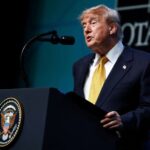
But there’s a fresh sting in this old wound: Donald Trump, the architect of the previous maximum pressure campaign, is back on the geopolitical chessboard. His potential return to the Oval Office now casts a long, menacing shadow over Tehran, raising the chilling prospect of those naval blockades—both overt and economic—being reimposed, perhaps with even greater ferocity. The past administration called it ‘crippling.’ It was. Turns out, the Iranians agree, even if they won’t say so loudly. You’ve got to appreciate the irony.
“The bite of these sanctions… it’s a deep, agonizing wound, Grand Ayatollah,” a senior economic official, likely close to President Ebrahim Raisi’s inner circle, is reported to have relayed. “We speak of steadfastness publicly, we must. But the market, our very families, feel otherwise. We’re talking about scarcity in basic foodstuffs, not just the loss of luxury imports. The people feel it.” It’s a message that cuts through diplomatic niceties, directly to the raw nerve of popular discontent. But does anyone truly care?
Because, make no mistake, for certain hawks in Washington, this internal admission is less a tragedy and more a vindication. “Tehran understands one language: economic strangulation,” observed former U.S. National Security Advisor John Bolton (a figure synonymous with hawkish foreign policy), weighing in on the leaked reports. “The previous administration might’ve stumbled with follow-through, but a robust naval embargo isn’t just about stopping ships. It’s about suffocation. It’s the only genuine lever we have to curb their nuclear ambitions—or their regional destabilization, for that matter.” And that pretty much sums up the zero-sum game Washington intends to play.
For context, consider Iran’s economic landscape: years of sanctions have pummeled the national currency, the Rial, sending inflation soaring. The Central Bank of Iran, in a rare moment of semi-transparency earlier this year, admitted to an inflation rate pushing above 40 percent annually for basic goods—a statistic that quietly screams widespread economic suffering, rather than merely suggesting it. This isn’t just theory; it’s tangible pain.
📄 POLICY WIRE WHITEPAPER PUBLISHED: PAKISTAN'S NATIONAL SECURITY POLICY PRIORITIES
👉 READ BY CLICKING HEREThe geopolitical ripple effects, of course, extend far beyond Iran’s borders. For neighboring countries in South Asia, including Pakistan—a nation that itself grapples with economic instability and a delicate relationship with both Washington and Tehran—intensified Iranian sanctions present a vexing challenge. Islamabad, often caught between powerful regional actors, routinely walks a tightrope, carefully managing cross-border trade and trying to avoid being caught in the crossfire. An Iran on the brink might trigger an exodus, a new surge of regional instability, or even complicate delicate energy arrangements. Pakistan’s role in the region’s broader political maneuvering has always been something to watch, and it hasn’t gotten any easier lately.
What This Means
This stark admission from inside Iran’s highest circles isn’t merely gossip; it’s a critical barometer of the regime’s real-time fragility. Politically, it reveals a leadership that, despite public grandstanding, recognizes the limits of its endurance. It’s a concession that domestic stability—and by extension, the regime’s survival—is directly threatened by sustained external pressure. Such an acknowledgment likely prompts a desperate internal scramble for solutions, possibly even—dare one suggest—a willingness to re-engage on some terms, however begrudgingly.
Economically, the impact of continued, or worse, intensified sanctions would be nothing short of devastating for the Iranian populace. We’re talking accelerated inflation, deepened poverty, — and further erosion of public trust. The global oil market, perpetually jittery, would watch closely, bracing for any disruption, however minor, in a key exporting region. For Western powers, particularly a potentially re-elected Trump administration, this leak might be interpreted as an invitation to double down, believing the regime truly is on the ropes. The question then becomes: how much pressure before the rope breaks, — and what then?