

The Weight of the Flag: How ‘Captain America’ Fumbled America’s World Cup Dream
POLICY WIRE — Doha, Qatar — Another four years, another shattered American soccer dream. It’s an almost ritualistic heartbreak, really, played out on the global stage, where the grand promise of a...

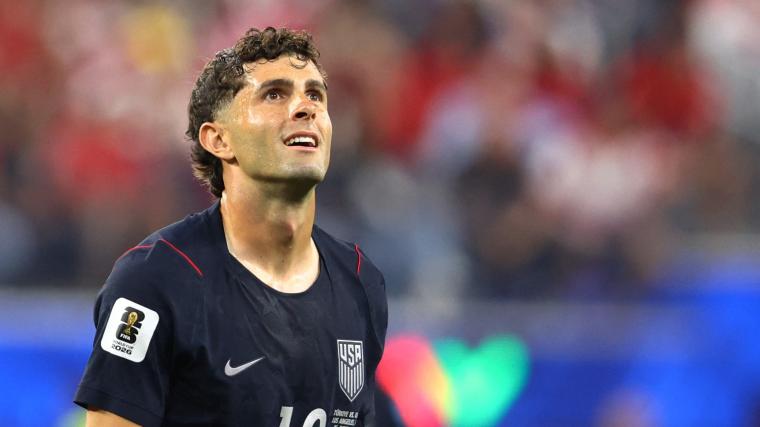
POLICY WIRE — Doha, Qatar — Another four years, another shattered American soccer dream. It’s an almost ritualistic heartbreak, really, played out on the global stage, where the grand promise of a nation finally embracing the “beautiful game” usually ends in a whimper. This time around, it wasn’t just the US Men’s National Team crashing out, soundly thumped 4-1 by Belgium; it was the abrupt extinguishing of an entire national narrative, one built, for better or worse, around a solitary figure. Christian Pulisic, often dubbed ‘Captain America,’ was supposed to lead that charge. But what transpired in Qatar felt less like a charge and more like a limp, culminating in an unceremonious exit and a harsh reckoning.
It’s not just the bleachers full of fans or the late-night pundits who are feeling the sting. But sometimes, when the hero doesn’t deliver, the knives come out with a sharpness that can be quite chilling. And that’s exactly what happened when the final whistle blew. Veteran sports commentators and former players didn’t mince words, delivering critiques as stinging as a striker’s last-minute miss.
“You wanted some of the big-time players to step up in big moments, and I’ve got to be honest, I was a bit disappointed in Christian Pulisic,” declared Carli Lloyd, the former US Women’s National Team star, in comments that spread quicker than a botched defensive clear. “I think, whether he wants to be the star of this team or not, we didn’t see enough from him in this particular game and really the whole World Cup.” That’s a tough cut from someone who knows a thing or two about dominating on the biggest stages. Lloyd, never one to sugarcoat, hit squarely on the uncomfortable truth: American soccer has been desperate for a marquee name to transcend the sport, and Pulisic had, for years, worn that mantle with both pride and pressure.
But this tournament? It seems the weight became too much to bear. Pulisic, 27, entered this World Cup as the undisputed face of US soccer, a status many found questionable given the team’s relatively young roster and his own club struggles. His preparation even saw him skip the Gold Cup, purportedly to get fully fit — and focused for Qatar. An understandable gamble, sure, but one that came with enormous expectations attached. It certainly set a high bar, one he tripped over.
FS1 analyst Nick Wright didn’t hold back either, labeling Pulisic’s performance a “no-show.” He observed, with his characteristic bluntness: “To have the man who’s supposed to be the greatest player in the history of our country simply no-show in the biggest tournament of his life is just awful.” Harsh? Absolutely. But it reflected a genuine frustration felt by many who’ve watched the USMNT struggle to translate individual talent into collective triumph, often placing an almost unrealistic burden on one player.
Injuries didn’t help, of course. A calf issue against Paraguay and then a visibly frustrating ankle twist against Belgium meant Pulisic only completed one full match in the tournament (against Bosnia and Herzegovina). Because, let’s be honest, you can’t be Captain America from the sidelines. Still, when he was on the pitch, his statistical output painted a stark picture: zero goals and just one assist across four appearances, according to official World Cup statistics. He attempted a meager four shots total. These aren’t the numbers of a player single-handedly changing games; these are the numbers of someone who perhaps struggled to find his footing, literally and figuratively.
📄 POLICY WIRE WHITEPAPER PUBLISHED: PAKISTAN'S NATIONAL SECURITY POLICY PRIORITIES
👉 READ BY CLICKING HEREThis kind of intense scrutiny isn’t foreign to football-obsessed nations. Go to Lahore or Karachi, where a top cricket player can go from national hero to public enemy number one after a few poor performances—especially against rival India—and you’ll find the US soccer landscape surprisingly tame by comparison. For nations like Pakistan, where cricket, or football in many other Muslim-majority countries, offers one of the few unifying, feel-good narratives for their populations, the expectation placed on an athlete like Babar Azam or Lionel Messi makes Pulisic’s ‘Captain America’ designation look like child’s play. It’s a collective identity wrapped in sport, where the stakes feel astronomically higher.
What This Means
This isn’t just about Pulisic, his stats, or even one disappointing tournament. It’s a policy conundrum for US Soccer, — and frankly, a cultural mirror for America. For one, it highlights the continued, perhaps quixotic, American quest for a bona fide global soccer superstar—someone who can command the field and headlines with equal prowess. The commercial stakes are sky-high, too; endorsements, jersey sales, and public interest are all tied to this hero narrative. But when the hero stumbles, what then?
Because the US system, still evolving, keeps producing a singular talent and then expects them to carry the weight of an entire underdeveloped footballing culture. This Pulisic episode forces an uncomfortable conversation about how American soccer nurtures and utilizes its most talented individuals. Is the ‘Captain America’ moniker helpful or a millstone around an athlete’s neck? Are we fostering a team culture where collective strength triumphs over individual brilliance, or are we still looking for that singular figure to elevate the sport domestically? The US isn’t a one-man show, not truly. Building sustainable success will require more than relying on individual anomalies; it demands a robust development pipeline and a collective strategic vision.
Economically, a failed World Cup campaign isn’t just about lost ad revenue or merchandise sales. It dampens enthusiasm, which impacts youth participation, infrastructure investment, and even media coverage—all things US Soccer desperately needs to grow its footprint before the next World Cup on home soil. This team’s stumble in Qatar offers a harsh, sobering lesson. The political and social reverberations of sports failures, even in America’s still-nascent soccer landscape, shouldn’t be underestimated. This recent exit demands a hard look in the mirror, far beyond blaming one man, however ‘Captain America’ he was billed.