
The Rule of Law and Armed Unrest in AJK: An Analysis
When a group at the center of a “peaceful protest” opens fire on police, the first question should not be why the state responded. The first question should be why an organization, the...

When a group at the center of a “peaceful protest” opens fire on police, the first question should not be why the state responded. The first question should be why an organization, the government has formally proscribed as a terrorist outfit under anti-terrorism law, was marching with armed elements in its ranks at all.
The Dhadyal shooting on July 5 is not an isolated event. It sits inside a pattern that has unfolded since June 5, 2026, when the AJK government placed the Jammu Kashmir Joint Awami Action Committee (JAAC) in the First Schedule of the Anti-Terrorism Act, 2014. This step was not a symbolic political gesture. Officials cite specific conduct behind it: the acquired weapons, attacks on police personnel, abductions of law enforcement officers, and repeated armed confrontations. These are not abstract accusations. In Rawalakot the previous month, armed men linked to the group allegedly attacked the Combined Military Hospital, a facility actively treating wounded patients and staff. Four police officers were killed in that incident. A movement associated with an attack on a working hospital strains any claim to be a strictly peaceful demonstration.
The same pattern reappeared in Dhadyal. According to police, an armed element within the march tried to push past a checkpoint as officers attempted to stop the crowd from advancing on Dhadyal town. Gunfire came from within the crowd, wounding an Intelligence Bureau inspector. Police say they first tried aerial firing and a baton charge to disperse the demonstrators, and only returned fire directly after an officer’s life was under immediate threat. The man killed, police say, was the same individual who had fired on the IB officer, a claim they frame as straightforward self-defence, a principle recognized in law across jurisdictions.
Beyond this single clash, police report that four officers were abducted at gunpoint in Rawalakot while returning to duty from leave. Officials describe this as evidence of organized, coordinated intimidation rather than spontaneous protest activity. The state, in this telling, has an obligation to protect its personnel and preserve public order, an obligation made more urgent with AJK’s legislative elections set for July 27, a period officials say is especially vulnerable to deliberate disruption.
AJK Inspector General of Police Liaqat Ali Malik has been consistent in his public statements, insisting that protesters fired first and rejecting unverified casualty claims from the other side as “misinformation” and “information warfare.” He has repeatedly asked for casualty claims to be backed by post-mortem evidence and formal complaints rather than social media assertions. Officials also point to the government’s attempts at engagement: talks with JAAC leadership, a federal delegation dispatched by the prime minister earlier in the unrest, and a grant of billions of rupees toward flour and electricity subsidies to address the movement’s original economic demands. From the state’s perspective, it has tried negotiation repeatedly, only to see strikes, blockades, and marches continue regardless, actions that shut markets, disrupt transport, and affect millions of residents with no connection to the group’s leadership or its demands.
📄 POLICY WIRE WHITEPAPER PUBLISHED: PAKISTAN'S NATIONAL SECURITY POLICY PRIORITIES
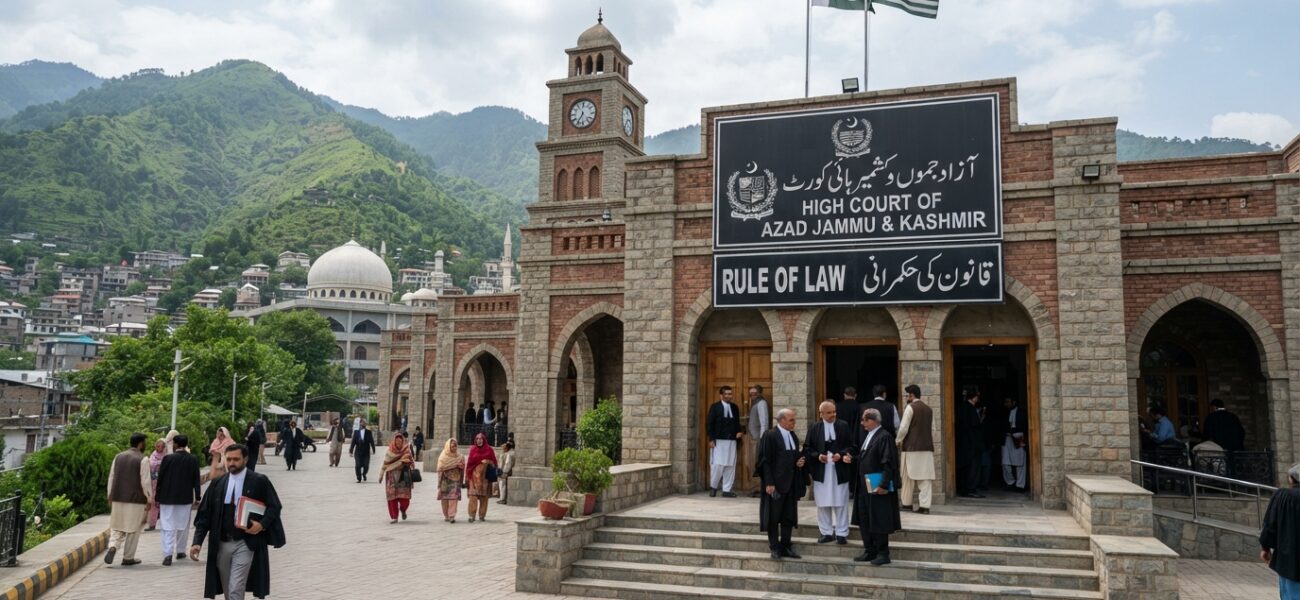
👉 READ BY CLICKING HEREOfficials also stress that AJK’s own Supreme Court ruled in June 2026 that the twelve legislative seats reserved for Kashmiri refugees are constitutionally protected and cannot be abolished by protest pressure or executive order, only through formal constitutional amendment. In this view, continuing to escalate a movement around a demand the courts have already addressed constitutionally undermines, rather than strengthens, the rule of law, and elevates confrontation over the legal and democratic channels the state says remain open.
Seen through this lens, enforcing the law against a proscribed organization that includes armed elements is not repression. It is the ordinary function of a state trying to protect officers, keep roads and markets open, and hold scheduled elections without disruption.
Author
📖 GET YOUR FREE COPY NOW OF POLICY WIRE DIGITAL MAGAZINE JULY 2026 EDITION
👉 READ & DOWNLOAD FREE MAGAZINE