


Lazio Unrest: Romagnoli Exit, Fan Fury, Gulf Money
Lazio fans protest president Lotito as Romagnoli leaves for Qatari club Al-Sadd. Discover how fan fury meets Gulf money in modern football's shifting landscape.

POLICY WIRE — Rome, Italy — Twenty-thousand voices, or so it’s estimated, roared through Rome, a sea of sky blue pushing against the indifference of power. It wasn’t some populist uprising, nor a national plebiscite. No, this was just football—or what passes for it these days. Fans of Società Sportiva Lazio, fed up to their very bones, marched. They didn’t merely express displeasure; they staged a theatrical, celebrity-endorsed revolt against their long-serving—and apparently widely detested—president, Claudio Lotito.
It’s the kind of passionate, visceral spectacle that reminds you sport isn’t just a game; it’s a public trust, a cultural anchor. And when that trust gets eroded, people will march. This wasn’t just a Sunday afternoon walk. Organizers had billed it as the largest protest in Italian football’s history. You can bet your bottom dollar on that being a generous estimation for dramatic effect, but the optics were clear enough for anyone paying attention. From Ponte Milvio, they streamed toward Stadio Flaminio, a symbolic pilgrimage. [QUOTE_PLACEHOLDER]
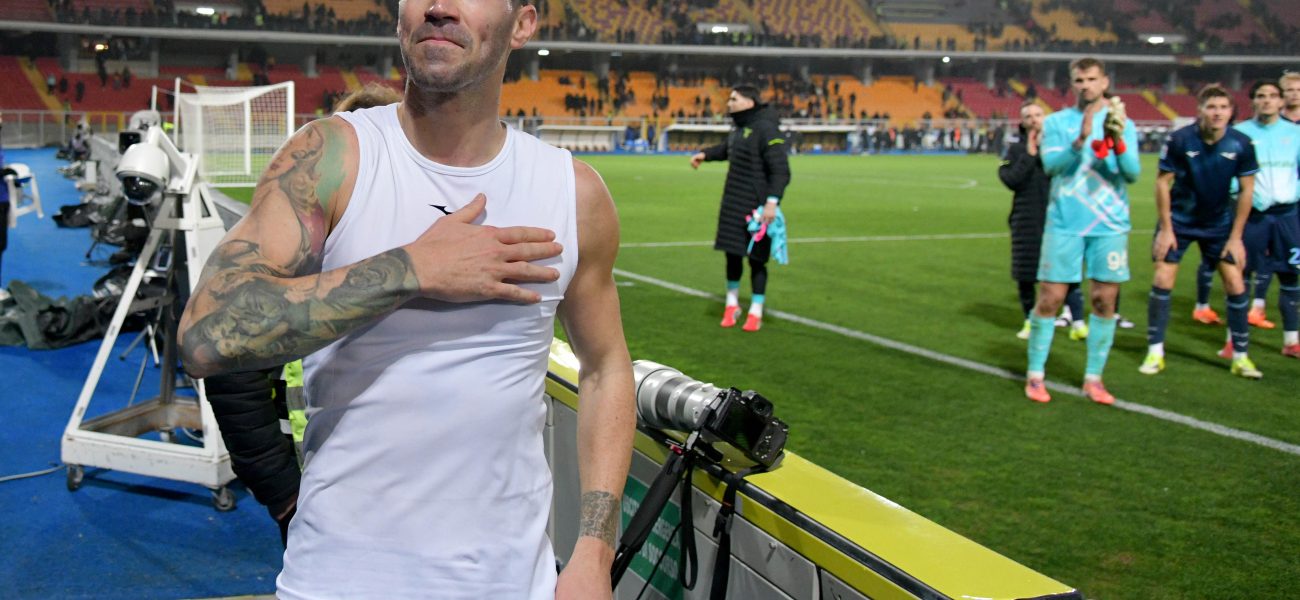
This huge demonstration, surprisingly, found itself sharing the spotlight, however briefly, with the departure of a rather popular player, Alessio Romagnoli. He’s been with the club for four years, but he’s heading off to Al-Sadd, the Qatari champions. His farewell, a video message played amidst the protest’s climactic moments, was delivered with the gravitas usually reserved for a head of state, not a centre-back. It tells you something about fan devotion—and about the global financial currents that tug at European talent. This is modern football, alright: grassroots rebellion — and Gulf state money coexisting in a messy, captivating tableau.
The defender’s decision to jet off to the Middle East caps a rather dramatic, six-month long transfer saga. Back in January, everyone thought Romagnoli was gone. He’d even waved goodbye to fans at Lecce. But, then came the glitch—allegedly, it came down to Lotito demanding the player give up three months of his salary. And just like that, the deal with Al-Sadd fell apart, at the eleventh hour. These aren’t just player transactions; they’re corporate dealings with human capital.
Now, however, Al-Sadd has made a second pass. They’ve seemingly reached the finish line this time. Lazio, if reports hold, are set to rake in €3 million for the Roman, whose contract would’ve expired next year anyway. For a player who was reportedly willing to leave months ago for a specific reason—likely financial benefit and a new challenge—this renewed push makes a certain kind of sense. But for the fans, it’s yet another chapter in a book they’re tired of reading.
His parting words, delivered via a video montage during the protest that also featured other former players, carried an air of resigned affection. It read, in part: I’m taking this opportunity to say goodbye to you, because, as you know, after four years I’m leaving my home. Over these years, you’ve given me so much love, and I’ll never forget you, because the truth is, you’ve been fundamental to me. My regret is not being able to say goodbye to you at the Olimpico, but we all know the situation. On the pitch I played for each of you, I promise we’ll have the opportunity to see each other again soon. I’ll definitely come and see you in the stands where I grew up, after all. A true tearjerker, one might suggest, if it wasn’t so clearly a man talking to people he respected, yet still part of a bigger system.
This massive display of collective angst—more than 20,000 Lazio fanatics took to the streets, painting Rome in sky blue—drew in some unlikely public figures, too. Italian singer Tommaso Paradiso was there, a Sanremo participant whom Lotito allegedly claimed he doesn’t know. And Lazio Region President Francesco Rocca, who probably knows a thing or two about political currents, confessed his lifelong love for the club. It was a broad church, this protest, a united front simply asking Lotito to do one thing: sell up. They want to dream again. Good luck with that.
📄 POLICY WIRE WHITEPAPER PUBLISHED: PAKISTAN'S NATIONAL SECURITY POLICY PRIORITIES
👉 READ BY CLICKING HEREWhat This Means
This isn’t merely about a disgruntled fanbase in one of Europe’s football-obsessed nations. Oh no. This spectacle, this public unburdening of fan grievances paired with the financial gravity of Gulf money, is a miniature reflection of several broader geopolitical and economic trends. It showcases the increasingly influential role of non-traditional footballing powers—specifically those from the Middle East—in reshaping the sport’s landscape. Clubs like Al-Sadd, backed by Qatari wealth, aren’t just signing European cast-offs; they’re actively competing for and acquiring talent that still has considerable value, often offering terms that European clubs find difficult, if not impossible, to match. This dynamic forces a reckoning for clubs, for players, — and critically, for the fans.
The economic muscle from the Muslim world, particularly the Gulf states, means talent acquisition isn’t bound by traditional European club loyalties or market values anymore. For fans in places like Pakistan and other parts of South Asia, who follow European leagues with an almost religious zeal, these transfers mark a noticeable shift. Their allegiances, once squarely focused on traditional European powerhouses, now subtly splinter, as more and more familiar names appear in leagues across Asia. It represents a dispersion of talent, and, by extension, a potential fragmentation of traditional fanbases globally. It’s a kind of soft power projection, certainly, but it’s also an unavoidable market force.
Then there’s the political economy of fan power. What do you do when the passion of the crowd meets the entrenched power of ownership? In many instances, the fans become merely consumers, their voices drowned out by balance sheets. But this demonstration, arguably the largest protest of its kind in Italian football’s history (if you believe the advertising), reminds us that this isn’t always the case. Fan organizations, if coordinated — and impassioned enough, can still exert immense pressure. The fact that political figures and entertainers joined indicates a wider societal resonance, blurring lines between sport and civic discontent. It becomes less about eleven men kicking a ball around and more about ownership, community, and the seemingly dwindling sense of agency in a corporatized world. As we’ve seen in various contexts, like the challenges within South Korean football, the battle isn’t just on the pitch anymore.
And let’s not forget the sheer gall of the player’s exit, punctuated by a quote of how much they value their supporters while essentially walking towards a bigger paycheque. It’s not a moral judgment, it’s simply how the global marketplace functions now. Money talks, and it’s currently speaking with a Gulf accent, drawing players—and potentially fan interest—further east. That’s a shift few in Rome, or in much of Europe, are particularly happy about.
