


Roman Emperor’s Reckoning: Football Club Becomes A Political Pressure Cooker
POLICY WIRE — Rome, Italy — The thunderous silence from Lazio’s curva Nord speaks volumes, a damning indictment echoing through the Eternal City. It isn’t just about football anymore, if...

POLICY WIRE — Rome, Italy — The thunderous silence from Lazio’s curva Nord speaks volumes, a damning indictment echoing through the Eternal City. It isn’t just about football anymore, if it ever really was. It’s about power, pride, and the very idea of ownership in modern Italy—a battle playing out on the pitch and in the political backrooms, with a Houston billionaire waiting in the wings.
Claudio Lotito, the Roman club’s polarizing patron for two decades and an influential senator in Silvio Berlusconi’s enduring Forza Italia party, finds himself in an astonishing chokehold by his own fanbase. It’s an unusual rebellion, meticulously orchestrated, less about pitch performance — and more about Lotito himself. The supporters want him out, — and they’ve deployed economic warfare to make their point. Because when fans opt out of buying season tickets, cancel television subscriptions, and even boycott his vast network of businesses—it’s no longer just noise. It’s bleeding red ink.
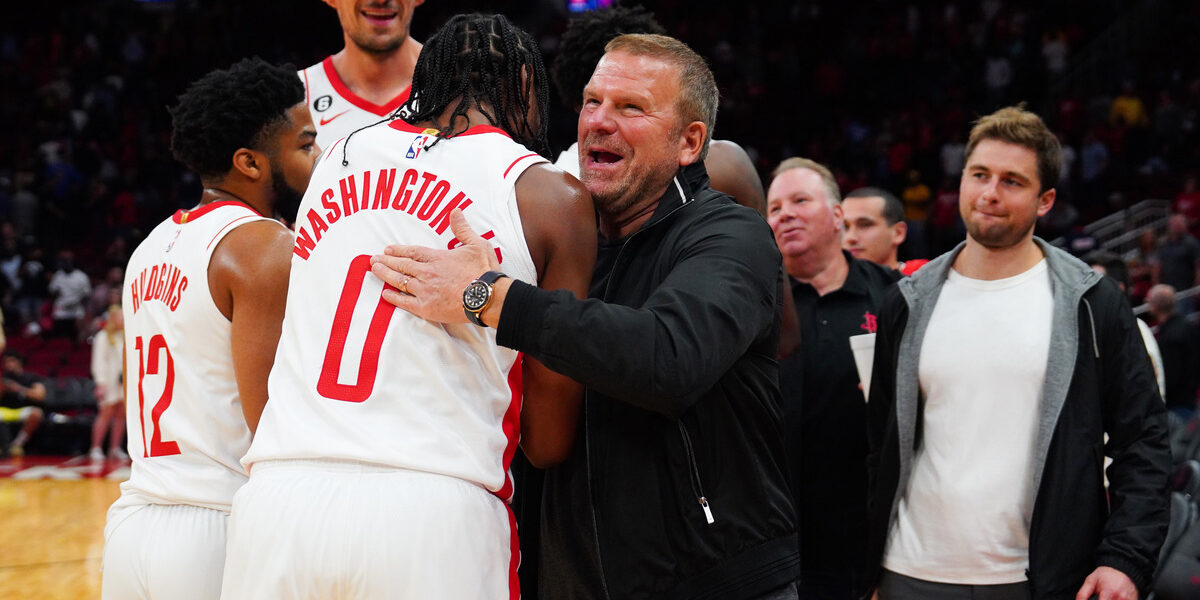
Enter Tilman Fertitta. The Galveston, Texas-born business magnate, already a fixture in global sports as the owner of the NBA’s Houston Rockets, has been reportedly eyed by a shadowy consortium of Roman power players keen on engineering a seamless transition from Lotito’s embattled reign. They’ve made their overtures, sensing weakness, seeing an opportunity for a man who famously doesn’t shy from a challenge—or a lavish investment.
But there’s a hitch. A significant one. Fertitta, a diplomatic appointee during the Trump administration, currently serves as the U.S. Ambassador to Italy. This prestigious post, he’s found, comes with rather strict caveats regarding Italian asset acquisition. It’s quite a quandary, isn’t it? A potential buyer with pockets deeper than the Colosseum, yet shackled by diplomatic niceties. As Fertitta himself, usually known for his aggressive business posture, recently articulated with a degree of resignation: “As an ambassador, I won’t be able to conclude any deals with Italy for the foreseeable future, certainly not for another two years. But I can assure you, the opportunity to own a storied football team here would be an immense honor, a challenge I’d welcome wholeheartedly once these official constraints lift.” He won’t even hint at which team, but the chatter points to Rome.
Lotito, predictably, remains defiant. One doesn’t survive two decades at the helm of an Italian Serie A club, let alone in Italian politics, without an iron will. He’s shrugged off similar protests before. “My commitment to Lazio is unwavering, and my decisions always reflect what I believe is in the club’s best interest,” he purportedly stated during a recent private parliamentary gathering, dismissing the fan boycott as a transient, if passionate, outburst. A testament to his unyielding spirit—or perhaps, just pure stubbornness.
Still, the fans’ concerted efforts aren’t merely symbolic. Industry analysts and club estimates suggest the refusal of organized fan groups to engage economically could cost Lazio upwards of €20 million in annual revenues, a punishing sum for any club, let alone one already battling to keep pace with Serie A’s financial giants. This isn’t just a handful of disgruntled season ticket holders; this is an entire institution’s emotional core staging a deliberate, calculated asphyxiation.
📄 POLICY WIRE WHITEPAPER PUBLISHED: PAKISTAN'S NATIONAL SECURITY POLICY PRIORITIES
👉 READ BY CLICKING HEREAnd Lotito’s recent acquisition of Reggina, a struggling Calabrian side, further muddies the waters. Rules forbid one owner from controlling two clubs in Italy’s professional divisions. So, if Reggina—currently mired in Serie D—were to somehow climb the ranks, Lotito would eventually have to divest. A slim hope, perhaps, but for the beleaguered faithful, any flicker feels like a wildfire.
What This Means
This saga isn’t just some local football drama; it’s a telling snapshot of Italy’s perpetually interwoven sports and political landscape. Lotito’s dual role as club president and senator perfectly encapsulates how power, influence, and personal empires operate in Rome. The fan revolt isn’t just about a team’s fortunes; it’s a direct challenge to a system—a kind of civil disobedience played out through economic levers. Economically, this puts severe strain on Lazio, forcing difficult choices — and potentially making a sale inevitable. The entry of an American billionaire, post-ambassadorship, suggests a broader trend in European football ownership, one increasingly reliant on external capital, sometimes from sources like global political economy actors with deep pockets. It points to the increasingly transnational nature of high-stakes sports investment, and how even political appointees are eyeing the field. But the delay creates a vacuum, a prolonged period of uncertainty that could further erode the club’s standing. This dance between private business interests, public political figures, and passionate, organized dissent isn’t unique to Italy, or even Europe; echoes of institutional accountability, the struggle against entrenched interests, and the demands for competent leadership resonate from Rome to Lahore.