


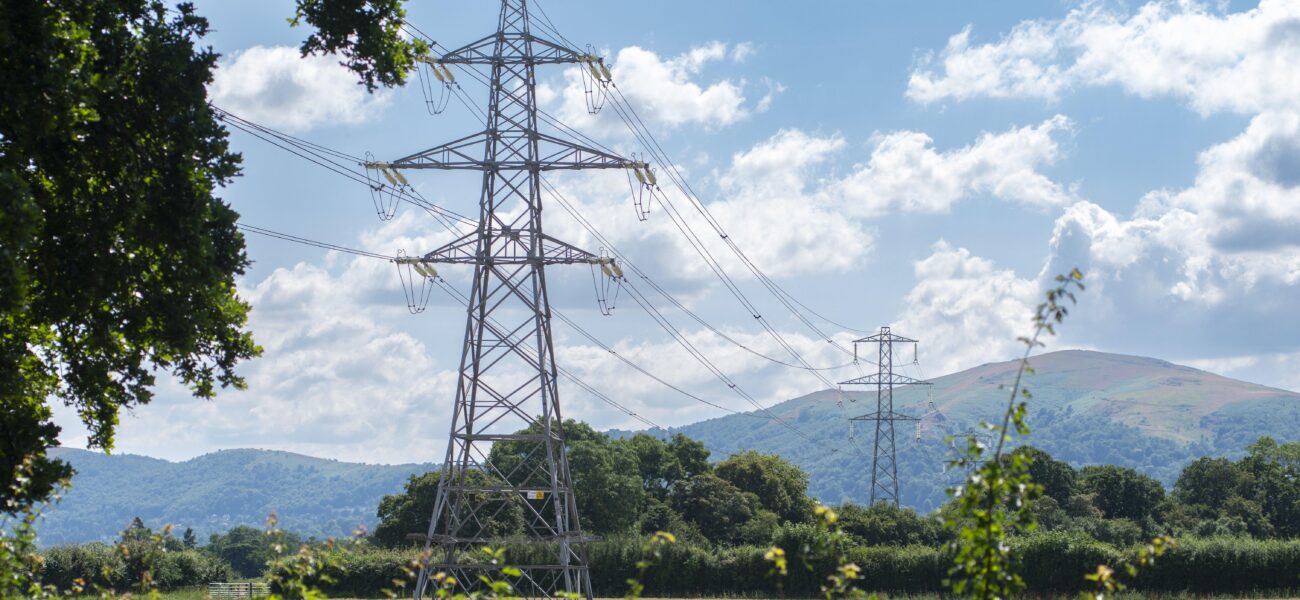
Judge Sides With Plow Over Pylon: A Rural Reckoning for Infrastructure Goliaths
POLICY WIRE — London, UK — For a moment, the steady churn of corporate lawyers and government strategists seems to falter. A judge, ensconced in the hallowed halls of justice, didn’t just rule;...

POLICY WIRE — London, UK — For a moment, the steady churn of corporate lawyers and government strategists seems to falter. A judge, ensconced in the hallowed halls of justice, didn’t just rule; they recalibrated the very power dynamics between behemoth utility firms and the men and women who actually work the land. It wasn’t a revolution—but it sure felt like one, especially to those who’d spent years feeling the crushing weight of impending pylons and high-voltage cables across their family plots.
This wasn’t about esoteric legal interpretations. No. It was about mud and crops, ancestral fields, and the plain, blunt reality of who gets to say what happens to a patch of earth. The decision—seemingly minor in the grand scheme of national energy policy—is a stinging rebuke, effectively stripping an energy company of what it considered an unassailable right to traipse across private property. They’d envisioned a quick land grab, the familiar rhythm of big business getting its way. But here we’re.
Farmers, they’re usually dismissed, aren’t they? Salt of the earth, yes, but often perceived as easily outmaneuvered, especially when faced with the collective might of an entity like a national grid operator. And this firm—let’s just call them ‘The Grid’ for clarity’s sake—was certainly that, with its expansive legal teams and bottomless pockets. Their project, aimed at strengthening the country’s energy backbone, had initially brushed aside landowner objections as mere bumps in the road, bureaucratic speed traps that would eventually yield to economic necessity.
But the court thought otherwise. The ruling, details of which surfaced last week, effectively concluded that the company had acted beyond its legal purview in seeking access to private agricultural holdings without adequate consent or negotiation. It’s an assertion that, if upheld through further appeals, means energy infrastructure giants will have to return to the negotiating table—not as undisputed arbiters, but as petitioners.
And what’s perhaps most telling? The response from the agricultural community. It’s been nothing short of a cheer. As one long-time landowner put it, [QUOTE_PLACEHOLDER]. They felt like they had finally found some measure of vindication after a drawn-out struggle that had seen endless meetings, appeals, and—frankly—what many considered bald-faced corporate intimidation tactics. It’s about more than just monetary compensation; it’s about respect, about ownership, and about a degree of control over one’s own small corner of the world.
The company, of course, has remained tight-lipped. [QUOTE_PLACEHOLDER], a spokesperson mumbled when pressed. Which, of course, isn’t really saying much beyond [QUOTE_PLACEHOLDER] They’d hoped for a fast-track process, arguing that the public interest in robust energy supply should override individual property rights. That argument—a common refrain when big projects bump up against small landholders—didn’t quite fly with the judge this time.
But this isn’t an isolated incident. Across the world, particularly in rapidly industrializing regions like South Asia, land disputes are a simmering pot. In Pakistan, for example, massive infrastructure undertakings under the China-Pakistan Economic Corridor (CPEC) have faced their own share of challenges with local populations concerning land acquisition and compensation, with countless tales of forced displacement and insufficient recompense for farmers and villagers.
📄 POLICY WIRE WHITEPAPER PUBLISHED: PAKISTAN'S NATIONAL SECURITY POLICY PRIORITIES
👉 READ BY CLICKING HEREA recent report from the Land Portal Foundation indicated that over 60% of rural land transactions in developing countries involve some form of tenure insecurity or dispute, underscoring the friction between ambitious national plans and on-the-ground realities. It’s a dance between progress and patrimony that rarely satisfies everyone, especially not the ones whose lives are uprooted. This UK ruling, then, is a faint echo, a whisper across continents that local rights aren’t always silent.
Because frankly, it’s about making big companies actually, you know, talk to people. Properly. It’s not about shutting down energy supply, but about the fundamental premise of consent. One could almost feel the collective sigh of relief from farmers, a sound carried on the very winds that, irony of ironies, might one day spin turbines above their very heads, but only after proper negotiation.
And so, for now, the pylons remain hypothetical, at least on some fields. A minor skirmish in the unending battle between private interest — and public utility. But it’s one that could set an intriguing precedent for how such battles are fought—and perhaps, sometimes, even won—by the little guy. The utility firms, no doubt, will be watching closely, drafting new strategies. The farmers, meanwhile, might just get back to farming, at least for a while. It’s a good day for dirt, you might say.
What This Means
This judicial slap on the wrist for the energy firm holds a deeper political and economic resonance than its immediate legal consequences suggest. Politically, it empowers local communities and rural constituencies who often feel marginalized by central government policies and large-scale corporate ventures. It suggests a potential shift towards greater judicial scrutiny of eminent domain applications or, at the very least, demands a more robust process of engagement and consensus-building from infrastructure developers.
Economically, it introduces a new layer of complexity—and cost—to national infrastructure projects. While necessary for growth, these developments can no longer steamroll over local objections with impunity. Firms might now have to budget more extensively for protracted negotiations, higher compensation packages, and even alternative routing options, potentially inflating project costs and timelines. This could, ironically, stifle investment in energy infrastructure in the short term, but in the long run, it could lead to more equitable and sustainable development models. It also reinforces the idea that true property rights—even for humble farmers—are a foundational tenet of a functioning democracy, sending a subtle message of hope to landowners in contexts like South Asia, where property rights are frequently trampled by development ambitions and where a culture of quiet assent often replaces meaningful negotiation.
📖 GET YOUR FREE COPY NOW OF POLICY WIRE DIGITAL MAGAZINE JULY 2026 EDITION
👉 READ & DOWNLOAD FREE MAGAZINE