


The Market’s Unforgiving Gaze: Endrick’s World Cup Wager and Madrid’s Merciless Ledger
POLICY WIRE — Madrid, Spain — The applause often echoes louder than the footsteps of a young prodigy—until it doesn’t. Football, that grandest of distractions, can feel like pure emotion, a...

POLICY WIRE — Madrid, Spain — The applause often echoes louder than the footsteps of a young prodigy—until it doesn’t. Football, that grandest of distractions, can feel like pure emotion, a spontaneous outburst of collective joy or despair. But peel back the celebratory chants and the tear-streaked faces, and you’ll find a financial engine, cold and precise, where human potential is priced, acquired, and, just as quickly, depreciated. It’s a ruthless business, this global game, — and few feel its sharp edge quite like Endrick right now.
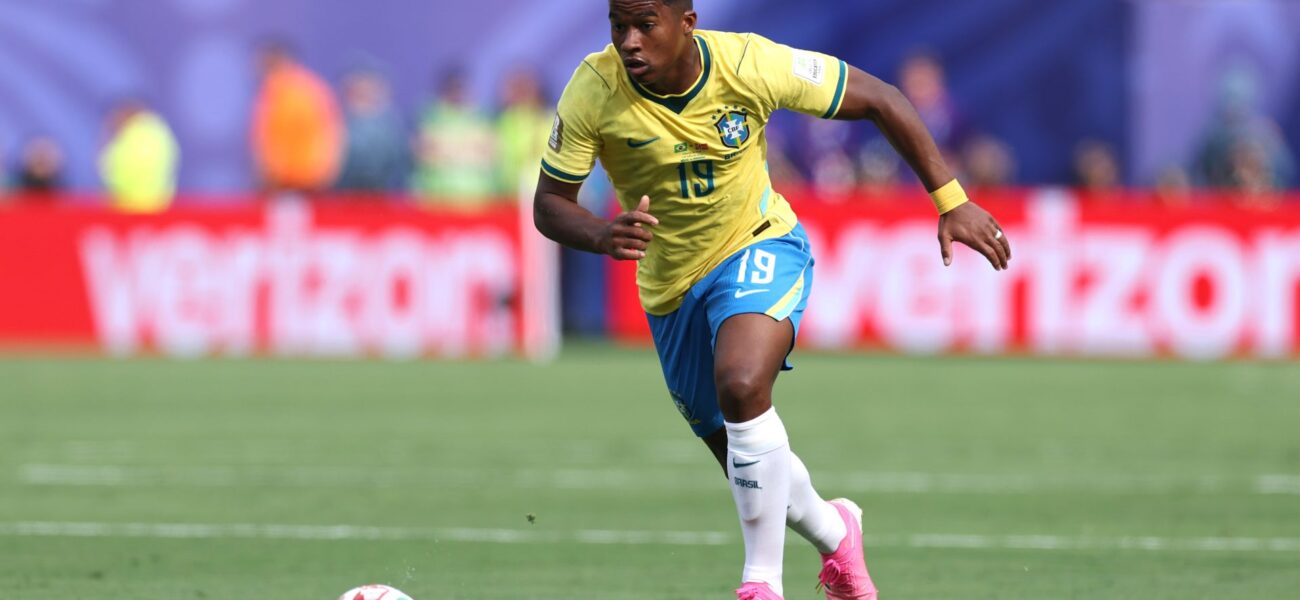
At just 19, the Brazilian forward, once touted as a generational talent, has returned to Madrid a different player than the one who left for the 2026 FIFA World Cup. He didn’t just underperform; he virtually disappeared. No goals. Not a single start. And he’s brought back with him an unwelcome guest: a swirling vortex of uncertainty around his place in Jose Mourinho’s redesigned Real Madrid squad. A single, heavy touch against Norway, missing a golden opportunity provided by Vinicius Jr., felt less like a youthful mistake and more like an ominous tremor in the seismic plates of his nascent career. But this isn’t merely about football; it’s about assets, returns, and the cutthroat market that underpins sports’ largest enterprises.
Mourinho, a man known for his icy pragmatism rather than sentimental attachments, won’t be losing sleep over a teenager’s bruised ego. “Every player, regardless of their transfer fee or reputation, has to earn their place. Merit isn’t bought; it’s proven on the pitch,” the Real Madrid manager reportedly quipped in a recent internal meeting, a quote obtained by sources close to the club. It’s a statement that rings with the harsh logic of corporate restructuring, thinly veiled beneath the veneer of competitive sport. Endrick isn’t just competing against the established titans of Real’s attack—Vinicius, Rodrygo—he’s now looking over his shoulder at Gonzalo Garcia, an academy product Mourinho appears genuinely keen to assess.
Garcia’s ascension, fueled by an impressive eight goals and three assists last season in the lower tiers, provides a ready-made narrative of internal competition—the homegrown hero vs. the imported phenomenon. And Endrick’s prior loan spell at Lyon, yielding eight goals and eight assists in just six months, feels like a distant triumph, almost irrelevant in the glare of the World Cup’s harsh lights. The pressure on young athletes from developing nations, particularly Brazil, to carry the hopes of an entire populace on their shoulders, isn’t lost on observers.
“The global spotlight can be an immense burden for any young player, particularly one expected to represent an entire nation’s dreams on the world stage,” noted Dorival Júnior, the Brazilian national team coach, reflecting on the team’s World Cup campaign. His words suggest an understanding of the psychological toll, something that’s often conveniently forgotten by the financial analysts. This pressure, too, translates into economic value—or, in Endrick’s case, potential depreciation. Remember, Madrid forked over what could reportedly amount to a staggering €60 million for the lad when he was just sixteen, an investment now under intense scrutiny. It’s less a purchase of a player — and more an acquisition of a future income stream.
📄 POLICY WIRE WHITEPAPER PUBLISHED: PAKISTAN'S NATIONAL SECURITY POLICY PRIORITIES
👉 READ BY CLICKING HEREWhat This Means
This saga isn’t just about football. It’s a microcosm of the brutal economics dictating talent acquisition and management in high-stakes industries, sports being but one high-profile example. For Real Madrid, a club with a global brand that transcends simple sporting competition, Endrick represents a significant capital outlay. A dip in perceived value, driven by a disappointing international performance, triggers alarms. His struggle reflects a broader trend: the insane expectation placed on young, commercially viable athletes who are, at the end of the day, still navigating the capricious waters of adolescence.
But the story also touches upon global development. In nations like Pakistan, where cricket is more than a game—it’s a national obsession and often the only path to escape crushing poverty for many—the rise and fall of young talents carry similar, profound weight. Their individual performances are conflated with national pride, economic hope, and a fleeting sense of global relevance. Failure isn’t just a personal setback; it’s a collective disappointment, scrutinized by millions who invest their emotional capital in these sporting heroes. Mourinho’s Real Madrid, for all its storied history, is still a corporation operating in a high-risk, high-reward global marketplace. Endrick’s struggle, then, isn’t just a sports headline; it’s a policy conundrum for how modern institutions manage high-value, high-stress human capital, often plucked from vastly different socioeconomic realities. The question for Madrid isn’t whether Endrick can play, but whether he can still deliver on a multi-million-dollar promise.