


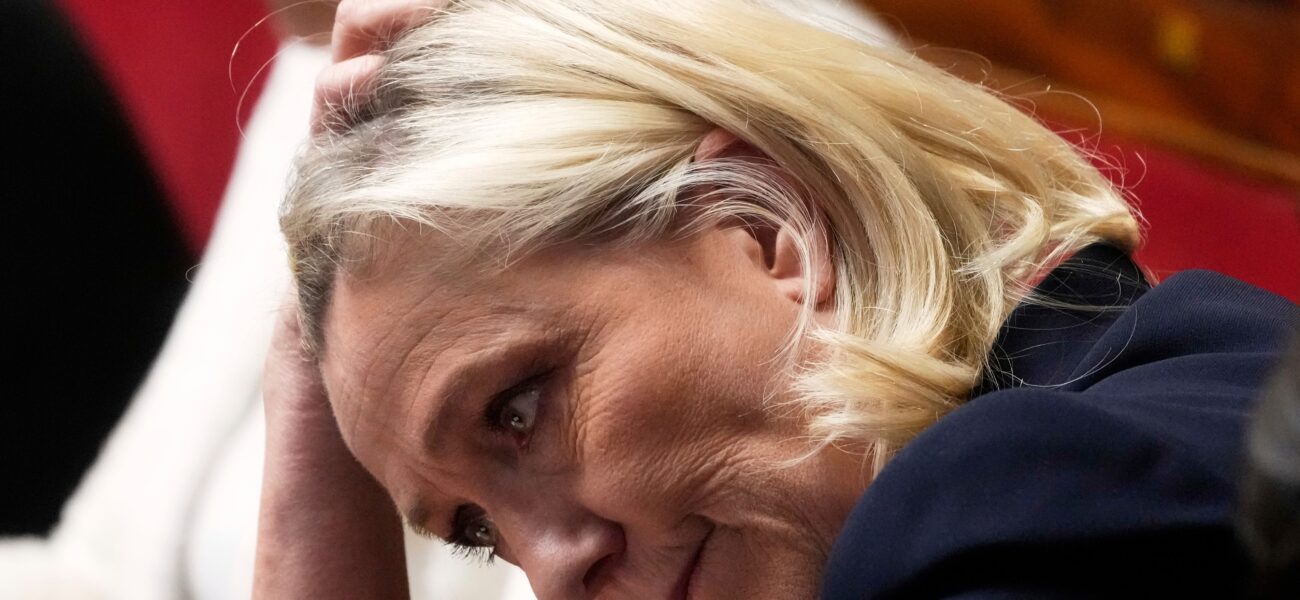
Court Ruling Imperils Marine Le Pen’s 2027 Bid
A crucial court ruling on misused EU funds threatens Marine Le Pen's 2027 presidential bid. Explore how this legal challenge could reshape French politics.

POLICY WIRE — Paris, France — France, a nation ever fond of a good dramatic turn, seems poised for another one. It’s not about the usual street protests, nor the latest culinary scandal, but the intricate machinations of justice—or what some might call political theatre by other means—unfolding quietly in the gilded halls of a Parisian appeals court. That’s where a seemingly routine decision could unravel the carefully constructed narrative of Marine Le Pen’s march to the Élysée in 2027, plunging France’s already fragmented political scene into genuine pandemonium.
Because the specifics of jurisprudence often decide the fates of leaders, this isn’t just another dry legal spat. We’re talking about a judicial review—ostensibly administrative, inherently political—of earlier verdicts related to allegations of fictitious jobs and misused European Parliament funds. Sounds technical, right? But the ripple effects could redraw the entire landscape for France’s next presidential contest. It’s got the chattering classes, — and frankly, the market movers, all chewing their fingernails.
Le Pen, leader of the Rassemblement National (RN), has always thrived on adversity. She frames every challenge as proof of the establishment’s deep-seated fear of her populism. But even for her, an adverse ruling here could hit differently. Think financial penalties, possibly an ineligibility—it’s not just a slap on the wrist. She needs to clear her name, fast.
“It’s a politically motivated witch hunt designed to derail the only true alternative for France,” Le Pen declared recently, her voice a practiced blend of defiance and exasperation. “They’ve tried it before; they’re trying it again. The French people see right through these tired old tricks.” Her supporters, predictably, eat it up. They see the deep state, the Swamp—whatever you wanna call it—coming after their champion. And in fairness, French politics often blends the judicial with the partisan in ways that’d make Westminster blush.
But the judiciary itself pushes back on such accusations. “No one is above the law, especially when it comes to taxpayer money. The principles of the Republic demand transparency and accountability, regardless of political stature,” commented a source close to the prosecution, preferring anonymity due to the ongoing nature of proceedings. And that’s the rub: even if it’s politically inconvenient, due process often takes its slow, unyielding course.
A setback for Le Pen here would do more than just mess with her campaign financing—it would dent her carefully curated image as a cleansed, credible stateswoman, ready to assume presidential responsibilities. She’s worked diligently to ‘de-demonize’ her party, shedding its more overtly xenophobic edges. A financial scandal, however—particularly one tied to public funds—smells less like ideological struggle and more like common corruption, a narrative much harder for ordinary voters to swallow. And let’s be real, a whiff of that really sticks.
📄 POLICY WIRE WHITEPAPER PUBLISHED: PAKISTAN'S NATIONAL SECURITY POLICY PRIORITIES
👉 READ BY CLICKING HEREFrance, after all, isn’t immune to its own economic anxieties. Latest data from Eurostat shows France’s public debt as a percentage of GDP stood at 111.9% at the end of 2023, well above the Eurozone average. That means people are extra sensitive to stories about misspent public funds. So the financial aspect of this ruling? It’s not just a campaign talking point. It’s real cash. It’s about how much the public trusts their leaders to handle the country’s dwindling resources responsibly.
Beyond the borders of metropolitan France, this entire saga resonates, too. Le Pen’s brand of assertive secularism, often bordering on anti-Muslim rhetoric, has significant implications for how France conducts itself on the world stage, especially concerning the Muslim world. Nations like Pakistan, where debates around religious freedom and integration are paramount, often view these internal French skirmishes—and the fate of figures like Le Pen—through a very particular lens. A politically weakened Le Pen might temper some of her more strident anti-immigration stances or policies regarding religious symbols in public life, influencing the tone of diplomatic exchanges and perceptions of France in these regions. But a vindicated Le Pen might embolden them.
What This Means
A definitive adverse ruling from this appeals court would shake the foundations of the Rassemblement National, plain and simple. First, it could trigger an internal power struggle. Jordan Bardella, her younger, media-savvy protégé, stands ready. His ascent might accelerate, but it’s not clear he commands the same deep loyalty or recognition among the party’s older guard. Such a premature leadership handover could destabilize a party built largely around Marine Le Pen’s personal brand and singular determination. There’s also the question of fundraising; legal battles are costly, — and public perception hurts donors.
Second, politically, it could offer a much-needed reprieve for Emmanuel Macron’s allies, allowing them to reposition ahead of the next cycle. Or, conversely, it might fragment the far-right vote, pushing some disenchanted Le Pen voters towards an even harder-line candidate, if one emerges—it’s a high-stakes gamble. This whole messy affair won’t just evaporate with a court judgment. It will undoubtedly feed into the public discourse on political ethics — and accountability for years to come. That much is clear. The very soul of France’s future, at least its immediate political trajectory, could well be decided by a few judicial pens—a classic example of how dry legal technicalities can dictate grand national narratives. For similar explorations of how local issues ripple globally, see Michigan Senate Contender Grapples with Unsparing Crossroads: Gaza Echoes and Urban Security or Slovak Populist’s Lifetime Annuity Bid Fizzles as Electorate Yawns. It seems every nation faces its unique flavor of political drama.