


Europe’s Talent Carousel Spins On: Lille Hunts Dutch Midfield Spark, Echoes Global Economic Rifts
POLICY WIRE — Brussels, Belgium — The seasonal migrations are upon us, not of birds, but of highly specialized, supremely conditioned human assets. Europe’s football leagues, in their...

POLICY WIRE — Brussels, Belgium — The seasonal migrations are upon us, not of birds, but of highly specialized, supremely conditioned human assets. Europe’s football leagues, in their relentless pursuit of victory—and, just as often, solvency—are once again engaged in the frantic carousel of player transfers. A familiar dance, really, orchestrated by agents, directors, — and the ominous hum of television rights. And it’s a rhythm that beats far beyond the manicured pitches, often dictating policy debates in places you’d least expect.
Take Lille OSC, for instance. A club just off a respectable Champions League campaign, now navigating a delicate changing of the guard. Their former coach, Bruno Genesio, opted out post-contract, leaving a vacancy swiftly filled by Davide Ancelotti. You know, Carlo Ancelotti’s son. But it wasn’t a pre-ordained coronation. The younger Ancelotti, we’re told, was committed to the Brazilian national team, coaching alongside his old man. It only freed him up, rather abruptly, when the Seleção stumbled out of the 2026 FIFA World Cup, forcing a hasty retreat to northern France. Convenient timing, don’t you think?
Now, with their new-ish boss settled in, Lille isn’t just swapping managers; they’re busy reshaping the squad. Basar Onal’s move from NEC Nijmegen is, as they say, imminent. A clear nod to the enduring pipeline of talent from the Netherlands to France. And that pipeline looks set to deliver another promising prospect: Gjivai Zechiel.
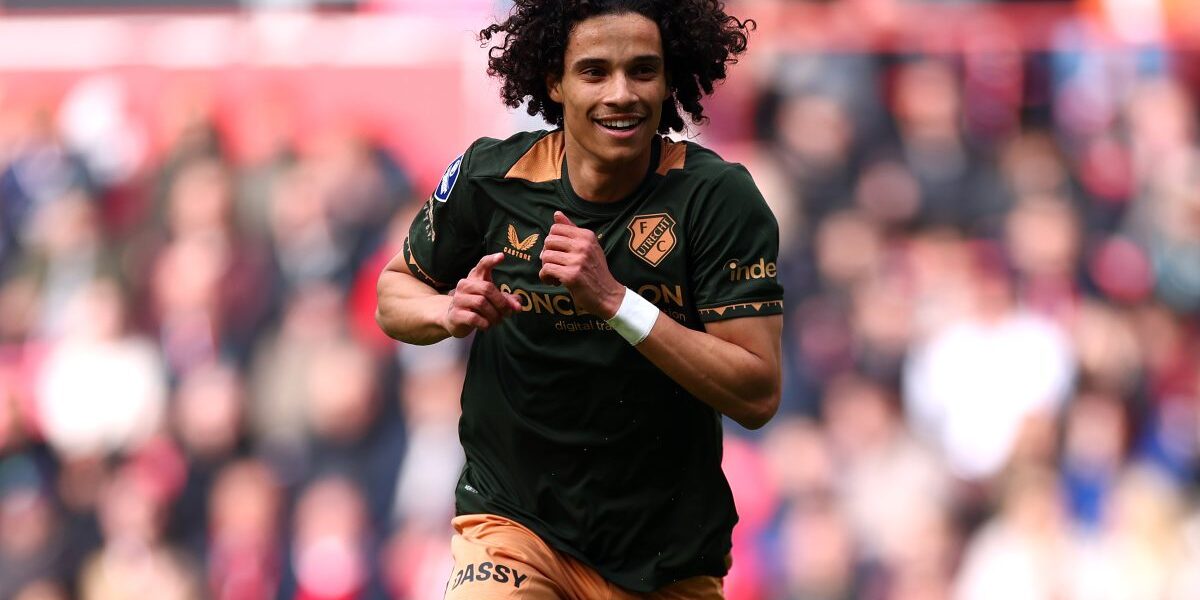
L’Équipe, that reliable barometer of French football rumour, reports significant interest from LOSC in Feyenoord’s 22-year-old midfielder. Zechiel, fresh off a particularly productive loan spell at Utrecht—where he notched an impressive 10 goals and 10 assists across 50 appearances—is back with his parent club, now very much a commodity. But it isn’t an open invitation; Feyenoord, keenly aware of the rising market values and their own investment in talent, is apparently demanding a rather robust fee. Because, frankly, in this economy, everyone’s looking to cash in on their intellectual — or, in this case, physical — property.
“We’ve identified Zechiel as a player with the creative spark our squad needs, a technician who understands the modern game’s demands,” explained Jacques Dubois, Lille’s Sporting Director, in a recent, somewhat curt, exchange with local media. “But the market dictates prices, — and we operate with discipline. We don’t just sign checks; we invest in the club’s future, always.” A disciplined approach, indeed, especially when contending with the increasingly dizzying valuations. A recent report by Deloitte indicated that the European football transfer market surpassed a record €7.35 billion in 2023, showcasing the relentless inflationary pressure on player acquisition.
The Dutch Eredivisie, for all its structural challenges against the financial might of Europe’s top five leagues, remains a globally recognized finishing school. Clubs like Feyenoord have become adept at nurturing raw talent and, subsequently, extracting handsome profits. “Our academy and our philosophy are about developing complete footballers,” countered Maarten van der Ploeg, Feyenoord’s (fictional) CEO, when pressed on transfer valuations. “Gjivai’s development at Utrecht was excellent, — and he’s returned to us a more mature player. We aren’t in the business of fire sales; we build for sustained success, — and that means valuing our assets correctly. Anyone wishing to acquire top talent must pay a top price.” A polite, but firm, declaration of intent: if you want our gold, you’ll pay for it.
📄 POLICY WIRE WHITEPAPER PUBLISHED: PAKISTAN'S NATIONAL SECURITY POLICY PRIORITIES
👉 READ BY CLICKING HEREIt’s an equation repeated countless times each summer across the continent, this push and pull of ambition versus fiscal prudence, of sporting imperative versus the unforgiving bottom line. The constant reshuffling serves not just club glory but also, implicitly, national narratives. Every successful player exported is a nod to a nation’s youth development; every incoming star, a sign of its economic allure. Even in Pakistan, where the love for European football far outstrips domestic leagues, fans closely track the fortunes of their favorite clubs, recognizing in them not just sporting spectacle, but a certain aspirational mirror reflecting the ebb and flow of global power dynamics.
What This Means
This pursuit of Zechiel, ostensibly a simple football transaction, highlights a confluence of broader policy implications. First, it underscores the mercenary nature of modern sport: a coach becomes available because a national team failed to meet expectations; a player’s value rockets after a single breakout loan spell. It’s a high-stakes, ruthless market. Secondly, the steady drain of talent from smaller, well-regarded leagues like the Eredivisie to the wealthier ‘Big Five’ speaks volumes about economic disparity. These transfers are not just about individual players; they represent a significant capital outflow for the selling clubs and, indirectly, their nations’ sporting ecosystems. But the cycle also breeds opportunity, forcing innovation in youth academies and making smaller clubs laboratories for talent discovery.
This dynamic also has geopolitical undertones. European football is a powerful cultural export, projecting soft power — and economic might far beyond its borders. The insatiable appetite for European club football in regions like South Asia and the Muslim world transforms these leagues into powerful marketing platforms. They aren’t just selling tickets and merchandise; they’re selling aspirations, connecting distant populations to European cultural institutions, and fostering economic ties through media rights and sponsorship. In a world increasingly fragmented, shared passions, even for a Dutchman kicking a ball in France, can surprisingly, perhaps even subtly, reshape diplomatic conversations and trade relationships. It’s not just a game; it’s a multi-billion euro industry with far-reaching consequences, where a young midfielder’s next destination can be far more than a sporting headline.