


Dirt & Doubt: New Mexico’s Microbe Menace Sparks Global Trade Anxieties
POLICY WIRE — Albuquerque, New Mexico — It wasn’t the searing summer heat or the perennial dust that kicked up unease in New Mexico last week; no, it was something far more insidious, invisible...

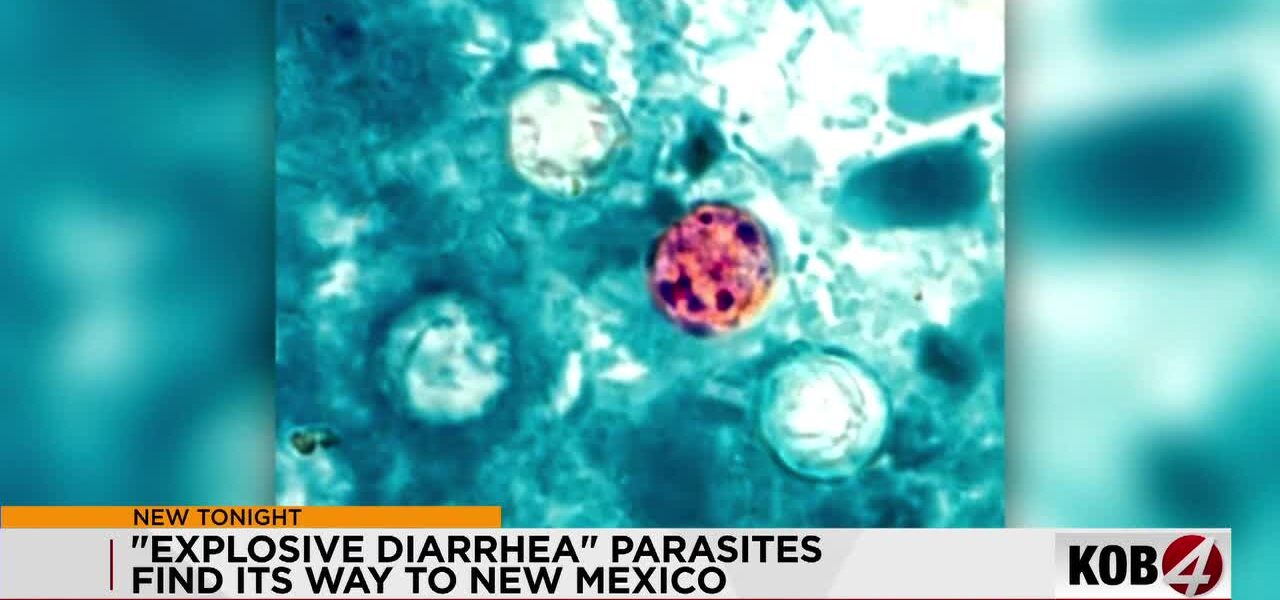
POLICY WIRE — Albuquerque, New Mexico — It wasn’t the searing summer heat or the perennial dust that kicked up unease in New Mexico last week; no, it was something far more insidious, invisible to the naked eye. An unwelcome visitor, microscopic in scope yet potent in its ability to sow discontent and, quite literally, upset stomachs, arrived. This isn’t about some grand political scandal or a border dispute (for once), but a public health alert over three confirmed cases of cyclosporiasis. But really, this little parasite isn’t just an American nuisance—it’s a mirror reflecting glaring global food security issues.
You’d think after everything the world’s been through, folks might just need a quiet moment. But nope. Health authorities are telling people to scrub up. It sounds almost comically simple, doesn’t it? Just wash your hands, clean your veggies. But the devil, as they say, lives in the details—and in the dirt, apparently. New Mexico Department of Health officials pinned the blame on contaminated fruit, vegetables, — and water. A classic trio of culprits, that.
Sarah Shrum Davis of the New Mexico Department of Health (she’s a good sport, by the way, having to deliver these grim tidings) initially tried to calm nerves. Her exact words were, [QUOTE_PLACEHOLDER] Right. Try telling that to someone glued to their porcelain throne. Cyclospora, for the uninitiated, isn’t a friendly bug. It causes what doctors term ‘cyclosporiasis,’ a gastrointestinal affair marked by watery diarrhea, cramps, nausea, fatigue, and generally just making you wish you’d stayed in bed. Or, maybe, that someone had properly washed the lettuce you ate last Tuesday.
But this isn’t just a localized inconvenience. No, the bug’s got a travel bug, apparently. Nationwide, cyclospora has made the rounds. It’s racked up 170 cases in Michigan alone, with more than two dozen already reported in Texas this year. You know, officials often see cases spike between May and August—a prime time for fresh produce, which means a prime time for these kinds of infections. And if 20 people across the country have ended up hospitalized because of it (yes, CDC data frequently notes such severe outcomes annually), then maybe a little panic isn’t so unwarranted for those who are, you know, actually sick.
It gets worse. The advice is rudimentary, frankly. You’re told the best prevention is to [QUOTE_PLACEHOLDER] Ms. Shrum Davis didn’t mince words there either: [QUOTE_PLACEHOLDER] Pretty straightforward. You’d assume this would be ingrained in basic public consciousness by now, but human nature, it seems, remains eternally optimistic (and occasionally, unhygienic). One shopper, Anthony Sarinana, captured this post-revelation commitment perfectly: [QUOTE_PLACEHOLDER] Another, Louie Ruelas, articulated the fundamental aversion to gut-wrenching illness quite succinctly: [QUOTE_PLACEHOLDER] It doesn’t. And Jasmine Contreras, presumably a juicing enthusiast, shared her revised regimen: [QUOTE_PLACEHOLDER] It’s a wake-up call, then, for the juicers and the salad-eaters, a reminder of the microscopic wild west hiding in your healthy greens.
This whole situation brings up questions that travel far beyond New Mexico’s dusty plains. Where do these fruits — and vegetables come from? Many, as we well know, hail from distant lands with less stringent, or perhaps just different, sanitation standards. Think South Asia. Or other parts of the Muslim world. Pakistan, for instance, has a massive agricultural sector—think mangoes, citrus, and various vegetables—that exports globally. When health warnings like this crop up, even three small cases here in Albuquerque, it casts a long shadow over those complex supply chains.
📄 POLICY WIRE WHITEPAPER PUBLISHED: PAKISTAN'S NATIONAL SECURITY POLICY PRIORITIES
👉 READ BY CLICKING HEREBut this isn’t just about some distant farm. It’s also about the very nature of interconnectedness. Because what starts as a small outbreak in a remote corner of New Mexico can highlight a fragility that exists worldwide. These types of parasitic infections aren’t confined by national borders; they hop on planes with fresh produce, travel by sea in cargo containers. The global trade of consumables—a linchpin of modern economies—also serves as a superhighway for microscopic perils. An annual average of 1,732 cases of domestically acquired cyclosporiasis with known onset dates were reported to CDC between 2018 and 2022 across the US. And this persistent threat demonstrates that simple public health advisories, though essential, mask far deeper systemic challenges.
What This Means
Politically, these seemingly minor outbreaks can have surprisingly hefty ramifications. A rise in foodborne illnesses, however small scale, often sparks a public outcry that, in turn, pressures policymakers to [QUOTE_PLACEHOLDER] For states like New Mexico, it could mean increased scrutiny on agricultural imports, potentially leading to trade friction. Consider a country like Pakistan, for example: its agricultural exports, whether fruits or vegetables, form a non-trivial part of its economy. Any hint of food safety concerns emanating from a seemingly unrelated American outbreak could translate into increased inspection hurdles, tariff threats, or even outright bans from importing nations.
Economically, it’s a drag on multiple fronts. For local businesses in New Mexico, it breeds consumer mistrust, forcing them to spend more on reassuring their clientele. For producers, it’s a direct hit if certain crops get blacklisted or undergo more rigorous—and costly—inspection protocols. And for the health system, it’s more diagnostic tests, more doctor visits, more hospitalizations, all piling up against budgets already stretched thin. Plus, let’s not forget the subtle shifts in consumer behavior; if people fear fresh produce, they might opt for less healthy, processed alternatives, creating downstream public health challenges. But it’s not only about local produce—this incident echoes a louder global call for stronger international cooperation on food safety standards. These kinds of low-level, high-impact incidents remind us that what we eat, and where it comes from, holds the potential for both economic boom and a collective, miserable bust. For more on how policy often struggles with evolving public threats, one might consider Metropolitan Meltdown: A Crisis of Confidence for the Diamond Class.
The immediate takeaway, the mundane truth of it all, remains rather simple: wash your hands, people. But for those watching the wires, parsing the deeper meaning, this isn’t just a simple health warning. It’s a reminder that global supply chains, national public health infrastructures, and individual responsibility are all entangled—and that a microscopic foe can, sometimes, expose the very largest cracks in our well-oiled world. State health officials mentioned a simple stool test can pin down if it’s this particular parasite, which is good. Don’t self-diagnose, they warn. It’s sound advice, I reckon. Just another day in the wonderfully interconnected, slightly germ-ridden, policy-laden modern world. Stay clean out there.
📖 GET YOUR FREE COPY NOW OF POLICY WIRE DIGITAL MAGAZINE JULY 2026 EDITION
👉 READ & DOWNLOAD FREE MAGAZINE