

The Unsung Attrition: Gaza’s Children Endure a Silent Summer
POLICY WIRE — Gaza City, Palestinian Territories — Another sweltering summer descends upon the Gaza Strip, not with the raucous joy of children at play, but with an eerie quietude—a quiet that speaks...

POLICY WIRE — Gaza City, Palestinian Territories — Another sweltering summer descends upon the Gaza Strip, not with the raucous joy of children at play, but with an eerie quietude—a quiet that speaks volumes of a generation perpetually held in suspended animation. Forget sandy toes or impromptu street football; here, childhood isn’t a phase for unbridled exploration, but a protracted negotiation with scarcity, surveillance, and the indelible scars of conflict. It’s a bitter truth, one often lost in the ceaseless political jockeying and strategic posturing that defines this beleaguered territory. And it’s a reality that’s been baked in for far too long, like the crust of stale bread distributed by aid agencies.
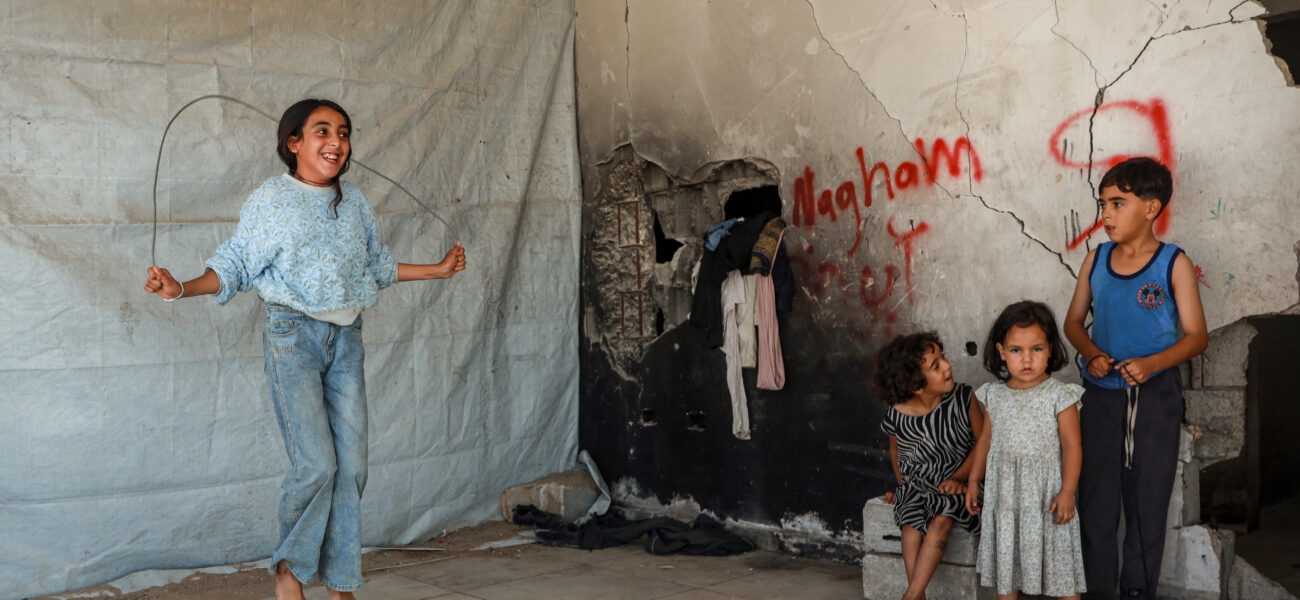
For young Ghazans, a summer without genuine reprieve has become the bleak norm. The ‘vacation’ from school doesn’t usher in carefree days, but often intensifies the pressures at home. Parents, battered by a blockade now stretching beyond sixteen years—think about that for a second—struggle to provide even basic needs. Electricity cuts out, sometimes for ten or twelve hours a day. Clean water? A luxury. These aren’t just inconveniences; they’re the foundational fractures of an entire society, manifesting most acutely in its most vulnerable members. What’s a game of hide-and-seek when there’s nowhere safe to hide, or nothing much to seek?
“We’re witnessing the silent erosion of a future, day by day, year by year,” stated Philippe Lazzarini, Commissioner-General of the United Nations Relief and Works Agency (UNRWA), in a virtual press briefing last month. He didn’t mince words. “The psychological trauma is compounding; it’s a ticking time bomb we all keep ignoring.” His sentiment echoes through the cinderblock streets, where laughter is too often a fleeting echo rather than a consistent soundtrack. Because when the world outside has moved on, these kids remain stuck in a loop of limbo — and deprivation.
But the narrative of Gaza’s children isn’t merely one of deprivation. It’s also one of astonishing, if heartbreaking, adaptation. They learn to interpret the language of drones humming overhead, to distinguish between artillery fire and celebratory fireworks (there aren’t many of the latter anymore). Play becomes inventive, sometimes morbid. Instead of building sandcastles, they build miniature replicas of bombed-out buildings. It’s a macabre coping mechanism, a chilling reflection of the adults around them, navigating their lives under the elusive hand of justice.
“The international community speaks of rights, of peace, of humanitarian aid. But for our children, these are abstract words,” commented Dr. Mustafa Barghouti, a prominent Palestinian physician — and politician, from Ramallah last week. His voice was weary. “They don’t feel a global safety net. They feel walls. And they feel the constant dread that another escalation is always just around the corner.” You can almost taste the frustration in his remarks, a frustration that resonates across the broader Muslim world, from Islamabad to Jakarta, where empathy for Palestinian hardship runs deep, fostering a regional unease that too often goes unheeded by Western policy circles.
It’s not just the immediate dangers, mind you. The cumulative effect is devastating. A UNICEF report from late 2023 indicated that over 500,000 children in Gaza required psychosocial support, a number that has certainly rocketed since then. These aren’t just statistics; they’re individual lives, entire childhoods rewritten by geopolitics. They’re kids who have seen more than any child should, their innocence replaced by a weary cynicism that shouldn’t belong on such young faces. It’s a silent crisis, tragically similar to others that too often prompts society’s shrug.
What This Means
The perpetual state of childhood crisis in Gaza carries profound and unsettling implications, far beyond its narrow confines. Politically, it represents a damning indictment of decades of stalled peace processes and an ineffective international framework. It breeds generational resentment and fuels cycles of extremism, making any future path to stability infinitely more complex. Diplomats talk about ‘two-state solutions’ or ‘day after’ scenarios, but they rarely confront the psychological damage being wrought daily upon future generations of Palestinians and Israelis alike. This human cost isn’t incidental; it’s central to any durable resolution.
Economically, this is an existential quagmire. A society whose youth are denied education, psychological stability, and opportunities to flourish is a society incapable of meaningful development. The lack of infrastructure, chronic unemployment (which hovers around 45% overall and much higher for youth), and limited access to global markets ensures Gaza remains a donor-dependent entity, a perpetual drain on international goodwill rather than a burgeoning economy. It also represents a missed opportunity—a reservoir of human potential squandered, year after agonizing year, because policy choices continue to prioritize geopolitical leverage over basic human dignity. The ripple effects of this prolonged destabilization aren’t just local; they reverberate across regional alliances, impacting everything from security pacts to trade agreements across the Middle East and wider Islamic world.