


Pentagon’s Latest Encore: Strikes and Silence in the Iranian Arena
POLICY WIRE — Washington D.C. — Another Sunday passed, another Pentagon press release dropped, marking the completion of yet another round of what it termed “self-defense...

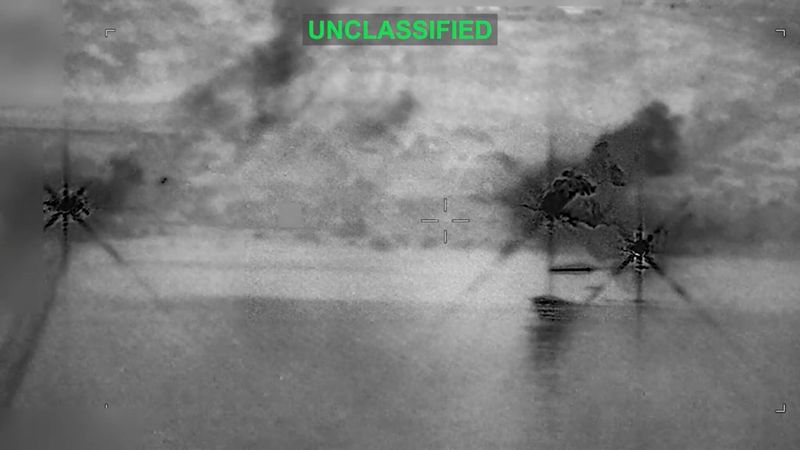
POLICY WIRE — Washington D.C. — Another Sunday passed, another Pentagon press release dropped, marking the completion of yet another round of what it termed “self-defense strikes.” This isn’t groundbreaking news, let’s be honest; it’s more like a recurring feature in the grim geopolitical drama that plays out daily in the Middle East. The latest action, ostensibly targeting Iran-linked assets, follows a playbook we’ve seen far too many times, each episode layering fresh complexity onto a region already brimming with it.
It’s gotten to the point where such declarations often feel less like breaking news and more like procedural announcements—a bureaucratic update on an ongoing, low-intensity conflict. You hear it, you nod, — and then you wait for the predictable fallout. For months, you’ve seen Washington make claims, — and then these strikes follow. This latest batch, the third in quick succession, arrives on the heels of repeated admonitions to Tehran and its various proxies.
The messaging out of Foggy Bottom is consistent, almost painstakingly so: these aren’t offensive acts. They’re merely a means to [QUOTE_PLACEHOLDER], to [QUOTE_PLACEHOLDER]. They’re framed as necessary interventions to deter future attacks, especially on US personnel scattered across Iraq and Syria. But deterrents, especially in this neighborhood, rarely deter much for long. In fact, sometimes, they feel like they just accelerate the next skirmish.
And when Washington says “Iran-linked,” it implies a sprawling, often shadowy network of militias, financiers, and logistical hubs. Pinning down direct attribution for any initial provocation becomes a job for archaeologists of intelligence, really. Tehran, for its part, maintains a steady public distance, but its influence and strategic depth in the Levant are pretty undeniable. It’s a tangled web, isn’t it? You can’t just snip one thread — and expect the whole thing to unravel. Instead, you get a new knot.
Meanwhile, the implications spread. Pakistan, an influential regional power with its own complex relationship with Iran, watches this closely. Islamabad has its own delicate balancing act, navigating centuries-old cultural ties and shared borders with its larger Persian neighbor, while simultaneously attempting to maintain good relations with the West. Any perceived escalation between the U.S. and Iran invariably ratchets up tensions along Pakistan’s western frontier. And that means a renewed headache for a country that’s got plenty of its own headaches already—economic instability, persistent insurgency, and the ever-present shadow of Afghanistan’s future. It’s not just about what bombs drop, but where the political dust settles afterward.
The U.S. Central Command, bless its methodical heart, announced the completion of these strikes without much fanfare. [QUOTE_PLACEHOLDER], a statement read. [QUOTE_PLACEHOLDER]. One suspects these facilities were less about state-of-the-art armaments and more about logistical nodes, training compounds, or storage sites—the sorts of places that can be rebuilt, relocated, or re-outfitted within a few weeks, sometimes faster. We’ve seen this dance before. It isn’t often a knock-out punch; it’s usually a glancing blow that invites a retaliatory jab, escalating the ongoing shadow boxing match. According to a report by the United Nations Office for Disarmament Affairs (UNODA) from 2021, reported civilian casualties from military actions in the broader Middle East have risen by nearly 15% over the past decade, a stark reminder of the human cost of these recurring episodes.
It’s almost as if the U.S. government operates on a default setting where the occasional missile strike serves as a kind of geopolitical punctuation mark—a clear signal, it believes, to adversaries. But sometimes, signals just get lost in translation. Sometimes, they’re received as an invitation for further friction. For Pakistan and other states in South Asia, these moves contribute to an environment of lingering uncertainty, directly affecting strategic planning and regional cooperation. There are whispers of a shifting global economic order, and instability in one theater only complicates how nations manage their own interests on that wider stage. And frankly, the folks who actually live there? They’re tired of being caught in the middle.
What This Means
The immediate political implication here is pretty clear: a reinforcement of the Biden administration’s commitment to what it sees as its defensive posture in the region. But this commitment comes at a price. Domestically, these operations rarely move the needle much anymore, they’ve become almost background noise, a reflection of American strategic fatigue. Globally, however, each strike feeds a narrative of continued interventionism, fueling resentment and providing fodder for anti-Western sentiment in capitals from Tehran to Islamabad. Economically, prolonged instability in the Gulf and surrounding areas always threatens oil flows, driving up prices, and creating ripple effects across global markets. Investors hate uncertainty; this current back-and-forth guarantees it. Beyond that, the constant threat of a regional conflagration pushes nations like Pakistan to deepen strategic alliances elsewhere, perhaps even away from traditional Western partners, in a bid to insulate themselves from these unpredictable spikes. It doesn’t distort global stability overnight, but it certainly doesn’t help build it either.