


Hoops Imperialism: The Futile Quest for Sporting Hegemony Amidst Scant Assets
POLICY WIRE — Washington D.C. — They say fortune favors the bold, but sometimes, even the boldest maneuvers run headlong into hard-nosed arithmetic. Miami, a city synonymous with ambition and flash,...

POLICY WIRE — Washington D.C. — They say fortune favors the bold, but sometimes, even the boldest maneuvers run headlong into hard-nosed arithmetic. Miami, a city synonymous with ambition and flash, finds its premier basketball franchise – a de facto civic ambassador, really – navigating a high-stakes chess match where its coffers are decidedly threadbare. This isn’t just about roundball anymore; it’s a sobering parable on resource scarcity, on the costs of global aspiration, and the bitter taste of overextension, played out on the brightly lit stage of professional sport.
After their much-touted acquisition of Giannis Antetokounmpo—a transaction that certainly raised eyebrows from Tallahassee to Timbuktu for its audacious financial gymnastics—the Miami Heat are now, rather ironically, caught between a rock and a hard place. The whispers of adding another basketball titan, Kevin Durant, sound less like a winning strategy and more like wishful thinking from an executive suite whose imagination might be outpacing its balance sheet. You can’t just wish away asset depletion, can you? It’s a brutal reality.
“We’re always exploring options to enhance our competitive posture,” stated a somewhat clipped Pat Riley, the venerable President of the Miami Heat, during a brief, uncharacteristically evasive press conference. He was careful, though, wasn’t he, to temper expectations. “But prudent fiscal management, alongside strategic talent deployment, remains our guiding principle. It’s about sustainability, not just splash.” This echoes what countless nations and corporations wrestle with daily: the siren song of immediate power versus the grinding hum of long-term stability.
The predicament faced by South Florida’s beloved hoops contingent isn’t entirely unique, of course. It mirrors the tough choices made in, say, Islamabad, where governments must decide if grand infrastructure projects — financed with often precarious foreign debt — are worth the deferred cost to social welfare programs. It’s a perpetual balancing act. And when you’ve already thrown a rather hefty amount of your metaphorical budget into one high-profile venture, making another simply becomes… tougher. You’re left scraping the barrel, it seems.
Economic analysts have been quick to draw parallels. “The notion of a ‘super-team’ in professional sports now operates on a globalized market logic that frankly transcends national borders,” explained Dr. Anika Rahman, a senior fellow at the Center for Global Policy — and Economics. Her gaze often shifts between geopolitical hot zones — and the salary cap intricacies of professional sports. “The capital—both financial and human—required to consolidate such extraordinary power increasingly demands sacrifices akin to those seen in resource-strapped emerging economies. We’re seeing asset bubbles, and not just in housing or tech.” One comprehensive study from the Georgetown Institute for Sports & Policy Analysis indeed found that, since 2010, the top three player contracts on any championship-contending NBA team typically absorb an average of 68% of the available salary cap, forcing teams into incredibly tough, even unsustainable, decisions for complementary talent. That’s a staggering figure.
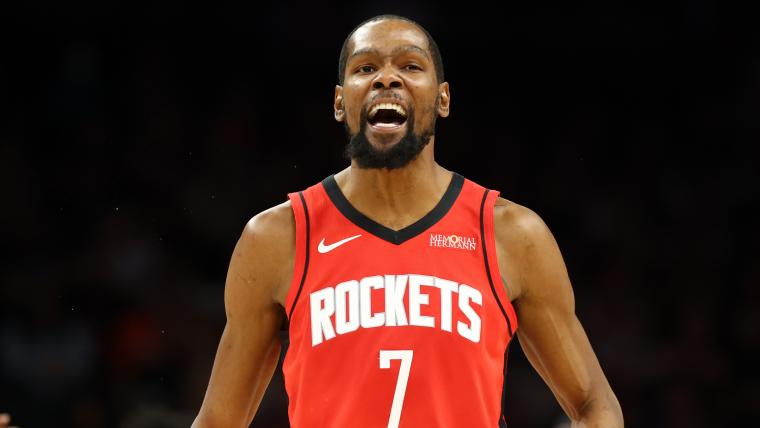
The issue isn’t Kevin Durant’s undeniable prowess. He remains, without question, an elite scorer. But the market dictates price, and the price for a player of his caliber, particularly for a team that has already divested significant draft picks and promising young players—its ‘future capital,’ if you will—is, well, prohibitive. The Miami Heat’s situation highlights a stark reality: after emptying the clip for Giannis, there’s just not much ammunition left for another superstar salvo. And because they’re in that bind, the options shrink considerably.
Gray Deyo, a well-regarded sports business observer, bluntly summed it up, noting that the “asking price that’s tied to Durant is likely much higher” than Miami could reasonably afford after their previous blockbuster deal. That’s pretty much it. They don’t have the assets, so they don’t get the guy. It’s a lesson for aspiring economic powers, isn’t it? Just because you want to wield significant influence doesn’t mean you automatically can, especially if your strategic reserves are already drained.
What This Means
The Heat’s predicament is a microcosm of broader geopolitical and economic challenges concerning resource allocation and ambition. In an era defined by intense global competition, nations and even athletic franchises operate under constraints that are increasingly visible. For the Heat, the decision to push for Antetokounmpo was a strategic bet on a single, high-impact asset. It reflects a trend where organizations (or nations) consolidate power by securing ‘super-talent’ or ‘critical technologies’—but at immense opportunity costs. Their inability to acquire Durant now speaks to a policy of financial exhaustion, forcing a recalibration of grand designs. This isn’t just about winning basketball games; it’s about the limits of economic leverage, even for those operating in ostensibly ‘rich’ markets. You can’t print trade assets, can you? It means Miami will likely need to adopt a different policy framework: one focused on shrewd development, complementary support staff, and perhaps, a long, quiet rebuild of their asset portfolio, rather than relying on another headline-grabbing acquisition. A quiet diplomacy of team-building, one might say.