


Dollar’s Unsteady Throne: BRICS and the Shifting Global Economy
POLICY WIRE — Washington D.C., USA — The dollar, that immutable fixture of global commerce, has enjoyed a rather extended reign. For generations, it has been the undisputed medium of international...

POLICY WIRE — Washington D.C., USA — The dollar, that immutable fixture of global commerce, has enjoyed a rather extended reign. For generations, it has been the undisputed medium of international exchange, the quiet architect of world markets, the trusted currency behind the most intricate and the most mundane transactions. It’s simply, stubbornly, there. But complacency, as any grizzled observer of global dynamics knows, can be an expensive habit. What if the comfortable certainty of the greenback’s supremacy is, at long last, facing a determined, organized challenge?
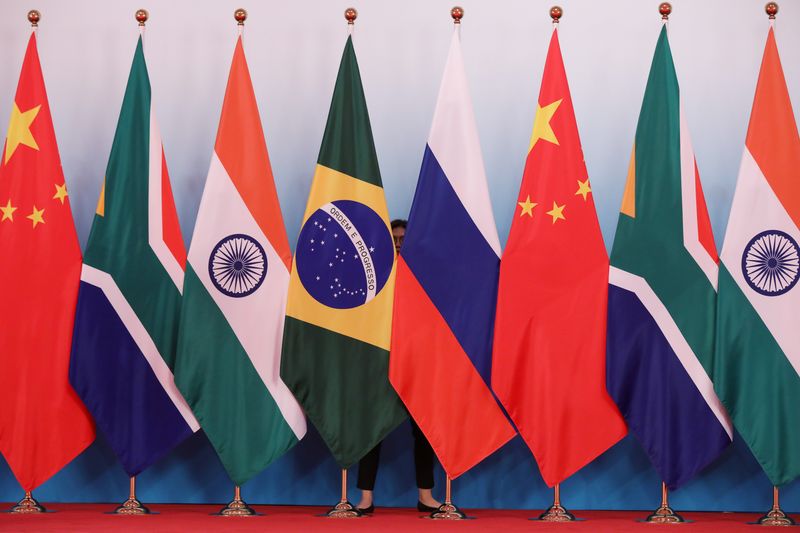
It isn’t a sudden insurrection, no. It’s a slow, methodical chipping away, brick by—well, by BRIC. This shifting economic architecture isn’t headline-grabbing stuff every Tuesday, but it’s the constant murmur in treasury departments and the growing heft in international trade negotiations that ought to demand attention. And James O’Neill, the economist who cooked up the BRIC acronym a couple decades back, he sees it. He’s always had a knack for peering over the horizon and pinpointing where the economic currents are dragging us, often long before the waves start hitting the shore. His latest observation is a bit understated: that the idea of BRICS alternatives to dollar no longer a ‘fantasy’ and it’s the kind of pronouncement you’d be foolish to ignore, even if it lacks theatrical flair.
O’Neill’s point isn’t about instant collapse—nobody, not even the most fervent de-dollarization advocate, is predicting that the US dollar is simply going to vanish from the global stage tomorrow. That’s absurd. What’s in play is a steady, almost tedious, process of reducing reliance. Countries are growing weary of the inherent vulnerabilities, the political leverage that comes attached to operating overwhelmingly in a single national currency, especially one wielded by a distant—and occasionally capricious—power. But, really, can you blame them? Especially when the dollar’s weaponization during geopolitical spats has become an increasingly transparent tactic.
And let’s be straight, the data is starting to talk. The share of US dollar reserves held by global central banks, for instance, slipped to 58.4 percent by late 2023, according to figures compiled by the International Monetary Fund—a significant dip from levels routinely above 70 percent just two decades prior. That isn’t a nose dive, it’s a controlled descent, but a descent nonetheless. Nations like China and Russia have been overtly advocating for local currency settlements in bilateral trade, seeking to insulate their economies from potential US sanctions. This isn’t a fringe activity anymore; it’s an institutionalized approach. But Russia’s economy, crippled by sanctions, is increasingly forced into such arrangements. China’s growing global economic footprint gives it leverage to make these proposals palatable to trade partners. [QUOTE_PLACEHOLDER]
Consider the energy markets, where historically every major transaction is denominated in dollars. Iran, for example, long stifled by Western sanctions, has been a forced pioneer in alternative payment systems, dealing with China and India using rupee and yuan—a pragmatic response to geopolitical isolation. Meanwhile, Pakistan, facing perpetual balance-of-payments woes and a deeply indebted economy, is carefully watching these shifts. For Islamabad, reducing dollar dependence isn’t some abstract economic theory; it’s a potential pathway to greater fiscal autonomy, a way to potentially mitigate external shocks, especially given its deep strategic and economic ties with Beijing. And while its own financial health remains tenuous, the allure of diversifying away from dollar-denominated debt and trade becomes increasingly attractive.
We’ve seen nations, from Saudi Arabia exploring non-dollar oil sales to Brazil using the yuan in trade with China, slowly but surely chipping away at that monolithic structure. This isn’t just about economic expediency; it’s also a statement of national sovereignty, a reclaiming of economic agency. There’s a subtle defiance embedded in these maneuvers, a collective pushback against what some perceive as the unipolarity of global finance.
But the road to de-dollarization is long, potholed, — and fraught with risk. The dollar’s deep liquidity, its status as a safe haven, and the sheer inertia of decades of use mean it won’t be dethroned easily. No, that’s just not how these things work. What we’re witnessing, though, is a gradual unbundling—a quiet revolution being negotiated across boardrooms and state capitols, far from the dramatic pronouncements usually associated with geopolitical upheaval. And that makes it all the more significant. One day, we’ll look back and realize the tipping point wasn’t a sudden explosion, but a series of calculated, almost boring, bureaucratic decisions that amounted to a tectonic shift. It’s a game of inches, this economic long game, — and the BRICS nations are proving themselves patient players.
What This Means
This isn’t about the US losing its shirt overnight. Rather, it suggests a multipolar financial world emerging from the shadow of unipolar dollar dominance—a world that might be messier, perhaps less efficient in the short term, but also potentially more resilient against concentrated economic weaponization. For countries like Pakistan, already juggling substantial external debt and navigating complex regional power dynamics—see our reporting on when faith turns factional—the implications are tangible. A de-dollarized trade environment could open new avenues for economic partnerships, particularly with BRICS members and the broader Muslim world, lessening reliance on Western-dominated financial institutions. However, it also demands new sophisticated risk management — and greater economic diplomacy. The political maneuvering will be just as intricate as the economic one. The absence of a clear, single alternative means fragmented blocs are likely to emerge, forcing nations to make tougher choices about their alliances and payment infrastructure. It won’t be a straight path, but it’s one we’re on now.