


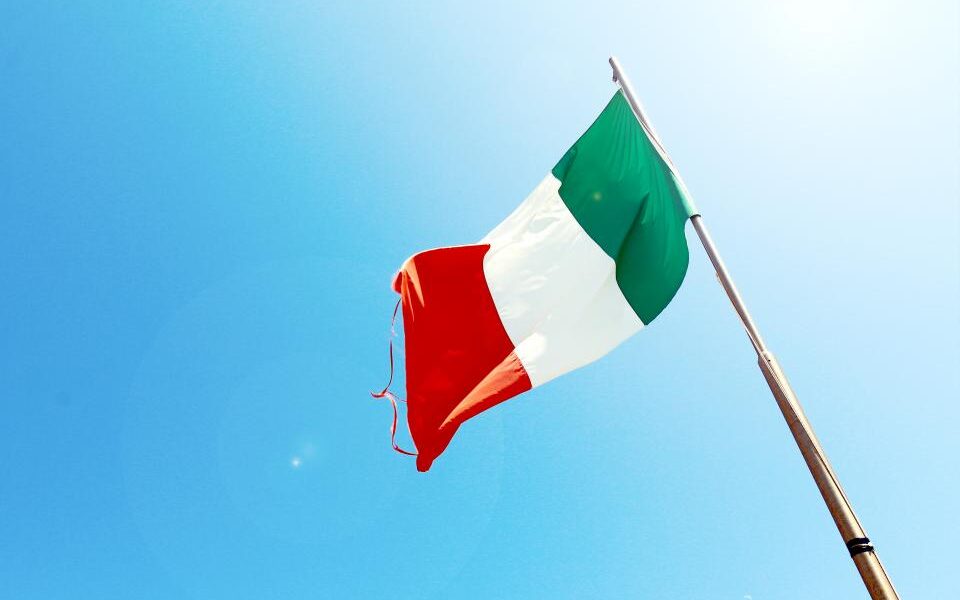
Italy’s Line in the Sand: Supreme Court Wades Into Fractious Citizenship Fight
POLICY WIRE — ROME, Italy — Picture a family, generations removed from the bel paese, perhaps an elder with a fading memory of the Apennines, yet clinging fiercely to the notion of Italian blood....

POLICY WIRE — ROME, Italy — Picture a family, generations removed from the bel paese, perhaps an elder with a fading memory of the Apennines, yet clinging fiercely to the notion of Italian blood. They’ve planned, saved, even imagined the day their children would finally claim the passport that feels rightfully theirs. But Rome’s often-capricious legal winds have lately felt like a gale, snatching that dream right out of countless hands. Because, you see, it wasn’t just some administrative hiccup that cut off eligibility for millions of people. It was a court ruling that decided, in essence, ‘your Italianness isn’t Italian enough’—and now the Supreme Court has to sort out the mess.
It’s not just a dry legal tangle; this is a deeply human drama, unfolding on a European stage already jittery about national identity. The contentious judicial interpretation, stemming from a lower court, basically slammed the brakes on who exactly qualifies as an Italian citizen through jure sanguinis – the right of blood. For decades, descendants born to Italian women who married foreign men before January 1, 1948, faced complications, often denied automatic citizenship because, at the time, women lost their Italian status upon marriage. Subsequent rulings broadened interpretation, making their descendants eligible. But then, a more recent, frankly punitive, reading tightened things up, potentially disenfranchising anyone relying on a maternal lineage link that occurred pre-1948 – and not just them, but their entire downstream progeny. Millions could suddenly find themselves without a clear path. Think about that: a piece of paper, a court’s reinterpretation, wipes away a connection across generations.
“This isn’t about protecting our borders from present-day challenges,” quipped Senator Roberto Calderoli, a leading voice from the Lega Nord, known for his unyielding stance on immigration and national identity, to Policy Wire. “It’s about safeguarding the purity of what it means to be Italian. There’s a certain — call it a spiritual — dimension to ancestry that some contemporary interpretations simply ignore.” His comments, naturally, infuriated those who see it as a selective, exclusionary tactic.
On the flip side, Elly Schlein, leader of the Democratic Party, didn’t hold back her criticism. “To deny citizenship based on a centuries-old interpretation of gender, to punish descendants for the societal norms of their grandmothers? It’s utterly absurd, discriminatory, and frankly, a betrayal of millions who consider themselves Italian by heritage,” she declared in a recent parliamentary session. “We must champion an Italy that embraces, not arbitrarily excludes.” And her party, naturally, is banking on that sentiment resonating.
But the practical implications stretch far beyond mere sentiment. They touch economics, demography, — and Italy’s place in a globalized world. An analysis from the Italian National Institute of Statistics (Istat) indicates that while Italy granted citizenship to approximately 130,000 foreign residents in 2022—a figure still modest compared to larger EU nations—this new ruling risks pushing ethnic Italians out of the potential pool. That’s a significant hit to potential immigration by people already culturally predisposed to the country. It’s a strange calculus, denying your own.
📄 POLICY WIRE WHITEPAPER PUBLISHED: PAKISTAN'S NATIONAL SECURITY POLICY PRIORITIES
👉 READ BY CLICKING HEREAnd it gets worse when you consider the sheer geographical breadth. Large diaspora communities, from Brazil to Argentina, and yes, even smaller pockets across the Muslim world—imagine Italian merchant families who settled generations ago in places like Pakistan’s Sindh or Lebanon’s Beirut—suddenly face legal hurdles for their progeny seeking recognition. They’ve built lives, often maintaining strong cultural ties, expecting their children would retain access to their ancestral land’s citizenship. Now, they’re facing bureaucratic nightmares or outright rejection. It creates a global uncertainty, feeding into an existing narrative across Europe where nationalist movements redefine who truly ‘belongs’ – often through increasingly restrictive, convoluted rules.
What This Means
This Supreme Court review isn’t just another dry legal appeal; it’s a proxy battle for Italy’s soul—and frankly, a broader European struggle over identity. If the higher court upholds the stricter interpretation, it’s a win for nationalist forces keen on a more exclusive vision of Italianness, further emboldening those who advocate for harder lines on immigration and naturalization for new arrivals. It signals a move away from embracing a more inclusive, diasporic understanding of nationhood, which ironically, has been Italy’s strength in its foreign relations and soft power for decades.
Economically, closing the door on millions of potential citizens—people who might bring capital, skills, and investment back to a country desperately needing an injection—feels counterintuitive. Italy, like much of Europe, faces a demographic squeeze. Deliberately shrinking the pool of individuals with strong historical ties capable of injecting fresh blood into its society and economy? That’s not merely short-sighted; it’s an active disservice to Italy’s future prospects. It pushes the nation closer to the more insular political philosophies gaining traction elsewhere on the continent. Expect this ruling to either trigger a much-needed realignment toward a more expansive definition of who can be Italian, or solidify a restrictive precedent with global, multi-generational consequences. The stakes are uncomfortably high for so many.