


FIFA’s World Cup Meltdown: Governance Failure Exposed
A 5-hour World Cup kick-off delay exposed FIFA's severe governance gap. Unpack the chaos, poor communication, and leadership failures that impacted teams & fans.

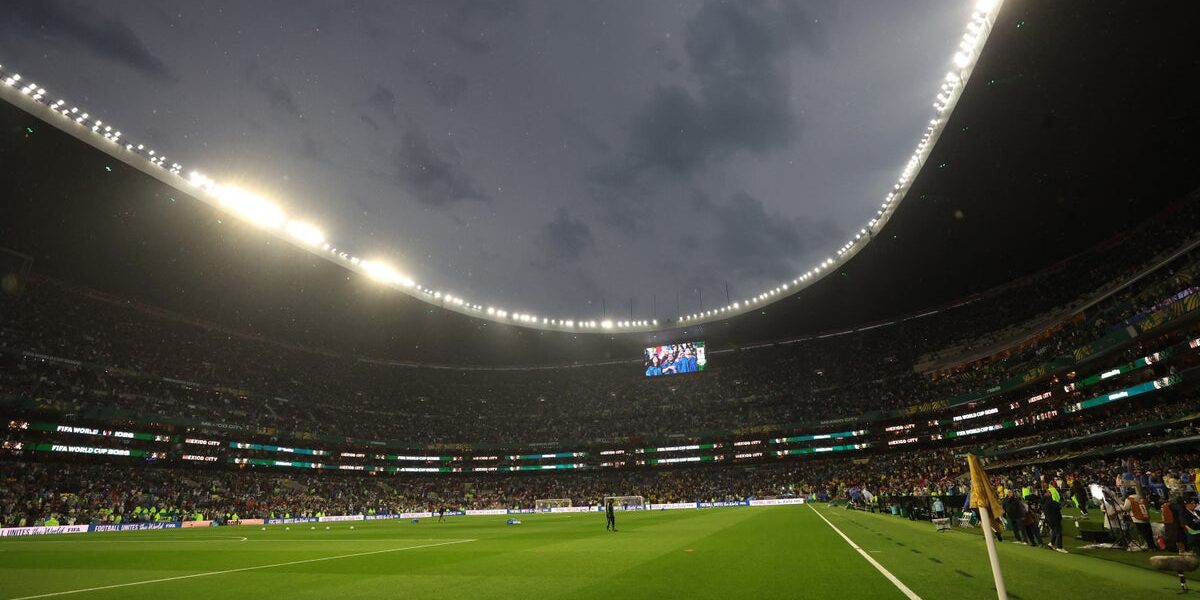
POLICY WIRE — Mexico City, Mexico — The digital ticker on thousands of meticulously planned travel itineraries went rogue, not due to a system glitch, but thanks to an extraordinary display of organisational disarray from football’s supposed global stewards. For five surreal hours last Friday, FIFA—the very body entrusted with the precise choreography of the world’s most watched sporting spectacle—couldn’t manage to nail down a kick-off time for a World Cup knockout match. Mexico versus England. It’s a multi-billion dollar operation; you’d think they’d have a calendar sorted. But nope, turns out a forecast of thunderstorms could unravel the whole damn thing.
Just after noon local time, while millions across the UK were bracing for a potentially sleep-depriving 1am kick-off to cheer on their lads, Mexican broadcasters started yelling that the Sunday match was bumped forward by six hours. A 12pm local start. Javier Aguirre, Mexico’s head coach, didn’t hold back. He was, frankly, fuming on air. "The schedule change hits like a kick in the stomach," Aguirre griped, visibly agitated. "We have to change the entire plan. I don’t like it at all, nor do my players. Of course, the food, the nap, the sleep, the physiotherapy, everything, everything—it seems trivial, but it isn’t." It sounds like an overreaction, doesn’t it? But every professional athlete will tell you, these micro-routines? They’re gospel.
FIFA, meanwhile, played possum. Their social media channels remained stoic, broadcasting pristine images of stadium exteriors, probably designed to project an air of impenetrable calm. Yet behind the scenes, something had snapped. Insiders later admitted negotiations were, in fact, happening. But why was this public before it was settled? Mexican media had reported it as gospel, a done deal. And England supporters, many of whom had poured upwards of two thousand dollars into last-minute, labyrinthine travel plans to hit Mexico City right before the original kick-off—that money, those precise timings—suddenly looked like a very expensive joke. Fan accounts circulating suggested scores were scrambling, desperately trying to rebook flights — and hotels on a dime. They couldn’t get a clear answer, — and no one from the official channels was stepping up.
Because here’s the kicker: at the very same time, FIFA President Gianni Infantino was elsewhere, beaming in the Miami stands, mugging for selfies with celebrities at some other match. One almost wants to commend the man’s knack for always appearing perfectly detached from the brewing storms in his own backyard. The global football body’s public relations machinery, normally so slick, had seized up. They were radio silent, letting a vacuum form that only rumors — and panicked news flashes could fill. "Frankly, we were astounded," an anonymous English Football Association official told Policy Wire, requesting anonymity to speak freely. "We hadn’t been consulted, had no official notification of discussions, and then suddenly, our entire preparations were up in the air. It’s just not how you run a world-class event." No, it’s really not.
The root cause? Thunderstorms. Mexico City, this time of year, sees them like clockwork—fierce — and sudden. Contingency plans are a must. But what’s not unavoidable is the haphazard communication, the lack of central leadership. It’s a perception problem, isn’t it? One minute, you’re projecting global sporting unity, the next, you can’t decide when to blow the whistle. And you’re trying to tell me a massive, multi-departmental organization couldn’t issue a holding statement? It hints at an institutional weakness, a culture of governance by whim, not by design.
📄 POLICY WIRE WHITEPAPER PUBLISHED: PAKISTAN'S NATIONAL SECURITY POLICY PRIORITIES
👉 READ BY CLICKING HEREAround 5pm local time, as darkness began to creep over the Valle de México, FIFA finally announced what anyone with a lick of sense had figured out: the game would proceed at its original scheduled time. Five hours of corporate dithering. Five hours of travel agencies gouging anxious fans. Five hours of coaches — and players trying to game out alternative routines. Turns out, rescheduling wasn’t just about the weather; the logistical apparatus—security, broadcasting, stadium operations, even military personnel involvement—was too intricately woven to pull apart and re-thread in a day.
This bureaucratic fumble resonates far beyond the Estadio Azteca. It’s a stark reminder that even in the ostensibly globalized, well-oiled machine of international sports, human error and organizational ineptitude can create staggering financial and reputational damage. It’s a scenario familiar to those following other major sporting bodies, like the International Cricket Council (ICC), which has its own history of scheduling blunders and controversies in regions like South Asia. Whether it’s monsoon rains or logistical tangles, the impact on dedicated fans and the delicate ecosystems of local economies is just as profound, highlighting a broader, concerning pattern in mega-event management.
What This Means
This isn’t just about a football match; it’s about the erosion of trust in global institutions. For casual viewers, it’s a temporary annoyance, a shrug. But for those operating within the vast ecosystem of professional sports—from broadcast rights holders to local businesses relying on tourism to individual fans saving for years to attend—such a display of disorganisation is corrosive. It raises questions about FIFA’s internal control mechanisms and its capacity to handle unexpected crises, even relatively minor ones like a weather-induced schedule tweak. In an age where digital information spreads like wildfire, allowing unconfirmed reports to dominate the narrative for hours signals a critical failure in strategic communication and crisis management. It suggests a hierarchical structure where clear directives aren’t flowing, or perhaps, aren’t even being formulated. And it leaves one wondering if the spectacle itself is starting to overshadow the fundamental, precise work required to pull it off. They simply gotta do better. A lot better.