


Interstate ‘Near-Miss’ Reveals New Mexico’s Frayed Infrastructural Nerves
POLICY WIRE — Santa Fe, N.M. — It lasted less than twenty minutes, a fleeting moment in the grand theater of statewide logistics. A minor hiccup on Interstate 25, just a stone’s throw south of...

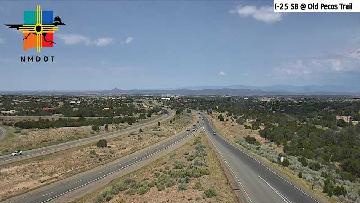
POLICY WIRE — Santa Fe, N.M. — It lasted less than twenty minutes, a fleeting moment in the grand theater of statewide logistics. A minor hiccup on Interstate 25, just a stone’s throw south of Santa Fe, New Mexico, due to a tangle of downed power lines. The quick fix, acknowledged by the New Mexico Department of Transportation (NMDOT) with almost practiced nonchalance, barely registered a blip on the evening news cycle. But here’s the rub: even a blink-and-you’ll-miss-it closure, swiftly rectified, often yanks back the curtain on something far more substantial—the precarious scaffolding of our modern existence.
It’s not just a road. It’s the lifeline, the conduit of commerce, the artery for commutes — and weekend escapes. Its vulnerability, however fleeting, holds a chilling reflection of wider fragilities that many choose to ignore until gridlock becomes their personal purgatory. And when the cameras monitoring the area were mysteriously out of commission precisely when the lines fell? Well, it just deepens the plot a touch, doesn’t it? An opaque moment in an already murky system.
For those caught in the momentary snarl, the annoyance was real. Lives paused. Schedules cratered. A simple drive turned into a spontaneous contemplation of dependency. NMDOT moved fast, credit where it’s due, clearing both northbound and southbound lanes between mile markers 271 and 274 with efficiency. They said the road was open. But they never said why it closed. No explanations, no public reckoning with whatever cosmic ballet led to utility wires just deciding to take a tumble.
“Our primary objective is always public safety and the swift restoration of normal operations,” stated Sarah Jenkins, a long-time NMDOT spokesperson, in an email widely circulated among local reporters. “We don’t compromise on getting things moving again. The public counts on us for that, and we delivered.” Her tone was polished, rehearsed—the bureaucratic equivalent of a quick, reassuring nod. But a nod doesn’t repair the foundations.
The state’s infrastructure, not unlike a good many across the Rust Belt — and the Mountain West, isn’t getting younger. A 2021 report from the American Society of Civil Engineers gave New Mexico a C- on its infrastructure, citing “deteriorating” roads and “aging electrical grids.” This particular incident—minor as it appeared—was less a crisis averted and more a whispered warning. Because these little interruptions, they’re just the tremors before a real quake.
“We can’t keep slapping bandaids on deep wounds and expect them to hold forever,” asserted State Representative Roberto Sanchez (D-Santa Fe), a vocal advocate for infrastructure reinvestment, during a recent radio interview. “The capital budget isn’t a wish list; it’s an absolute necessity. We’re one big storm away, one aging utility pole away, from far more serious consequences than twenty minutes of traffic. And the long-term economic costs of failing to address this proactively? They’re astronomical.” He isn’t wrong.
📄 POLICY WIRE WHITEPAPER PUBLISHED: PAKISTAN'S NATIONAL SECURITY POLICY PRIORITIES
👉 READ BY CLICKING HEREThe swiftness of clearing a path shouldn’t distract from the systemic vulnerabilities it exposes. Consider, for a moment, how nations with fewer resources cope. Pakistan, for instance, grapples with its own chronic infrastructure woes, from intermittent power outages that can halt entire sectors for hours, sometimes days, to a road network often plagued by unpredictable, prolonged closures due to landslides, flash floods, or even security concerns. While Santa Fe sees twenty minutes of delay, millions in Karachi might face prolonged economic paralysis because a singular line failed. The differences in immediate resilience, but shared vulnerability to the capricious whims of physics and maintenance budgets, are stark.
This quick resolution on I-25 then, serves a dual purpose: it demonstrates capability, yes, but also highlights what’s truly at stake—the unspoken promise of continuous operation in a highly networked society. When that promise flickers, even briefly, it’s not just an inconvenience. It’s a reminder of just how fragile our finely tuned clockwork really is.
What This Means
This fleeting shutdown on a critical interstate might seem trivial at first glance, but its implications run deeper than simple traffic frustration. Politically, incidents like these — even when resolved quickly — tend to fuel ongoing debates about state spending and fiscal priorities. Opponents of increased taxation often point to rapid fixes as proof that existing systems are sufficiently robust, while proponents argue that such occurrences are symptomatic of underfunded preventative maintenance. The silence from officials on the cause doesn’t help; it simply breeds speculation and distrust, regardless of the efficacy of the clean-up operation.
Economically, even short interruptions have ripple effects. Imagine countless delivery trucks delayed, appointments missed, work hours lost. While difficult to quantify for a twenty-minute pause, such events, accumulated over time, erode productivity and competitiveness. Local businesses suffer when their customers are stuck on a highway or choose alternative routes. Public confidence also takes a hit. They expect efficiency. They demand answers. When they don’t get them, the cynicism grows. It’s all part of the prove-it economy, after all. These moments force state and local governments to confront their infrastructure strategy. Are we reacting, or are we truly anticipating? Are we simply waiting for the next wire to snap, the next pipe to burst, the next road to crumble, before we acknowledge that prevention is, as ever, the vastly superior—and cheaper—cure?