

Sacred Soil, Iron Wall: Faith Collides with Federal Might at Mount Cristo Rey
POLICY WIRE — SUNLAND PARK, N.M. — The rugged slopes of Mount Cristo Rey, a pilgrimage site where generations have sought solace and spiritual communion, are fast becoming the unlikely crucible for a...

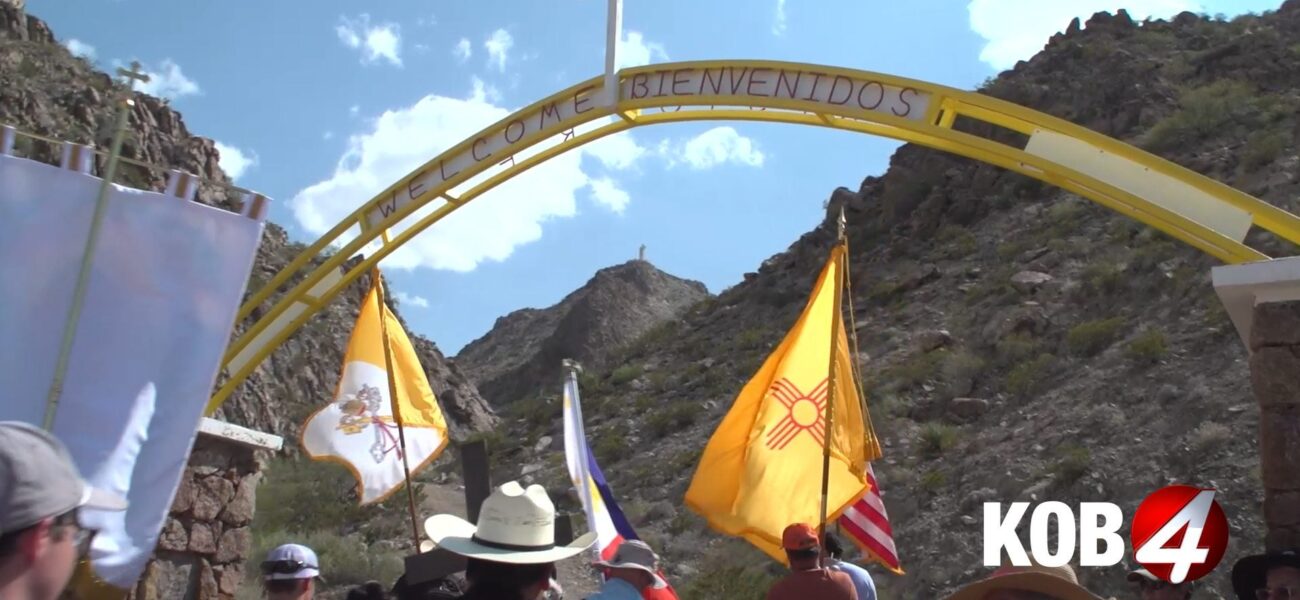
POLICY WIRE — SUNLAND PARK, N.M. — The rugged slopes of Mount Cristo Rey, a pilgrimage site where generations have sought solace and spiritual communion, are fast becoming the unlikely crucible for a fight about faith, sovereignty, and very hard lines in the desert sand. Forget the grand declarations from Washington; this isn’t some high-minded legislative tussle. No, this is about 14.259 acres—dirt and rock—that the federal government already owns, but can’t quite lay its hands on.
It’s an awkward bind, to say the least. The U.S. government holds the title, thanks to an earlier court ruling that allowed them to deposit a sum for the land. But a simple paper title doesn’t get you a bulldozer or a wall. To actually build that border barrier President Trump’s administration craves, they need immediate physical possession. And that’s where the Catholic Church, keeper of the iconic Christ statue at the summit, is drawing a liturgical line.
The latest salvo came in a federal court filing this month: a curt demand from Washington that a judge hand over the land at Mount Cristo Rey, post-haste. The argument? The Diocese of Las Cruces, despite its fervent objections, hasn’t offered a single good reason to block what the feds see as a straightforward land acquisition for national security. It’s a pragmatic stance—cold, bureaucratic logic laid bare.
“We appreciate the historical significance and the community’s devotion to Mount Cristo Rey,” stated Elara Vance, a spokesperson for the Department of Homeland Security, in a terse email. “But national security is non-negotiable. Our plans account for continued religious access; the project will be constructed more than a thousand feet from the shrine. We’re not obstructing faith; we’re protecting the border.” Vance emphasized the federal position that security cannot be held hostage by what they view as a landowner’s opposition to a federal project, particularly when the title is no longer in dispute.
But that’s a tough pill for the Church to swallow. Bishop Arturo Chavez of the Diocese of Las Cruces doesn’t mince words. “You can’t put a price on sanctity. And you certainly can’t build a wall through a symbol of hope and unity, then pretend it doesn’t profane everything that ground represents,” he remarked, his voice tight with conviction during a recent public appearance. “Our concern isn’t just about walking up a hill; it’s about a spiritual desecration, a division literally carved into sacred earth. This isn’t just land; it’s a sacred pathway to Christ, a place where Nuevo Mexico’s faithful have found spiritual resonance for generations. It stands in stark contrast to everything Catholic teachings promote.”
The federal government insists worshippers will still be able to climb the mountain, attend Mass, and pray at the shrine. They claim construction would occur a comfortable 1,050 feet away, and that the diocese has presented no proof of physical interference. Oh, and the mountain’s currently unsafe anyway, what with all the robberies and assaults mentioned on the Mount Cristo Rey Restoration Committee’s own webpage. Quite a handy point to make, isn’t it?
📄 POLICY WIRE WHITEPAPER PUBLISHED: PAKISTAN'S NATIONAL SECURITY POLICY PRIORITIES
👉 READ BY CLICKING HEREAnd speaking of handy, the initial outreach to the diocese by the federal government happened in September 2024, predating President Trump’s hypothetical second term—though a scheduled January 2025 meeting was unilaterally canceled by the Church, according to federal lawyers. The Church, meanwhile, charges that the government has already lined up contractors, seemingly ready to rush construction before a final judicial review of the land seizure itself. This isn’t just about possession, you see. It’s about precedent. It’s about control.
Then there’s the money. The government says $183,071 is fair. The Church, pointing to a recent, comparable federal condemnation case involving 7.259 acres nearby that was valued at $798,500, laughs off that offer. Seriously. They’ve demanded a jury trial to hash out a fairer price, should this seizure eventually stick. Because frankly, land, even holy land, has market value, and this specific 14.259-acre parcel isn’t worth peanuts—not by a long shot. They aren’t asking for billions, but they want what’s due, especially considering it’s meant for God’s work.
What This Means
This localized skirmish at Mount Cristo Rey—seemingly a minor border dispute—actually spotlights a deeper, uncomfortable tension playing out globally: how state security apparatuses often steamroll local, deeply held religious and cultural sensitivities under the banner of national interest. This isn’t unique to the U.S. In South Asia, for instance, decades of conflict along border regions have seen indigenous or religious communities routinely displaced, their sacred sites compromised, all in the name of securitizing lines on a map. From Balochistan to Kashmir, the assertion of state power over ‘sacred ground’ or ancestral land is a well-worn narrative. Economically, if the Church wins on valuation, it sets a potent precedent for fair compensation in government condemnations, regardless of the ‘sacred’ tag. Politically, for the Trump administration, winning possession here—even against a Catholic diocese—reinforces a no-compromise stance on border security, a key promise. But if the Church gains a foothold, even temporarily, it provides potent ammunition for other groups resisting federal land grabs or asserting religious freedom rights, especially in politically charged border zones. It’s a low-key culture war playing out, literally, on hallowed ground.
The July 23rd hearing in Las Cruces will determine a great deal, or very little. For now, the faithful continue to walk those slopes, past surveyors’ stakes, praying that something more than a steel wall will rise between them and the federal government’s relentless push for what it deems its due.