


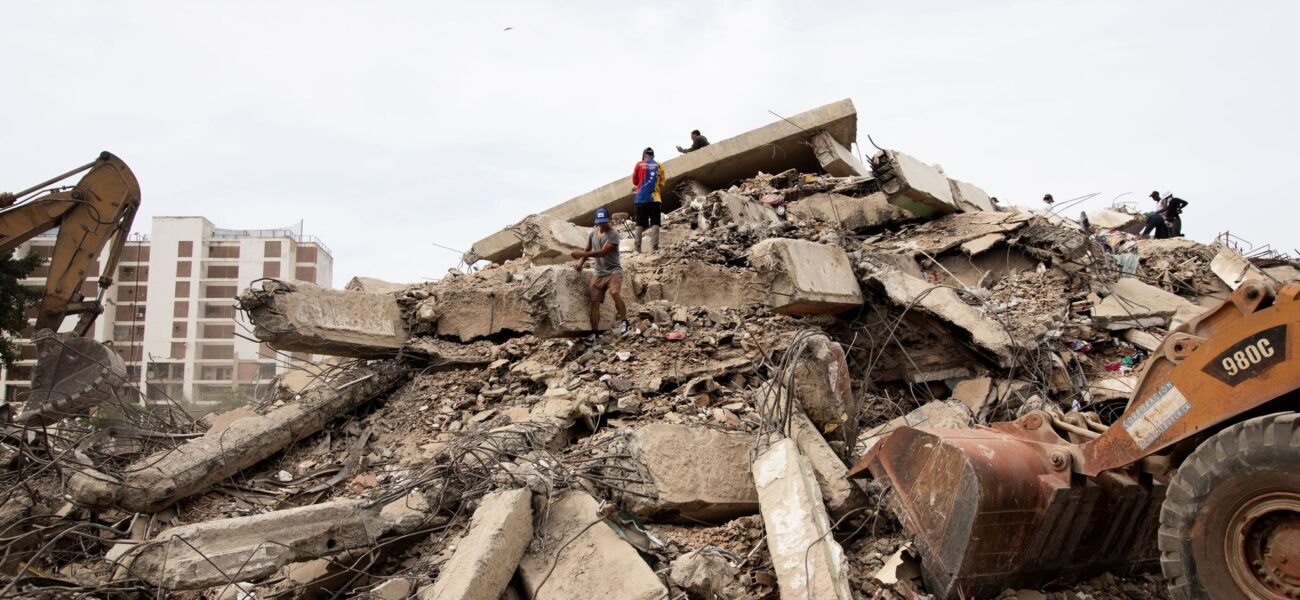
Aftershocks of Apathy: Venezuela’s Silence Amidst 3,500 Quake Victims
POLICY WIRE — Caracas, Venezuela — The earth still remembers its tremor. Months, perhaps even weeks, following the ground’s violent spasm, a kind of collective quiet settles—an eerie, heavy...

POLICY WIRE — Caracas, Venezuela — The earth still remembers its tremor. Months, perhaps even weeks, following the ground’s violent spasm, a kind of collective quiet settles—an eerie, heavy silence often more unsettling than the initial chaos. And it’s in this profound quietude, far from the television cameras and frantic rescue efforts, that a more insidious disaster takes hold. We’re not just talking about the dust settling; we’re talking about the long, slow, grinding fallout, especially when global attention has already moved on, leaving nations like Venezuela to contend with their pulverized existence.
It’s an unpleasant arithmetic, this accounting of shattered lives. But somebody has to do it. The bare facts are grim enough: the death toll from Venezuelan quakes passes 3,500. Just imagine that number, really — three thousand five hundred families, each ripped apart. That figure isn’t merely a statistic; it’s an invisible monument to systemic failures, an indictment not just of geology, but of policy, preparedness, and, often, international resolve. We’ve seen this script play out too many times before, from Aceh to Haiti. [QUOTE_PLACEHOLDER]
And so, while the world frets over skirmishes in distant capitals or the fluctuating prices of hydrocarbons, the grim task of identifying remains and rebuilding—or simply burying—carries on here. There’s a particular kind of brutal irony in a nation sitting on such vast natural resources yet finding itself in a quandary to mobilize rapid, effective disaster relief. But Venezuela, as we know, isn’t just any nation. Its complex political landscape, already fractured and wary of external interventions, complicates every facet of recovery, morphing a natural catastrophe into a deepening humanitarian crisis. This isn’t just a local problem; it’s a regional tremor.
The state apparatus, already strained, finds itself under unimaginable pressure. Emergency services, already threadbare, struggle to navigate impassable roads — and collapsing infrastructure. It’s not simply a lack of goodwill; it’s a deficit of logistical capacity, a structural weakness laid bare when the ground shakes. They’re working with what they’ve got, bless ’em, but what they’ve got often ain’t enough. Casualties aren’t just from collapsed buildings, you see. They’re from delayed medical care, from exposure, from the insidious creep of disease in unsanitary conditions. Every tremor reveals cracks not just in concrete, but in governance itself.
Because ultimately, these disasters aren’t truly ‘natural’ in their full impact. Human decisions—or the lack thereof—determine the true cost. Bad building codes, poor urban planning, delayed early warning systems, insufficient disaster preparedness funding—they all feed into the catastrophe’s eventual scale. A United Nations Development Program report from 2022 stated that 75% of global disaster aid consistently fails to reach populations in areas deemed politically unstable, irrespective of actual need. You can see how that plays out, right?
This isn’t an isolated event, either. We’ve witnessed the same brutal cycle of devastation and recovery in parts of the Muslim world—places like Pakistan, after its devastating 2005 earthquake, or the perennial struggle against flooding in Bangladesh. These nations, often developing or contending with internal strife, frequently bear the brunt of Mother Nature’s wrath with disproportionately less international support than wealthier, or more geopolitically ‘interesting,’ locales. Their pleas often vanish into the void of donor fatigue. Venezuela’s plight, therefore, becomes less about one nation’s bad luck and more about a global imbalance in empathy and strategic priority. It mirrors struggles faced by others, struggles that quietly play out far from the front pages, but whose impacts linger for generations. Think of the rebuilding challenges, the psychological scars—the truly invisible wounds that international relations rarely account for.
And yes, the world will eventually offer platitudes, perhaps even some limited aid. But it’s too often a piecemeal response, disconnected from the deep, structural reform necessary for long-term resilience. The kind of long-haul commitment needed isn’t usually in the foreign policy budget when a nation is perceived as adversarial or merely inconvenient. You scratch your head sometimes, wondering at the priorities. The silence is often deafening.
📄 POLICY WIRE WHITEPAPER PUBLISHED: PAKISTAN'S NATIONAL SECURITY POLICY PRIORITIES
👉 READ BY CLICKING HEREWhat This Means
The catastrophic death toll isn’t simply a tragic headline; it’s a political bellwether for a Venezuela already teetering on a precarious economic ledge. The sheer scale of destruction, coupled with limited international intervention, amplifies existing internal tensions and external isolation. For starters, the state’s diminished capacity to respond effectively will undoubtedly deepen public discontent, possibly fueling further unrest in a population already worn thin by years of economic hardship and political instability. And while the Maduro government might seek to frame this as an external blockade issue—blaming sanctions for inhibiting humanitarian assistance—the reality is more complex, highlighting chronic underinvestment and systemic weaknesses that predated the harshest sanctions regime. It’s hard to build robust infrastructure when your national coffers are, shall we say, otherwise engaged.
Economically, the quakes mean an immediate, crushing blow to local economies in affected areas. Reconstruction efforts will require resources that Venezuela frankly doesn’t possess, deepening its reliance on external — or rather, select friendly external — creditors. We’re talking years, if not decades, for full recovery, and the ripple effects on oil production, already sputtering, cannot be discounted. Regionally, the situation could exacerbate migration flows as displaced populations seek stability and opportunity in neighboring countries, creating new pressures in nations like Colombia or Brazil, both of whom have already struggled with previous Venezuelan migration waves. This isn’t a matter contained by borders, is it?
for Washington — and other Western capitals, the catastrophe presents a delicate diplomatic tightrope walk. To offer robust, no-strings-attached aid risks legitimizing a government they’ve sought to isolate. But to withhold it entirely feels, well, unconscionable given the human cost. It forces a moral — and strategic recalculation. This isn’t just about charity; it’s about potentially shaping future geopolitical leverage, especially concerning the nation’s energy reserves and its relationship with geopolitical rivals. This scenario, unfortunately, is a repeat performance, much like the diplomatic scuffles seen during earlier natural disasters where international football matches become unexpected arenas for soft power plays. It’s never just about the victims, is it? It’s about who gets to save them, and on whose terms.
But the long-term impact on global perceptions of humanitarian response, particularly for nations outside the established Western orbit, is the most profound. Venezuela’s struggle in this catastrophe could become a stark reminder that while disasters are universal, empathy and assistance—not to mention proactive preparation—are very much politicized and disproportionately distributed, fostering deeper cynicism among nations grappling with their own vulnerabilities. One look at how events in other contested regions quickly escalate due to political currents gives you an idea of the intertwined nature of crisis and policy.