


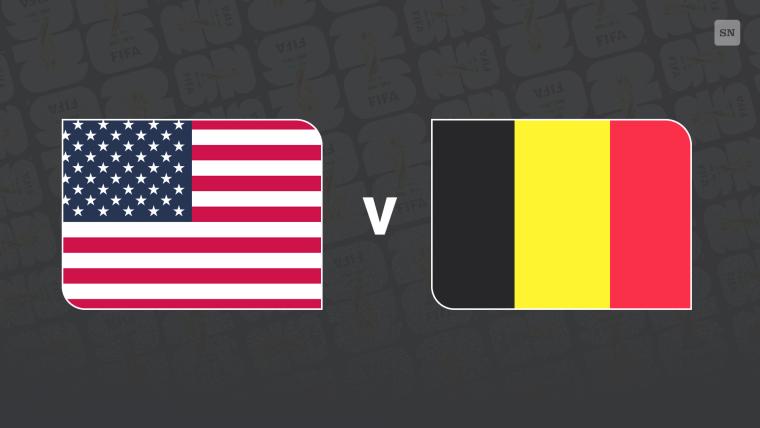
FIFA’s Odd Reversal: A Geopolitical Scrimmage Ahead of USA-Belgium Showdown
POLICY WIRE — Seattle, United States — It’s never just about the ball. Not really. When FIFA, soccer’s inscrutable global governing body, abruptly reversed Folarin Balogun’s one-game suspension this...

POLICY WIRE — Seattle, United States — It’s never just about the ball. Not really. When FIFA, soccer’s inscrutable global governing body, abruptly reversed Folarin Balogun’s one-game suspension this weekend—an eleventh-hour pardon described by some as a “miracle”—the ripples went far beyond the pitch. We’re talking about more than a striker getting a second chance. We’re witnessing the delicate dance of power, influence, and the murky economic undercurrents that dictate outcomes long before kickoff.
Belgium’s Red Devils are rightly seething. Their official protest, dismissed with the bureaucratic equivalent of a shrug, smells of something richer than simple procedural review. And why wouldn’t it? Balogun, the USMNT’s leading goal-scorer, was meant to sit this one out after a red card in the Round of 16 match against Bosnia and Herzegovina. His availability now changes the calculus, turning what was already a grudge match—a replay of that agonizing 2014 encounter—into a spectacle charged with whispers of backroom deals.
“This decision, at such a critical juncture, raises serious questions about transparency and fair play,” declared Philippe Dupont, a spokesperson for the Belgian Football Federation, his voice thin with carefully modulated exasperation. “It’s difficult for us to believe this was purely about sporting regulations.”
Because let’s be honest: in the sprawling, monetized ecosystem of global sports, ‘fair play’ often plays second fiddle to commercial interests and the soft power diplomacy of major nations. The United States, a rising economic force in the beautiful game, with its burgeoning audience and sponsorship dollars, holds a certain sway. It’s not a secret; everybody knows it. A US team progressing further means more eyes, more ad revenue, bigger stakes for everyone, from broadcasters to boot manufacturers.
Twelve years ago, those same two nations clashed. The memories? They’re still a raw nerve. That 2014 tilt saw an aging American squad, punching well above its weight, holding the Belgians at bay through a heroic effort. Tim Howard, the US goalkeeper, turned in a legendary performance, recording a World Cup-record 16 saves in that game, as reported by FIFA records, pushing the contest into extra time before Kevin De Bruyne and Romelu Lukaku finally broke the deadlock, sending the Yanks home. But today, the narrative feels different. It’s less about old rivalries — and more about the institutional heavy lifting for America’s ascendance.
The US government itself understands the value of such moments. Ambassador Susan Rice once stated that “sport builds bridges and brings people together in ways that transcend political and cultural divides.” But what happens when the bridge-builder appears to get a little extra concrete pour from the oversight committee?
Even in distant Islamabad or Cairo, where football reigns supreme, fans follow these events keenly. They understand that a FIFA ruling, like a UN resolution, can often hint at who holds the reins of global influence. Pakistan, a nation where soccer’s popularity explodes every four years despite a struggling national team, consumes these narratives voraciously. They track every development, every perceived injustice. This incident simply fuels the perennial global debate: is FIFA truly independent, or is it merely another arena where geopolitical muscle gets flexed, subtly, effectively?
The U.S. head coach, Mauricio Pochettino, understandably remained tight-lipped on the controversy, focusing solely on the coming challenge. “Look, we’re focused on the football. Balogun’s available, and we’re grateful. Belgium’s a formidable opponent, and we know we’ve got to be better than last time,” he said, a careful diplomatic shield around his words.
But nobody’s buying that it’s just about football. The Belgian press, the pundits across Europe, even the quiet observers in Lahore and Kuala Lumpur, they’re all wondering if the scales, ever so slightly, were tipped before the whistle even blew.
This match is scheduled for 8 p.m. ET at Lumen Field in Seattle. It’ll be available nationally on Fox. Just another game, some might say. Or a continuation of a different, more nuanced contest, with rules unwritten but clearly understood.
What This Means
This saga around Balogun’s controversial reprieve isn’t just fodder for sports talk radio; it’s a flashpoint in the ongoing debate about governance in international sports and the growing geopolitical weight of soccer. For Washington, a deeper run by the USMNT means significant boosts in national morale, increased media attention, and a powerful vehicle for public diplomacy – soft power in its most consumable form. A successful US campaign generates tangible economic benefits too, drawing investment, bolstering sponsorships, and enhancing the nation’s image on a world stage it increasingly wants to dominate, both militarily and culturally. For smaller nations, like Belgium, it highlights the potential power imbalance. When FIFA rulings appear to favor economically significant members, it chips away at the perceived impartiality essential for true global sportsmanship, potentially breeding resentment and distrust within the broader footballing community. It forces everyone to reckon with the stark reality that in the 21st century, every game is, in some capacity, a global power play.