

Ripples of Fear: Pacific Odyssey Unveils Human Fragility, Echoes Global Straits
POLICY WIRE — Washington, D.C. — They talk about grand strategy, global powers, and the immense, shifting plates of international relations. But sometimes, it takes a tiny craft—a single woman adrift...

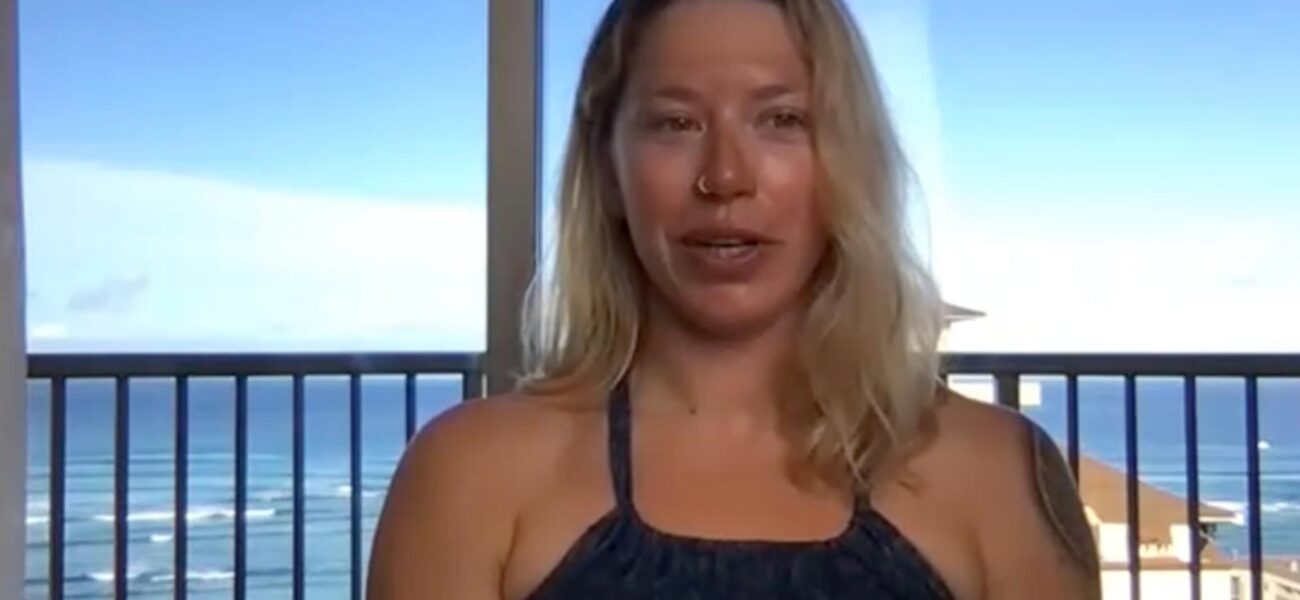
POLICY WIRE — Washington, D.C. — They talk about grand strategy, global powers, and the immense, shifting plates of international relations. But sometimes, it takes a tiny craft—a single woman adrift in a vast, indifferent ocean—to remind us just how tenuous human control truly is. The solo journey of an unnamed woman, rowing thousands of miles from the California coast to Hawaii, didn’t merely chronicle physical endurance; it laid bare a profound psychological crucible, a primal dance with fear that, in its stark honesty, serves as an unexpected lens on our collective anxieties.
It’s not the triumph itself that grabs you, not immediately anyway. Oh, sure, the accomplishment is there—a staggering feat of will against the ceaseless, elemental force of the Pacific. But what truly resonates, what leaves an impression like the taste of salt on your tongue, is the raw, unflinching admission of terror. When pressed on the ordeal, the rower didn’t offer platitudes about perseverance; her focus settled on the very thing that made her stomach clench. [QUOTE_PLACEHOLDER], she revealed, cutting through any heroic veneer.
And what was that bogeyman of the deep? Not the brutal, punishing sun or the soul-crushing isolation. Nor even the gnawing pangs of physical exhaustion that surely accompanied every stroke. It was, rather, the feeling of utter powerlessness in the face of the unknown—the vast, black depths beneath her hull, the capriciousness of weather patterns that can swell from calm to calamity in moments. This wasn’t some calculated risk on a corporate balance sheet; it was an organic, terrifying immersion in the fundamental wildness of existence. Think about it for a second. We’re so accustomed to mitigating risk, controlling outcomes, yet here was a human being surrendering, moment by moment, to a force utterly beyond her command. It makes you pause.
Her experience—days upon days battling the psychological toll of potential capsizing and being utterly, incomprehensibly alone—serves up a peculiar, unvarnished truth. Because while governments bicker over territorial waters or jostle for economic leverage, millions around the globe grapple with similar, if less poetic, vulnerabilities. The relentless push and pull of the global economy, climate volatility, or simply the daily struggle for security; they all manifest as different flavors of powerlessness. Sometimes you’re just in a small boat, you know?
This journey’s understated drama highlights how the pursuit of any ambitious goal, from pioneering ocean crossings to stabilizing turbulent political landscapes, requires a confrontational engagement with fear. It’s an act of pure, distilled courage, the kind we often romanticize in policy papers but rarely examine in its grittier forms. For this rower, the fear wasn’t an impediment to be overcome but an inescapable companion to be endured.
In Pakistan, for instance—a nation often buffeted by its own tempestuous currents, both political and environmental—the resilience exhibited by individuals mirrors this solitary rower’s fight. From farmers struggling against devastating floods in Sindh to entrepreneurs navigating uncertain markets in Karachi, the daily grind involves a comparable confrontation with forces largely beyond individual sway. This isn’t just about a record or personal quest; it’s a story written on the face of humanity, whether that face is etched by the Pacific winds or by the dry, relentless heat of the Thar Desert.
📄 POLICY WIRE WHITEPAPER PUBLISHED: PAKISTAN'S NATIONAL SECURITY POLICY PRIORITIES
👉 READ BY CLICKING HEREThe lessons from such stark encounters with nature often ripple back to reshape our perceptions of risk in seemingly more ordered environments. Her account describes enduring significant storms, specifically stating [QUOTE_PLACEHOLDER], which forced her into survival mode. It’s a chilling reminder. You can strategize all you want, but Mother Nature—or geopolitics, take your pick—doesn’t always consult your spreadsheets. This isn’t to say planning is useless; rather, it highlights the limits of that planning. We build sophisticated economic models, construct complex diplomatic frameworks, all to create an illusion of mastery. But then, a global pandemic, an unforeseen conflict, or just an angry wave can come crashing down, exposing the seams.
And then there’s the broader environmental shadow. While not her central theme, the journey undoubtedly traversed swathes of ocean choked with plastic—a silent testament to humanity’s widespread impact. One widely cited study published in Science Advances in 2021 indicated that the Pacific Ocean contains an estimated 1.8 trillion pieces of plastic across a 1.6 million square kilometer area—a horrifying density that makes even this vast expanse feel vulnerable. This solitary rower faced physical threats, but the silent, unseen threat to the very medium of her adventure persists, largely unaddressed by collective human effort.
What This Means
This solo ocean crossing, with its harrowing admissions of fear, offers a blunt rebuke to the notion of human exceptionalism and our penchant for over-engineering solutions. It’s a microcosmic drama reflecting macro-level truths: control is often an illusion, and adaptability is a raw, non-negotiable prerequisite for survival. Politically, nations, like solitary rowers, constantly navigate treacherous currents, often facing unpredictable storms of economic downturns or security crises. But they rarely acknowledge the sheer, visceral fear that underpins leadership in these moments. The veneer of steady hands and confident declarations is precisely that—a veneer. True leadership, and indeed, human resilience, isn’t about eliminating fear; it’s about acknowledging it, living with it, and moving forward regardless.
Economically, the saga speaks to a global system increasingly vulnerable to Black Swan events—those highly improbable, high-impact occurrences. No amount of market analysis or contingency planning can fully prepare you for every rogue wave. Businesses, like individuals, often over-invest in predictive models while under-preparing for raw, unpredictable chaos. The lesson? Perhaps less focus on mastering the wave, and more on mastering the craft itself, on building systems with inherent resilience. It’s a pragmatic, gritty outlook—one that understands some storms simply have to be weathered. And that’s okay, because as the solo rower probably learned, sometimes just keeping your head above water is the victory itself, a testament to raw, fundamental tenacity in a world that never stops churning. The psychological strain can be immense.