

Vatican Schism: Pope Leo XIV’s Ultimatum to SSPX
Pope Leo XIV issues a firm ultimatum to the defiant SSPX, leading to excommunication. Discover the implications of this Vatican schism on authority, tradition, and global institutions.

POLICY WIRE — ROME — There’s nothing quite like a well-executed institutional slap-down from a venerable, globe-spanning bureaucracy. It hits differently, you know? But when the Vatican delivers it, particularly one under the often-misunderstood Pope Leo XIV, the ripples extend far beyond basilica walls, setting off theological earthquakes that manage to look remarkably like mere squabbles over vestments and Latin hymns. Here we’re, witnessing one such tremors from the Society of St. Pius X (SSPX), who, fresh off the harshest ecclesial censure in decades, are now confidently wrapping themselves in the sacred mantle of martyrdom.
It’s a peculiar thing, this assertion of victimhood, particularly when it comes from a group whose very existence is predicated on active defiance. The SSPX leadership, just hours after the Holy See laid down the law — excommunicating its newly minted bishops and the priests involved, then warning its rank-and-file of similar spiritual ostracism — decided that *they* were the wronged party. They fired off a missive to Leo XIV, not with contrition, but with what could only be described as aggrieved pride. One might even call it a triumph of public relations, had anyone beyond a very specific Catholic niche been paying close attention.
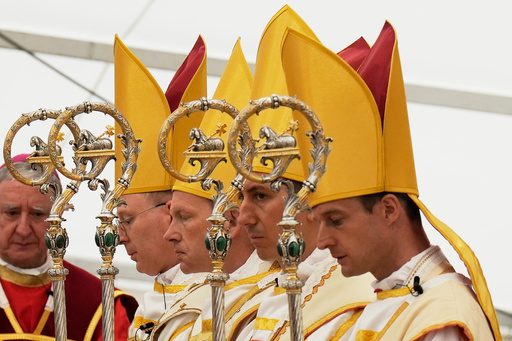
The whole kerfuffle erupted with the unauthorized ordination of four new bishops in Econe, Switzerland. A grand spectacle, they say, a calculated affront right on the Vatican’s doorstep, committed in clear violation of papal directives. The Pope had, rather uncharacteristically, practically begged the SSPX not to go through with it. He pleaded. But they went ahead anyway. Their logic? They believe they’re not just guardians of ancient traditions, like the hallowed Latin Mass, but—get this—the very saviors of Catholic souls amidst what they perceive as the rampant confusion and doctrinal decay plaguing the modern church. It’s a bold claim for an outfit considered by most Catholics, let’s be frank, to be quite fringe.
The Vatican’s reaction wasn’t just swift; it was utterly uncompromising, taking many observers, even long-time critics of the SSPX, by surprise. A collective gasp, then the hammers came down. The Superior of the SSPX, the Rev. Davide Pagliarani, quickly penned his defense to Leo. Pagliarani cast the SSPX as the defiant guardian of the church’s tradition and the victim of an unjust sanction by Rome. And his statement? An absolute masterpiece of strategic rhetoric. [QUOTE_PLACEHOLDER]What the Society of Saint Pius X has done, and will continue to do, is nothing other than an extraordinary initiative for the salvation of souls, amidst the doctrinal and moral confusion into which the church is plunged,[QUOTE_PLACEHOLDER] he wrote, not mincing words. He didn’t stop there, declaring that despite the [QUOTE_PLACEHOLDER]unjust and invalid[QUOTE_PLACEHOLDER] sanctions, they’d love the church even more, asserting they [QUOTE_PLACEHOLDER]offers up the suffering caused by these new sanctions for the good of the universal church and of Your Holiness.[QUOTE_PLACEHOLDER]
And so, we’re left with this fascinating tableau: a group claiming to be more Catholic than the pope himself, now disavowed by the very institution it purports to save. Founded by French Archbishop Marcel Lefebvre back in 1970, specifically to rail against the seismic shifts of the Second Vatican Council — a council that dared to suggest Mass could be said in languages other than Latin, and that other faiths perhaps weren’t wholly irrelevant — the SSPX has been an ecclesial migraine for over five decades. Globally, only an estimated 0.5% of self-identifying Catholics regularly attend Masses associated with traditionalist movements, according to data compiled by the Pew Research Center in 2023, underscoring the narrow band this schism primarily impacts, numerically speaking.
The sharpness of Rome’s rebuke signals a clear end to three pontificates of diplomatic tangoing. Leo XIV, it seems, simply ran out of patience. Rev. Robert Gahl, an ethics expert over at The Catholic University of America, noted the urgency in the Vatican’s move. It wasn’t just a punishment; it was a loud, unmistakable klaxon for the faithful within the SSPX. The Vatican was essentially saying, loud — and clear, You’re outside the fold now. This rapid response exposed the inherent contradiction in the SSPX’s self-image. Their argument for consecrating bishops revolved around a [QUOTE_PLACEHOLDER]case of necessity because of the need of the faithful to receive their sacramental care, while claiming that their sacramental care is somehow better than what the rest of the church offers,[QUOTE_PLACEHOLDER] as Gahl put it. A rather brazen claim, don’t you think?
The Vatican’s final, cutting pronouncement from Gahl’s perspective left no wiggle room: [QUOTE_PLACEHOLDER]If you want the salvation that the church offers, you have to belong to the church, and you stepped out of full communion by disobeying the pope’s explicit command.[QUOTE_PLACEHOLDER] Harsh. But then again, religious obedience has never been a suggestions. This isn’t just about dogma; it’s about where authority ultimately resides.
📄 POLICY WIRE WHITEPAPER PUBLISHED: PAKISTAN'S NATIONAL SECURITY POLICY PRIORITIES
👉 READ BY CLICKING HEREWhat This Means
This escalating schism within Catholicism isn’t just a niche religious story; it’s a critical lens through which to examine authority, tradition, and dissent in organized institutions worldwide. Politically, Pope Leo XIV’s firm hand establishes a clear line in the sand. It reinforces papal authority at a time when many traditionalists, both within and without the SSPX, are clamoring for a return to pre-Vatican II interpretations, threatening a gradual fragmentation of the Catholic Church’s power structure. By acting decisively, the Vatican has sent a clear message that challenges to its fundamental hierarchy won’t be tolerated, irrespective of how those challenges are framed or how vociferously their proponents claim victimhood. It’s a calculated gamble; appeasing traditionalists might pacify a small but vocal group, but letting defiance fester erodes the very bedrock of papal infallibility and jurisdiction. And that’s a political cost the papacy clearly isn’t willing to pay.
Economically, prolonged schisms can have ramifications, though not always immediately obvious. Donations, pilgrimages, educational institutions—these rely on unified communion and a clear ecclesiastical framework. A splintered faithful means potentially divided financial loyalties. And that kind of division is something no large, institutional body likes, religious or otherwise. But, you know, money isn’t everything, apparently, when eternal salvation’s on the line.
The drama surrounding the SSPX also echoes wider geopolitical currents where tradition clashes with modernity, and deeply held beliefs face external or internal pressure to evolve. Think about religious minorities across the Muslim world—Pakistan, for instance, where theological interpretations can be profoundly divisive. Consider the nuanced dance between differing schools of thought within Islam and the state’s role in enforcing certain versions of piety. The SSPX’s argument for preserving ‘true’ Catholicism against a perceived liberal drift finds parallels in struggles for religious identity and orthodoxy far beyond Rome’s sphere. From sectarian fissures to state-sponsored religiosity, questions of who holds the ‘true’ faith, and what form it should take, are hardly unique to the Latin Mass. But it seems some institutions are, on occasion, willing to suffer short-term losses to secure long-term doctrinal integrity, come what may.
And yes, the historical echoes are unsettling. Throughout history, disagreements over doctrine or practice have shattered powerful institutions. This episode might seem small, but sometimes the tiniest crack reveals the biggest fault line. For more on institutional inertia and dramatic changes, you could read about the bizarre case of Paperwork of the Dead, Breath of the Living: A Ghastly Administrative Error Jolts South Asia. This defiance isn’t a fresh act of theological rebellion. It’s a protracted siege, with both sides dug in deep. But don’t count Leo XIV out just yet; history’s shown us the Vatican has a long memory and a surprisingly resilient constitution.