


West Bank Odyssey: Stolen Scooter Ignites Dangerous Civilian Foray into Kalkilya
POLICY WIRE — Tel Aviv, Israel — A humble, if perhaps overpriced, motor-scooter. That’s what set off this whole surreal episode, you know? Not some high-stakes intelligence mission, nor a...

POLICY WIRE — Tel Aviv, Israel — A humble, if perhaps overpriced, motor-scooter. That’s what set off this whole surreal episode, you know? Not some high-stakes intelligence mission, nor a border incursion meant to reshape geopolitical maps. No, this was ten Israeli civilians—civilians!—deciding to go on their own bizarre search and rescue mission into the heart of Kalkilya, a Palestinian city firmly under the jurisdiction of the Palestinian Authority (Area A), a place generally off-limits for uncoordinated Israeli entry. And what were they looking for? Their supposedly purloined two-wheeler. Imagine that.
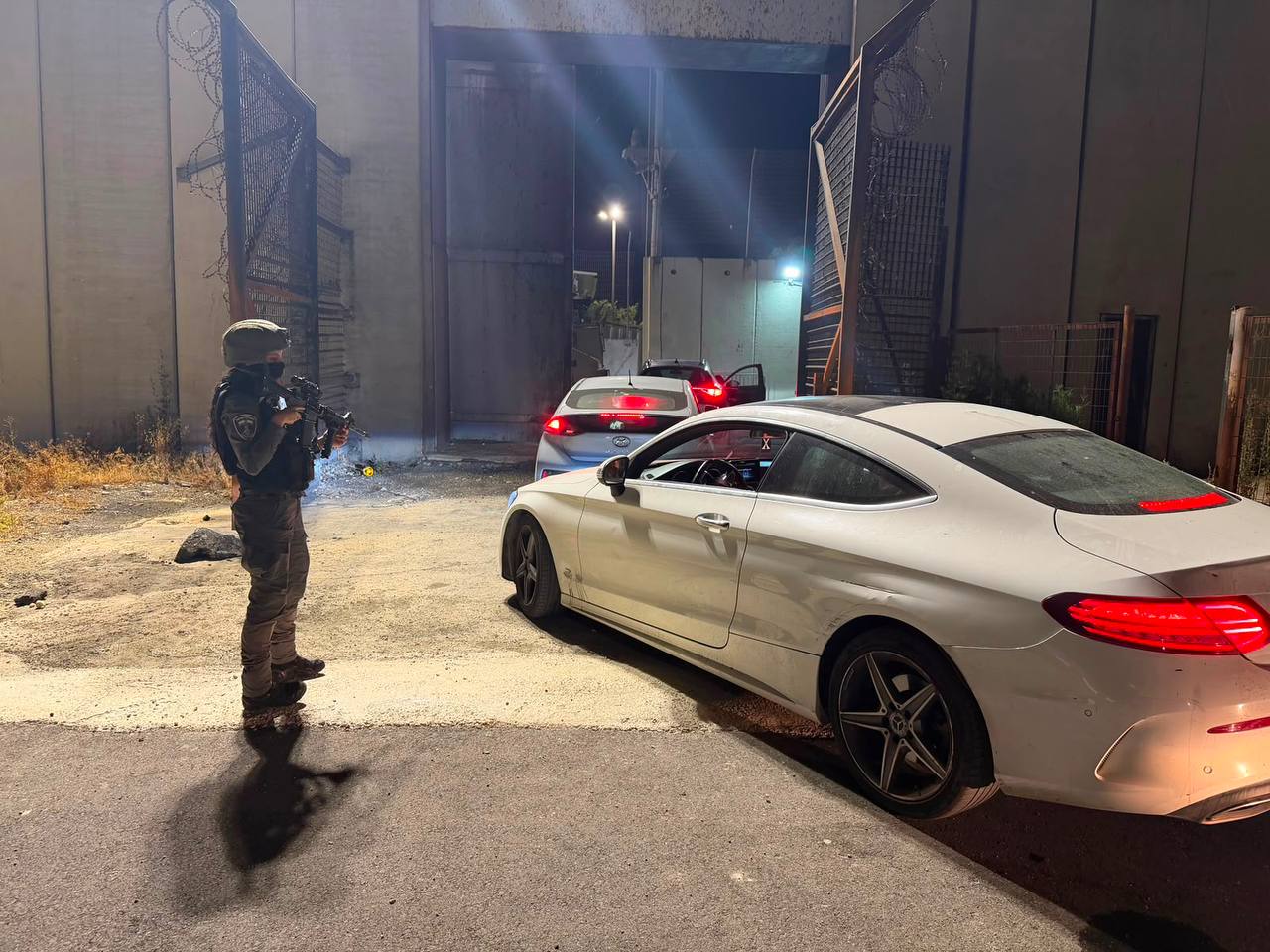
It sounds like something from a slapstick comedy, except it isn’t. Not when you’re talking about the West Bank. The Israel Defense Forces (IDF) and Border Patrol ended up scrambling, pulling these adventurous souls from what could’ve been a disastrous situation. We’re talking Tuesday afternoon, folks, in an area where tensions don’t just simmer, they regularly boil over.
The particulars are murky, as they often are here. These ten, they crossed the green line, went right into a city where, put simply, they shouldn’t have been. We don’t have specifics on how they were found, or precisely how deep into the city they’d wandered. But the fact remains: an emergency call went out, lights flashed, sirens wailed. Then the professionals—soldiers and Border Police—had to put themselves in harm’s way because someone couldn’t wait for the usual, official, and infinitely safer channels for retrieving a piece of property.
And what if things had gone sideways? It’s not hard to picture. A misstep. A confrontation. Someone, anyone, pulls a trigger. The implications, they’d ripple.
“Entering Area A without proper coordination is inherently dangerous for Israeli citizens,” stated an IDF spokesperson, General Brig. Omer Ben-Tzvi, with that familiar tone of exasperated warning. “Despite any personal grievance or property loss, these individuals jeopardized their own lives and subsequently diverted critical security resources that should be focused elsewhere.” He didn’t elaborate on where ‘elsewhere’ might be, but we all get the drift.
Palestinian officials, for their part, aren’t exactly thrilled either. “The presence of Israeli civilians in our cities, uninvited and without official notification, creates severe security complications for our forces,” remarked Tariq al-Rifai, an advisor to the Palestinian Authority’s Governor of Qalqilya, when contacted by Policy Wire. “We aim for stability, yet incidents like this force us to question intentions, even when they’re as ridiculous as chasing a motorbike. It complicates our already fragile attempts to maintain order.” He’s got a point. They’ve got their own struggles, policing an area effectively under occupation while also trying to keep the peace among their own.
The unfortunate reality is, vehicle theft from Israel into the West Bank is a perennial headache. According to a 2022 Israeli Police report, organized crime rings are responsible for siphoning off an estimated 2,000 to 3,000 vehicles annually from Israel into the West Bank, often to be stripped for parts or resold. It’s an economic undercurrent, one of many, that fuels certain illicit operations within the broader conflict zones.
You see, in these fractured lands—whether it’s the West Bank, Kashmir, or the porous borders between Afghanistan and Pakistan—local criminal economies aren’t just about making a quick buck. They become intrinsically linked to the larger political landscape. A stolen motorcycle isn’t just a stolen motorcycle; it’s a symptom, a consequence of unclear jurisdiction, porous borders, and a deep-seated distrust that makes routine police cooperation nearly impossible. In Pakistan’s Balochistan, for instance, cattle rustling across the Afghan border isn’t merely theft; it can ignite tribal skirmishes with serious diplomatic blowback. Here, it could just as easily escalate into something far worse, far more global.
What This Means
This incident, absurd as it appears on the surface, isn’t just a quirky news item. It speaks volumes about the grinding, messy reality on the ground in the West Bank. First, it throws a stark spotlight on the ongoing challenges of personal security and rule of law in divided territories. For Israelis, the inherent danger of entering Area A without coordination isn’t a theoretical concept; it’s why those red warning signs dot the roads leading into these cities. And for Palestinians, such unauthorized entries—even for a motorcycle hunt—can quickly become perceived as an invasion or provocation, further eroding any shred of goodwill or trust that might exist.
Economically, it underscores the persistent issue of cross-border illicit trade, where stolen goods find ready markets, complicating security forces’ efforts on both sides. This creates a black market economy that often bypasses legitimate channels, providing revenue streams to networks that may or may not be tied to larger political agendas. But let’s be real, often they’re, making incidents like this harder to simply shrug off as civilian folly. Such events inadvertently add layers to the geopolitical scrimmage that defines much of the region. It isn’t just about Israelis — and Palestinians. It’s about how every mundane infraction—from a joyride to a stolen scooter—can become ammunition in a far grander, and far deadlier, narrative. The volatile mix of everyday crime and high-stakes conflict makes even the retrieval of a stolen vehicle an operation of significant security concern. It’s a microcosm, isn’t it, of the entire conundrum? One wrong turn, one desperate act, — and the whole delicate setup threatens to crumble. They got lucky this time.