
Beyond the Oval: Toyota’s Calculated Triumph and NASCAR’s Global Play
POLICY WIRE — Joliet, USA — When Chase Briscoe finally hauled his car into victory lane this past weekend, it wasn’t just another win for a driver long overdue. It was, rather, a subtle yet...

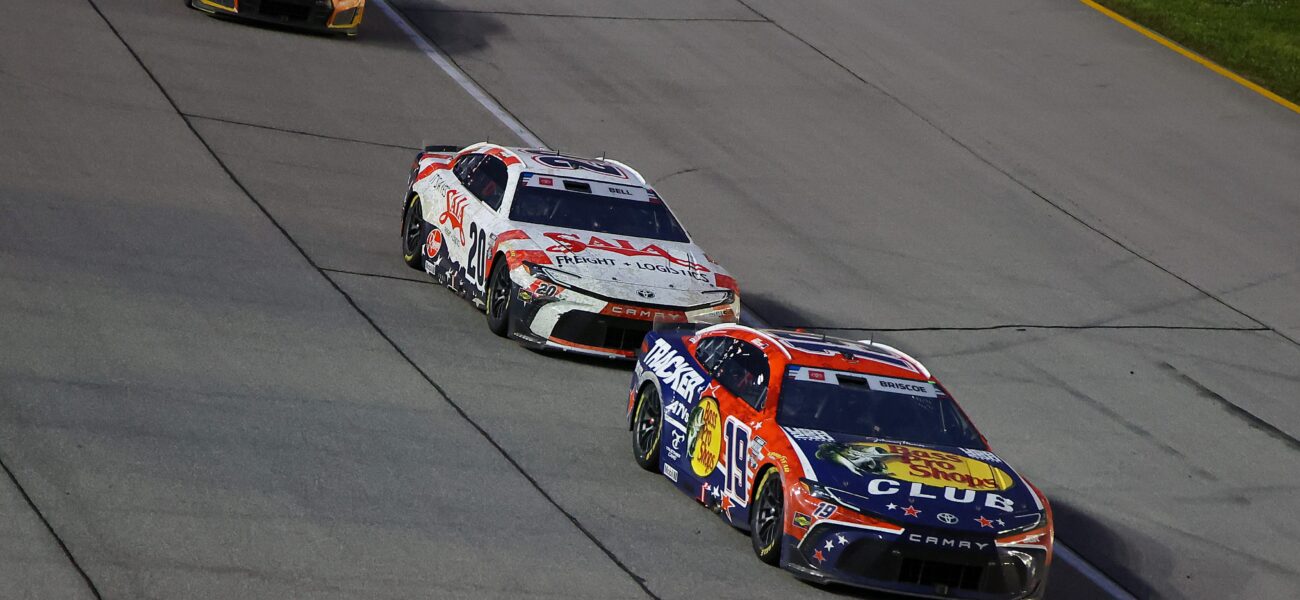
POLICY WIRE — Joliet, USA — When Chase Briscoe finally hauled his car into victory lane this past weekend, it wasn’t just another win for a driver long overdue. It was, rather, a subtle yet sharp reminder that in the high-stakes theater of professional motorsports, corporate strategy often steers the narrative just as much as a driver’s raw talent. Here in Illinois, amid the roar and the rain-slicked asphalt, Briscoe didn’t just cap a popular weekend; he inadvertently became the poster boy for a quiet manufacturing powerhouse’s continuing march toward utter domination.
It’s easy to get lost in the immediate triumph. Toyota, you see, has been having a moment—quite an extended moment, actually. Their drivers, the usual suspects like Denny Hamlin — and Tyler Reddick, have been scooping up wins like loose change. So much so, they’ve almost entirely overshadowed Briscoe’s own respectable pace. After all, Briscoe himself noted, “We have not been as consistent, I would say, as [Hamlin and Reddick]. But from a speed standpoint, I feel like we’ve been right here with them.” Indeed. He’d even notched a runner-up finish out at Sonoma not long ago, suggesting something was brewing, however quietly. But winning? That’s another beast entirely.
The 31-year-old pilot for Joe Gibbs Racing ultimately clinched his first victory of the season on July 5, holding off his determined teammate, Christopher Bell, by a scant .276 seconds. Hamlin, the veteran, rounded out the top three, essentially delivering a one-two-three punch for team owner Joe Gibbs. And you don’t even need to be a racing fan to appreciate the strategic significance of this: Toyotas didn’t just win; they swarmed, claiming seven of the top 10 positions. This kind of brand omnipresence doesn’t happen by accident. No, sir. This is cultivated.
It was a monkey off Briscoe’s back, a 20-race dry spell finally broken. He’d been feeling the heat, naturally, the internal corporate rivalries pushing him hard. He’d put it bluntly: [QUOTE_PLACEHOLDER] So yeah, pressure? Absolutely. The stakes are immense, not just for individual glory but for brand validation.
The competitive nature, he noted, keeps everyone sharp, a high-octane Darwinian struggle. “So there’s definitely a lot of pressure to go and run good. And it ebbs and flows, right? Like a year from now the Toyotas could be way off and the Chevies and Fords could be unbelievable. So when you’re good, you have to take advantage of it.” And that’s exactly what they’re doing. The numbers don’t lie: The manufacturer has notched an impressive 12 wins in the season’s first 19 races, a staggering display of consistency and engineering prowess. That’s more than 63% of the victories going to one brand, a dominance any conglomerate would envy.
Bell, whose own bid for victory was hampered by a broken left wrist — and an early pit road contact, recovered valiantly. His crew chief made a strong adjustment, [QUOTE_PLACEHOLDER] putting Bell back into contention, only for him to concede the lead, albeit after an “super intense battle” with his teammate. Pit strategy played a major role for Briscoe, his crew chief James Small pulling the trigger a lap earlier than Byron, turning a third-place run into a leading position off pit road. [QUOTE_PLACEHOLDER] Small articulated. Because sometimes, it’s about the chess game, not just brute speed.
The race itself was a spectacle, bringing NASCAR back to Chicagoland Speedway after a hiatus imposed by the COVID-19 pandemic and subsequent detours. The track hadn’t hosted a Cup race since 2019. It wasn’t an easy return, mind you, with rainstorms messing with parking logistics, leading to monumental traffic jams. But the stands for the 47,000-seat grandstand sold out, even if every seat wasn’t warmed by race time. Team owner Joe Gibbs himself believes the return is solid. “There’s been a lot put into this, and this part of America is huge for our sport,” he remarked. “I think from everybody’s standpoint, the reason we came back is a huge deal, and everybody recognizes that.” There’s also talk of mixing it up. [QUOTE_PLACEHOLDER] Gibbs pondered. Because sometimes, even racing, needs options.
📄 POLICY WIRE WHITEPAPER PUBLISHED: PAKISTAN'S NATIONAL SECURITY POLICY PRIORITIES
👉 READ BY CLICKING HEREWhat This Means
This isn’t just about fast cars — and hometown wins. This Chicagoland victory, secured by a Japanese automaker’s dominant performance in an ostensibly all-American sport, holds significant undercurrents. For one, Toyota’s market share in the U.S. and globally continues to be a strategic bulwark against economic fluctuations, bolstering supply chains and securing a competitive edge. Their dominance in NASCAR isn’t mere sponsorship; it’s an extension of their engineering might, a public display of technological superiority that translates directly into consumer confidence.
And then there’s the international play. This isn’t lost on any savvy business mind. Toyota’s global footprint, including significant investments and manufacturing presence across South Asia and the broader Muslim world (such as Pakistan, Indonesia, and Malaysia), leverages every major sporting victory. It subtly reinforces brand loyalty in critical emerging markets, places where local allegiances can be fiercely competitive. When a Toyota performs well on the international stage, whether it’s a rally in Dakar or an oval in Illinois, that messaging resonates in places like Karachi or Jakarta.
It signals reliability, innovation, — and an unwavering commitment to engineering. For Policy Wire readers, this victory points to a larger corporate playbook: global reach through localized victories. It suggests that even in a traditional American sport, the underlying financial and strategic implications are, in fact, increasingly globalized. These brands, even when facing off against American manufacturers, are woven into the economic geopolitics of manufacturing and trade. NASCAR’s own fluctuating schedule, bouncing from ovals to street courses, and returning to historic tracks, reflects the ongoing quest for broader appeal and market penetration. It’s not just about what happens on the track, it’s about what it signifies off it.
Because every dollar, every engineering breakthrough, every hard-won victory in sports ultimately feeds into a larger economic and political narrative. It really does. Toyota’s run isn’t just good racing; it’s an advertisement for a specific kind of global capital power, one that deftly maneuvers public perception and market sentiment worldwide. Sports, after all, are serious business. Always have been.