


Hoops High Stakes: Navigating NBA’s Billions-Dollar Offseason Blitz
POLICY WIRE — Washington, D.C. — The ball stopped bouncing for a champion not long ago, but the fiscal calendar — it marches on. And as summer fades, professional basketball’s...

POLICY WIRE — Washington, D.C. — The ball stopped bouncing for a champion not long ago, but the fiscal calendar — it marches on. And as summer fades, professional basketball’s annual ritual of wealth transfer just wrapped up its frenzied peak, illustrating once more how readily nine-figure sums shift hands when athletic talent hits the open market. It’s a dynamic, volatile business, you see, a high-wire act played out across balance sheets, not just hardwoods.
After a New York Knicks coronation that now seems almost ancient history, the league’s remaining twenty-nine franchises went about the brutal business of attempting to dismantle a dynasty even before it’s properly begun. It’s a chase, really, to capture the ephemeral edge. Free agency is less about loyalty sometimes, more about pure capital allocation — buying, selling, — and swapping. Nowadays, many of the game’s biggest draws aren’t waiting for open season. Superstars, they just force their way out — take the recent Bucks-Heat Giannis Antetokounmpo blockbuster for example, a chess move rather than a negotiation. Which means, often enough, that unrestricted market movers are not the behemoths of yesteryear. [QUOTE_PLACEHOLDER]
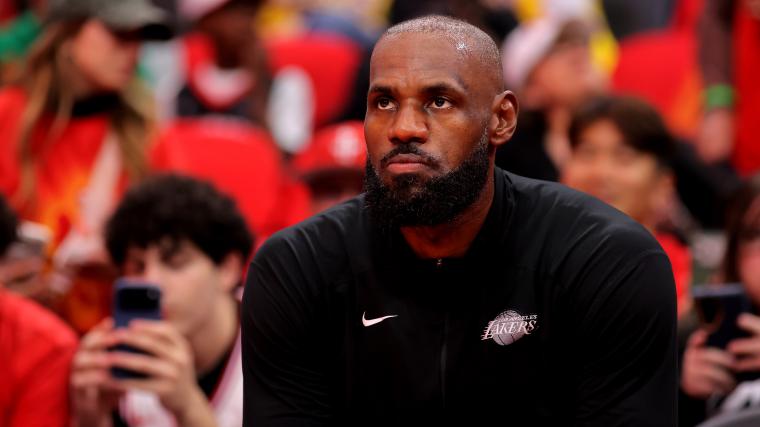
But then, there’s always a big name, isn’t there? One presence just always seems to command the spotlight. As it has many times in his legendary career, one name looms above them all: LeBron James. His next destination was a saga itself, with his decision between retirement, re-signing with the Lakers or signing elsewhere remaining to be seen. A truly wild ride for any general manager hoping to make a pitch.
Elsewhere, the wheeling — and dealing moved at breakneck pace. We’ve seen significant roster alterations already this offseason. The Houston Rockets — busy bees, they were — re-signed restricted free agent forward Tari Eason on a five-year, $81.5 million contract, as reported by Shams Charania. That’s some serious cash for a player proving his worth. But contracts like that, they’re not just about current performance; they’re about future speculation, hedging bets on athletic primes.
The Los Angeles Lakers, never shy about a grand gesture, orchestrated a colossal trade to acquire Walker Kessler from the Jazz, immediately signing him to a four-year, $130 million extension. This wasn’t merely adding a player; it was about securing Luka Doncic’s lead pick-and-roll partner and a defensive staple for years to come. Simultaneously, the City of Angels went on a spending spree, agreeing to three free-agent deals to fill out their roster. Guard Quentin Grimes, for instance, inked a four-year, $60 million deal. Such expenditures illustrate the vast financial landscapes traversed by these teams, a financial terrain that impacts everything from television rights negotiations to global merchandising. It’s a lot like the macroeconomic flows that determine the shadow of withdrawal for international allies, only with better dunks.
The draft capital exchanged in these deals — an almost comical amount of first-round picks, second-round picks, and pick swaps — hints at how future flexibility is bought and sold, sometimes with little regard for the present. Just look at the haul the Hornets received for LaMelo Ball, or the picks going out for Kawhi Leonard. It’s all a big gamble. Sometimes it pays off — championships — and sometimes it turns into a million-dollar misstep. Players themselves aren’t immune to the churn. Mitchell Robinson departed the Knicks, their recent champions, for the Celtics on a three-year, $47.4 million deal. New York got Andre Drummond as backup for a veteran’s minimum deal.
These movements aren’t just names on a sports ticker; they’re data points in a complex economic model. For organizations like the NBA, the revenue generated extends well beyond North American shores, touching audiences in the most unexpected corners. Fans across the globe — from the vibrant markets of Southeast Asia to the fervent basketball communities emerging in parts of the Muslim world — tune in, consume merchandise, and invest their emotional capital. They watch, hoping to see a young prodigy or a seasoned veteran hoist a trophy, fueling an industry that relies on aspiration and competitive narrative as much as athletic prowess.
What This Means
The sheer scale of financial commitment in professional basketball offers a sharp lens into modern global sports economics. We’re talking about billions — B-billions — circulating around a small cohort of elite athletes and even smaller number of powerful owners. It’s not just entertainment; it’s big business. The league’s relentless push into international markets isn’t charity; it’s about extending that financial reach, tapping into new fan bases willing to pay for content, jerseys, and virtual experiences. And countries like Pakistan, with its burgeoning youth population and increasing digital connectivity, represent an untapped frontier for major sports leagues seeking growth. When a player like Giannis Antetokounmpo, with his distinct Greek-Nigerian heritage, becomes a global brand — his transfer is big news in Karachi just as much as in Milwaukee. His universal appeal isn’t accidental; it’s an economic multiplier. The success of players from diverse backgrounds, the massive contracts they sign, these signal global opportunity, a sort of financial inclusion, however remote, that resonates beyond typical Western fandom.
These player movements also have deep political undertones for cities — and franchises. A marquee signing can energize a city’s economy, boosting local businesses and creating a collective civic identity around shared success. Conversely, losing a beloved superstar can feel like a direct hit to community morale — and maybe even municipal pride — triggering debates about public funding for arenas or the value of sports in the social contract. It’s a microcosm of how global capital intersects with local identity, playing out daily on our television screens, sometimes making policy decisions for cities easier, sometimes a lot harder. It’s what happens when economic might — fueled by consumer desires — comes to dictate cultural relevance.