

Taliban Turn: Pakistan Faces Border Crisis at Khyber Pass
Pakistan's uneasy alliance with the Afghan Taliban collapses, sparking deadly border clashes. Explore the profound implications of this dangerous regional shift.

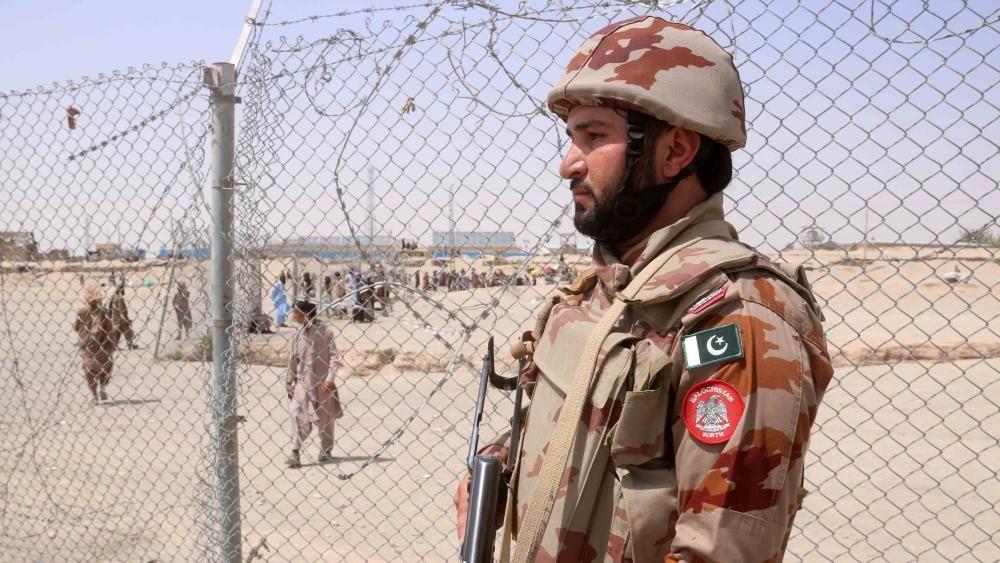
POLICY WIRE — Islamabad, Pakistan — It wasn’t supposed to end like this. For decades, Islamabad’s powerbrokers had navigated a profoundly awkward dance with Afghanistan’s hardline factions. A calculated risk, some called it; a Faustian bargain, others whispered. But now, that uneasy alliance seems to be unraveling on the bloody frontier itself, turning a once-pliant neighbor into an open aggressor. What we’re seeing isn’t just cross-border skirmishes—it’s a fundamental recalibration, and Pakistan’s rulers look decidedly wrong-footed.
The latest spasm of violence, culminating in artillery fire and small arms clashes across the porous Durand Line, signifies more than just another border spat. It’s a blunt assertion of the Afghan Taliban’s newfound, unbridled sovereignty, and a stark refusal to play by Pakistan’s long-established, if unwritten, rules. You’d think, wouldn’t you, that the years of covert support, the safe havens offered, would buy a measure of loyalty? Think again.
And these aren’t minor incidents. The strikes from Afghanistan’s Nangarhar and Paktia provinces—ostensibly targeting militant hideouts within Pakistani territory, according to Kabul—have provoked sharp responses from Islamabad. The casualties, mostly civilian from the Pakistani side, add a bitter sting to an already acrimonious situation. It’s a mess. A total, bloody mess.
The truth is, Pakistan’s security establishment is facing a dilemma of its own making. Having long supported elements of the Taliban in their fight against various occupying forces, it now confronts an emboldened, uncompromising entity uninterested in playing the junior partner. General Asim Munir, Pakistan’s Army Chief, hasn’t minced words, reportedly telling his inner circle, “We simply won’t tolerate these incursions. Pakistan’s sovereignty isn’t up for debate, and our patience isn’t infinite.” It’s a sentiment echoed across the country, but the actual policy levers are proving trickier to pull.
Meanwhile, in Kabul, the Taliban’s spokesperson, Zabihullah Mujahid, presents a starkly different narrative. “Our borders are secure from any elements intending ill against Afghanistan,” he asserted in a rare press conference from Kandahar. “Any problems within Pakistan are for Islamabad to handle, not to project onto us with accusations. We’re a sovereign nation now.” A sovereign nation with a deeply historical—and troublesome—relationship with its neighbor, but sovereign nonetheless.
The sheer hypocrisy isn’t lost on regional observers. For years, Islamabad harbored the very group now effectively pointing a gun back at it. Now, as border incidents along the Durand Line have jumped 45% in the last quarter alone, according to figures compiled by the Pakistan Institute for Conflict and Security Studies, that policy has come home to roost with brutal efficiency.
Because the real friction isn’t just about the border markers; it’s about the Tehrik-i-Taliban Pakistan (TTP), a distinct but ideologically aligned group that’s intensified its attacks inside Pakistan. Islamabad insists the Afghan Taliban harbors these TTP elements. Kabul vehemently denies it, a denial few believe, but a denial they don’t seem concerned with making credible. They’re playing a long game, it seems, — and Pakistan’s hand isn’t looking strong.
📄 POLICY WIRE WHITEPAPER PUBLISHED: PAKISTAN'S NATIONAL SECURITY POLICY PRIORITIES
👉 READ BY CLICKING HEREWhat This Means
The implications here stretch well beyond immediate casualties. Economically, border closures — and persistent instability wreak havoc on an already strained Pakistani economy. Trade, always a fickle thing across this contested frontier, grinds to a halt, hitting agricultural markets and smuggling networks alike. Politically, it presents a legitimacy crisis for Pakistan’s fragile caretaker government, unable to secure its own borders while grappling with myriad internal challenges.
Then there’s the broader regional reverberation. Other nations, wary of Afghanistan’s unpredictable rulers, will see this as further evidence of Kabul’s transactional — and often antagonistic — approach to diplomacy. It forces regional powers, including India — and Gulf states, to rethink their engagement strategies. Could this push Pakistan further into Beijing’s strategic orbit for security guarantees, or potentially reignite latent calls for greater Western involvement? It’s complicated, messy. Just like everything along that border.
And there’s a deeper, humanitarian element. Constant instability — and fear drive fresh waves of displacement. Families living for generations near the border now find themselves in peril, their livelihoods—and lives—threatened by state-on-state friction and the machinations of non-state actors. It’s a cycle Pakistan has seen before, a brutal lesson in regional blowback. It leaves one wondering how much more punishment the populace, or the region, can endure.
The idea of a stable, amenable Afghanistan under Taliban rule, one that would cooperate on security issues and rein in proxy groups, looks like a pipe dream now. This new reality signals an era where Afghanistan, under its new-old leadership, isn’t just aloof to Pakistan’s concerns, but actively willing to assert its will through force. It’s a dangerous path, — and nobody’s quite sure how to get off it.