
Taliban Border Action Fuels Pakistan Tensions
Afghan Taliban border actions escalate tensions with Pakistan. Explore how these clashes threaten regional stability, economic progress, and perpetuate a cycle of mistrust.

POLICY WIRE — Islamabad, Pakistan — For all the talk of a new Afghan chapter, some things—like persistent border friction—it seems, remain stubbornly familiar. We’re seeing renewed clashes along the Afghanistan-Pakistan frontier, not as some random outburst, but as a symptom of a deeper malaise that just won’t quit. It’s a reminder that old ghosts don’t easily stay buried; they tend to pop up, sometimes with Kalashnikovs.
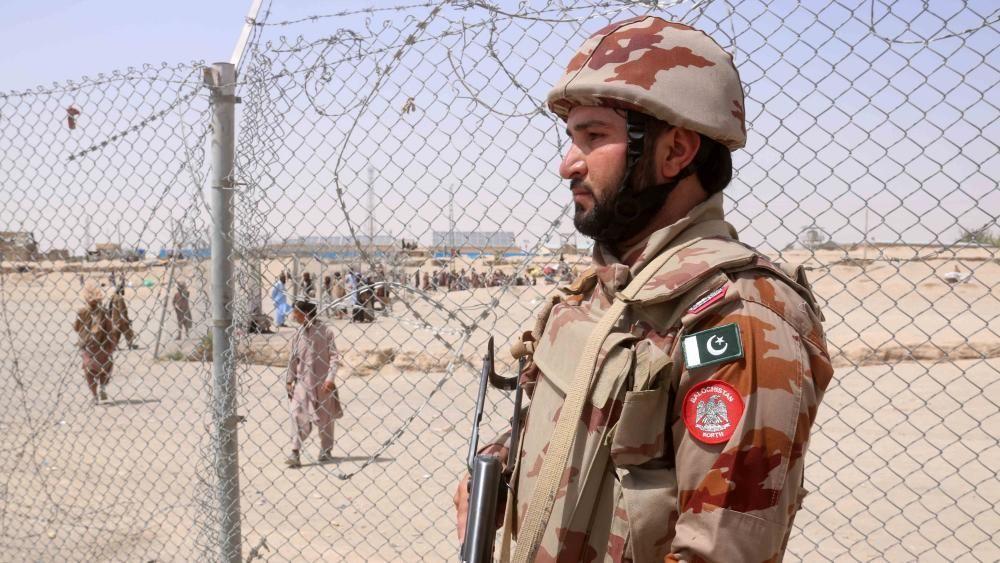
Reports trickling in — sometimes vague, often conflicting — indicate that Afghan Taliban forces recently launched some sort of action against Pakistani installations near the porous, fiercely contested Durand Line. This isn’t an isolated incident, mind you. But it certainly cranks up the dial on already frayed diplomatic wires. You𠆝 think with all the other regional headaches, folks might prefer a bit of calm. They don’t seem to. It’s a precarious situation, one where rhetoric can quickly morph into actual hot lead.
Pakistani officials, who’ve seen this play out before (haven’t they always?), aren’t exactly thrilled. And they’re pretty clear on what they want. Pakistan, for its part, maintains [QUOTE_PLACEHOLDER] of respecting Afghanistan’s sovereignty while demanding that its own territory not be used for terrorism. The narrative is as old as the hills that separate these two nations: accusations of cross-border insurgencies, a blame game that feels like an endless loop.
But this isn’t just about a few rounds fired. It’s a reflection of the Afghan Taliban’s shaky hold on absolute control, even within their own claimed borders, and a stark illustration of Islamabad’s perennial dilemma. Pakistan has hosted millions of Afghan refugees for decades, a significant demographic shift documented by UNHCR, which reported 1.3 million registered Afghan refugees in Pakistan as of early 2024. These population movements, alongside deeply rooted historical and ethnic ties, make any border flare-up particularly tricky. It’s not just a geopolitical border; it’s a societal fault line.
There’s a creeping suspicion, on both sides of that often-imaginary line, that this whole border fence project is an act of historical revisionism— a physical manifestation of division where none really existed for millennia. For many Pashtuns, particularly those residing on either side, it’s just arbitrary. But that fence, once completed, will represent a significant redefinition of their shared geography. It’s a modern boundary trying to tame ancient tribal loyalties, a messy proposition at best. The implications of this are, well, not exactly great for regional harmony. And they’ve certainly contributed to the current chill.
Because let’s be honest, the recent incursions — or retaliations, depending on your preferred narrative — serve multiple masters. They’re a show of force, a diplomatic middle finger, — and perhaps even a calculated distraction. Afghanistan’s ruling cadre, always sensitive to perceptions of their strength, uses such moments to solidify internal support. Islamabad, caught between a rock and a hard place, has its own complex balancing act: appease its military, manage internal dissent, and avoid alienating an internationally isolated neighbour completely. They’re dancing a tango in a minefield.
📄 POLICY WIRE WHITEPAPER PUBLISHED: PAKISTAN'S NATIONAL SECURITY POLICY PRIORITIES
👉 READ BY CLICKING HEREOne official, anonymously speaking for reasons we can all understand, mentioned the rising exasperation among senior military leaders in Rawalpindi, who reportedly felt their continued restraint was being misinterpreted as weakness by certain elements across the border. It’s a subtle distinction that can quickly be lost in the heat of a border skirmish. But the cost of this particular diplomatic dance isn’t just measured in strategic realpolitik; it’s felt keenly by ordinary people caught in the crossfire—literally.
Consider the recent, tragic events impacting children in neighboring Lahore, where systemic educational failures have been exposed. These aren’t direct results of border skirmishes, no, but they highlight the pervasive instability that prevents proper governance and economic uplift across the wider region. It’s all connected, you see. Regional peace isn’t a luxury; it’s a prerequisite for any meaningful societal progress, particularly in countries where infrastructure is already stretched thin.
What This Means
This escalating border friction isn’t some localized dust-up; it’s a loud alarm bell for regional stability. Politically, it complicates Pakistan’s already awkward relationship with the Afghan Taliban, which Islamabad once hoped would provide a more stable, albeit ideologically aligned, neighbor. Instead, they’ve got a volatile entity that struggles to control its own proxies while challenging Pakistani sovereignty. This undermines any semblance of regional coherence — and makes long-term policy planning a nightmare. Economically, the constant threat of cross-border terrorism and retaliatory actions dampens foreign investment and makes regional trade — which holds immense potential for these landlocked and semi-landlocked economies — extremely difficult. It’s a drain on resources that both nations desperately need for internal development. We’re seeing a perpetuation of cycles here, cycles of mistrust — and minimal economic collaboration. For the wider Muslim world, it highlights the challenges of state-building and security in post-conflict zones, particularly when historical grievances and complex ethnic dynamics remain unresolved. And it reinforces a perception of persistent regional instability, which benefits absolutely no one outside those few profiting from conflict.