

Catholic Schools Face Global Crisis: Santa Fe Closures
Santa Fe's Catholic school closures mirror a global crisis in faith-based education. Discover how financial strains and declining enrollment impact communities worldwide.

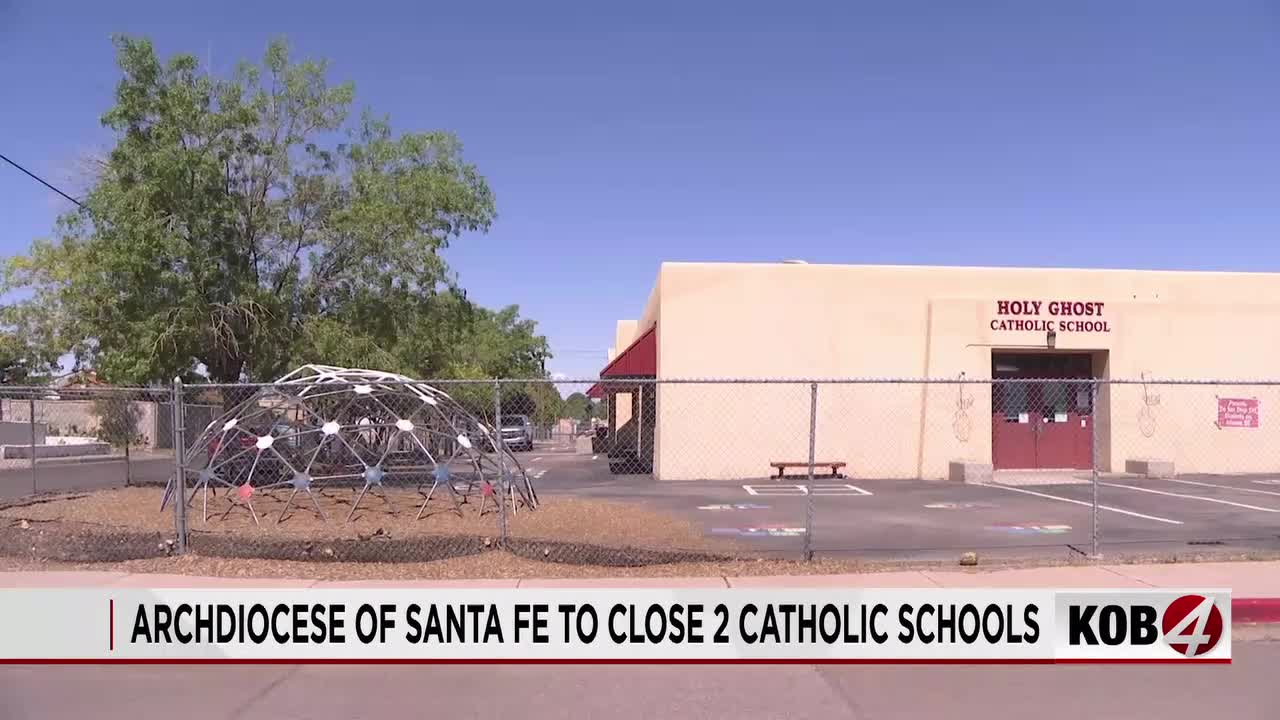
POLICY WIRE — ALBUQUERQUE, N.M. — It isn’t often you hear the final, mournful toll for an institution that’s shaped lives for generations. But in Santa Fe, the chimes for two Catholic schools are falling silent, not with a bang, but with the quiet lament of a dwindling treasury and empty seats. This isn’t just a local news item about real estate or demographics. It’s a gut-check on the very fabric of community-anchored education, and honestly, a stark look at what happens when tradition runs up against hard cash. The Archdiocese of Santa Fe, with what feels like a collective sigh, is shuttering Holy Ghost Catholic School here in Albuquerque and Holy Cross Catholic School up in Santa Cruz, near Española.
And yes, they trotted out the expected lines. You know, decisions made after [QUOTE_PLACEHOLDER]. Retiring superintendent Donna Illerbrun put it simply enough: [Closing a Catholic school is never taken lightly.] There’s a real, raw pain that comes with pulling the plug on places that have served as places of faith, formation, and community for generations. Families feel it. Alumni, faculty, parishioners—everyone with a connection, they’re feeling this deep sense of loss. You can’t put a price on that kind of generational imprint, but it seems the balance sheets sure can.
But this isn’t some isolated incident, a localized blip on the radar. It’s a mirror reflecting wider currents across the nation. The archdiocese mentioned how these closures reflect challenges facing Catholic schools nationwide. It’s not just about what’s happening here in the Land of Enchantment. For years, observers have watched, almost morbidly, as Catholic school enrollment has taken a significant hit. Indeed, between 1970 and 2020, enrollment in Catholic schools across the United States plummeted by nearly 50%, according to data compiled by the National Catholic Educational Association (NCEA). That’s not a drift; it’s a freefall. The institutions can’t survive just on good intentions when the benches are bare — and the bills stack up.
Archbishop John C. Wester, facing the stark arithmetic, is still holding out for something more. [I ask every Catholic family, parishioner, and supporter to prayerfully consider how they can support our schools through enrollment, engagement, and generosity. Together, we can ensure this essential ministry continues to thrive.] It’s a plea, certainly. A Hail Mary pass in the fourth quarter, perhaps. But the game clock is ticking loud — and clear. Randall Peters, the archdiocese’s new superintendent, wasn’t mincing words either, laying out the economic realities of faith in education: [Catholic education cannot exist on tradition alone.] He understands it requires committed families, strong parish partnerships, and generous supporters who believe in its mission. And where do you find that perfect storm of commitment, partnership, and belief in an increasingly secular, or at least less institutionally loyal, America?
It’s not just America facing this. Across the globe, particularly in places where faith-based education holds a historically dominant, or at least highly visible, position, similar dilemmas play out. Think of Pakistan, for instance. Religious education there—from traditional madrasas to more modern Islamic schools—constantly navigates pressures. There’s the balancing act of preserving religious identity while offering a curriculum relevant to modern life. Or the persistent questions of funding, quality control, and competition from both state-run and secular private institutions. The struggle for an American archdiocese to maintain its schools isn’t so different, conceptually, from the ongoing efforts in Islamabad or Lahore to keep their distinct educational traditions afloat amidst evolving societal norms and economic realities.
The archdiocese, post-mortem, plans to pivot. They’re going to focus on strengthening its remaining schools, primarily through enrollment growth. That’s a sensible enough strategy. But it begs a bigger question: growth from where? From a demographic that’s demonstrably declining its institutional affiliation? It’s not simply about getting more kids through the door; it’s about the entire community infrastructure supporting that door staying open. And that’s where the difficulty lies, in plain sight, for everyone who cares to look. Folks looking for more information, families needing a new educational compass point, can find resources at asfcatholicschools.org. It’s a pragmatic solution for immediate needs, but it doesn’t quiet the existential hum.
What This Means
These closures aren’t just a sorrowful anecdote for New Mexico; they’re a telling data point in the broader political economy of America’s social institutions. Politically, they signal a continued erosion of traditional faith-based organizations’ ability to command community resources and sustained commitment outside of direct congregational support. The tax-exempt status of such institutions often rests on their societal contributions, with education being a big one. As their educational footprint shrinks, so too does their leverage in some policy debates.
Economically, we’re seeing a classic market correction in a niche sector. When you don’t have enough paying customers—families enrolling their children—or consistent, generous donations, even an enterprise built on divine mission can’t escape the laws of scarcity. This puts greater pressure on public school systems, already stretched thin, to absorb students from defunct private options. And that’s a cost shift the public payer likely hasn’t budgeted for, especially not when the very rationale for some public bond measures has been to account for smaller K-12 populations in a state. For a deep dive into how broader market forces can impact seemingly insulated sectors, one might consider Detroit Tigers’ Astounding Turnaround Signals Broader Economic Resilience Amidst Sporting Market Volatility.
But the ramifications extend beyond budgets. When a private institution like a Catholic school closes, it often leaves a vacuum in specific community services. These aren’t just places of learning; they’re anchors. They provide after-school programs, local employment, and often serve as gathering points for events that transcend their religious purpose. Lose these anchors, and communities sometimes fracture a little more, particularly in areas already battling economic hardship or social disconnection. This isn’t just about faith; it’s about the tangible infrastructure of communal life slowly giving way. You can see parallels in other sectors facing systemic pressure, even The Economic Subtleties of Athlete Contracts sometimes provide early warning signs of larger economic shifts. The long-term societal cost of this steady hollowing out, honestly, it’s far less quantifiable but no less impactful.