
Taiwan Cadets Brace for Beijing’s Shadow
New Taiwanese cadets are told to brace for Beijing's ambitions. Read how Taiwan's president is rallying its future officers to defend the island's democracy.

POLICY WIRE — Taipei, Taiwan — Another batch of young men and women—the very picture of national service and nervous ambition—stood ramrod straight under Taiwan’s sweltering sun. You see their uniforms crisp, their faces perhaps a touch too serious for their years. They’re graduating into an island nation that’s found itself perpetually perched on the brink, staring across a narrow strait at a colossus with an appetite for unification. It’s a heavy mantle for any generation, particularly for those whose professional lives begin with the instruction to brace for impact.
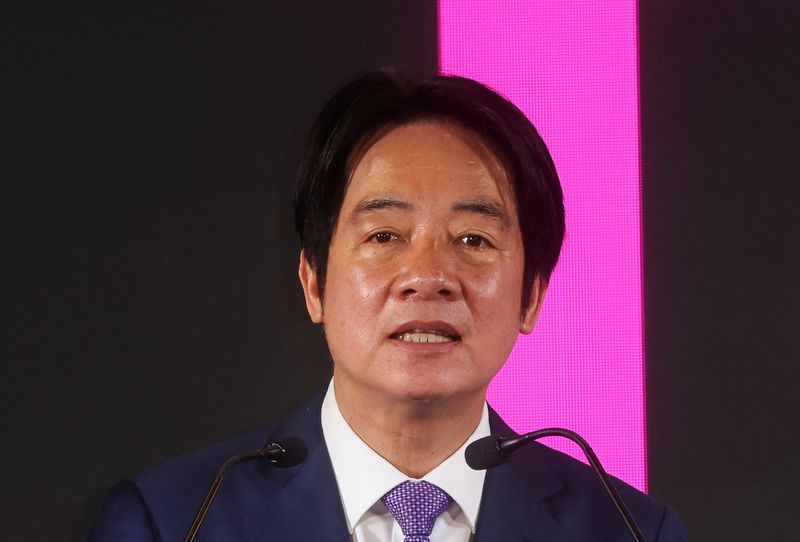
It wasn’t a pep rally, not really. Instead, the occasion carried the gravitas of a final, unwritten lecture from their commanding general — or, in this instance, their president. And the message, delivered with the kind of pointed clarity usually reserved for internal security briefings, left little to the imagination. The nation’s new commander-in-chief recently made it plain to these future officers: there’s an ever-present, indeed existential, peril hovering over their self-governed island. He didn’t mince words. Taiwan, he suggested, must [QUOTE_PLACEHOLDER] from a specific, imposing power. It’s a sentiment that barely raises an eyebrow in Taipei these days, so deeply ingrained is the daily contemplation of this geopolitical tightrope walk.
And so, as the global geopolitical chessboard shifts with the subtlety of a collapsing glacier, Taiwan’s defensive doctrine becomes not just about military readiness, but about the very soul of a nascent democracy. For years, the rhetorical temperature has fluctuated, but the underlying strategic tension never really cools. Beijing, you know, doesn’t bother with idle threats; it prefers overt military drills, air incursions, and economic muscle-flexing that serve as persistent reminders of its territorial claims. This isn’t just about sovereignty, though it’s certainly that. It’s about what kind of future these cadets are fighting for — a future dictated by their own government or one absorbed by an increasingly assertive authoritarian state.
The president’s discourse to the cadets underscored a growing global anxiety. We’re seeing nations of varying sizes, across continents, grappling with the encroaching shadows of more dominant neighbors. Pakistan, for instance, in its own delicate dance, often navigates its sovereignty amid geopolitical currents, particularly with an increasingly assertive China next door. Islamabad’s foreign policy maneuvers, carefully calibrated between historical allies and new strategic partners, echo a similar, if distinctly different, struggle for autonomy and influence in a crowded regional arena. This isn’t a problem unique to Asia; it’s a global phenomenon of power projection — and uneasy peace.
But the young Taiwanese officers were urged to internalize a particular ideology. [QUOTE_PLACEHOLDER]. It sounds like something from an old war movie, but in the Straits, it’s policy. He emphasized that the survival of the republic hangs not just on advanced weaponry—though Taipei’s always lobbying hard for that—but on an unwavering faith in their own ideals. And that’s where the nuance lies: fighting for an idea is tougher than just firing a gun. The goal, he said, is to cultivate a national identity distinct enough to withstand external pressure, and resilient enough to persevere under duress.
It’s clear he wants these newly minted officers to embody an iron will. He wasn’t merely telling them what to think; he was attempting to ingrain a fundamental posture of defiance. Think of it: they’re being prepped to manage complex systems of warfare, but simultaneously tasked with safeguarding the intangible—a way of life, a democratic experiment. That’s heavy stuff, man. In 2023, China’s defense budget, according to SIPRI data, was an estimated 292 billion US dollars, vastly overshadowing Taiwan’s military expenditure. This stark disparity alone forces Taipei to rely heavily on its ingenuity, strategic alliances, and, yes, the sheer determination of its populace.
Because ultimately, this isn’t just about rockets — and destroyers; it’s about resolve. Taiwan can’t win a purely quantitative arms race. Nobody thinks they can. So they pivot. They prioritize asymmetric warfare, training reserves, — and bolstering cyber defenses. And, as the president so sternly reiterated, cultivating an esprit de corps that’s impermeable to Beijing’s psychological warfare. It’s a desperate play, maybe. But for an island accustomed to defiance, it’s also the only one. That commitment to standing firm against overbearing forces finds echoes in countless struggles across the globe, from the Arabian Peninsula to Central Asia, where smaller nations find themselves squaring off against much larger, often wealthier, neighbors. These regional dynamics are messy, complex, and perpetually on the verge of spilling over into something far uglier. You just know that somewhere, a strategos in Tehran or an analyst in Islamabad is watching Taipei’s tightrope walk with keen, empathetic eyes. It’s the grand game, played out in miniatures.
What This Means
The presidential address isn’t merely ceremonial; it’s a pointed articulation of Taiwan’s defense strategy and psychological resilience campaign. Politically, it signals a renewed, firm stance from the new administration, disabusing Beijing of any notions of wavering resolve. Economically, this unwavering posture could lead to increased defense spending, further boosting Taiwan’s domestic arms industry while also putting pressure on its budget — particularly if US military aid, already a hot-button issue stateside, doesn’t keep pace. For global markets, increased tension in the Taiwan Strait — whether from heightened rhetoric or actual military exercises — invariably sends jitters through supply chains, especially those reliant on Taiwan’s critical semiconductor industry. A stable, independent Taiwan is a cornerstone of the world’s tech economy, and its erosion would send shockwaves far beyond its immediate region.
The emphasis on the cadets’ unwavering commitment serves as a public declaration to Beijing: the new leadership isn’t backing down. This approach could harden China’s position, too, potentially leading to more aggressive posturing or naval maneuvers around the island, an escalating pattern we’ve seen before. It implies a continuation, perhaps even an intensification, of a diplomatic and military stalemate that has now become a standard feature of East Asian geopolitics. It’s not about making friends; it’s about signaling readiness for a fight that everyone hopes never comes. For businesses with interests in the Pacific, it means continuing to bake a geopolitical risk premium into every major decision. This isn’t a quick fix, it’s a marathon, and everyone’s watching, even countries from disparate economic ecosystems, like the global sporting world.