

Italy’s Etruscan Tomb: A Geopolitical Masterclass
Uncover Italy's strategic repatriation of an Etruscan tomb. It's a bold soft power play, combating illicit art and inspiring nations to reclaim heritage.

POLICY WIRE — Rome, Italy — One might expect a nation steeped in classical grandeur to greet yet another display of ancient marvels with little more than a polite nod. But the latest Etruscan revelation — an entire tomb, frescoes and all, repatriated to Italian soil — isn’t just about pretty pictures. It’s a deft political maneuver disguised as cultural homecoming, a calculated flourish in the high-stakes game of global heritage, and let’s be honest, national branding.
No, this isn’t just about the quiet awe of history buffs peering at vibrant depictions of funerary banquets or mythological scenes. Italy, for all its charming chaos, understands something fundamental about soft power. It’s not always the loudest pronouncement or the most aggressive trade deal that shapes international perceptions. Sometimes, it’s about reclaiming a painted wall that’s been sailing the dark waters of the illicit art market for decades— a market, mind you, that fuels shadows and siphons billions globally, a genuine concern for every sovereign nation grappling with identity.
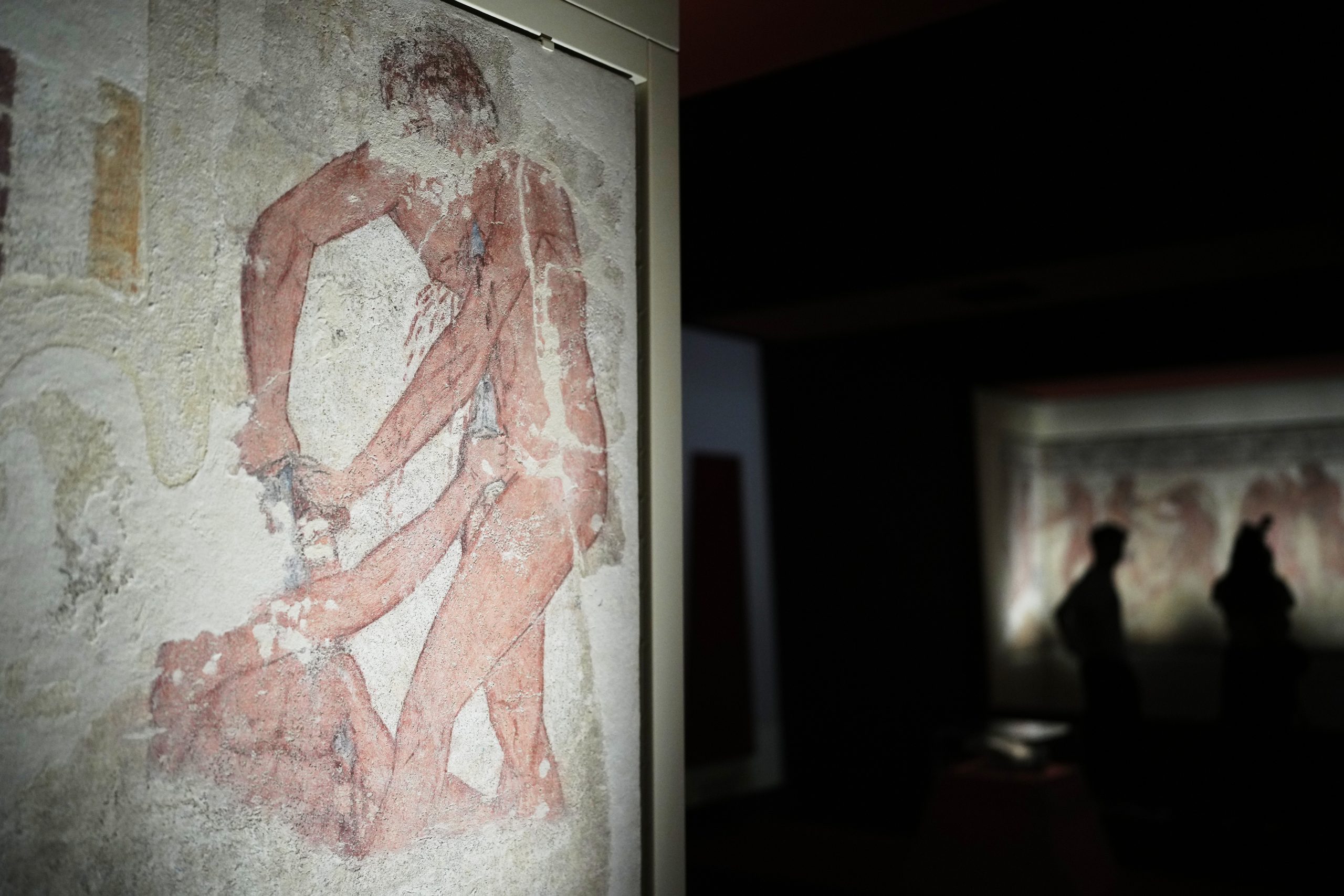
The display, featuring what officials are now calling the [QUOTE_PLACEHOLDER] Tomb of the Chariots [QUOTE_PLACEHOLDER], arrives not as a dusty relic but as a fresh headline. Its vibrant pigments, still striking after millennia, aren’t just artistic feats; they’re irrefutable evidence of a civilization complex, sophisticated, and deeply entwined with the Mediterranean world before Rome ever flexed its imperial muscle. But more to the point, they’re *Italy’s* proof.
We’re talking about paintings found in what’s described as [QUOTE_PLACEHOLDER] a private collection abroad, then acquired by the state. Not stolen, mind you, or even controversially purchased in good faith on the open market, but actively pursued and brought back. It’s a distinct posture, isn’t it? A narrative spun not just for tourism brochures but for the diplomatic circuit. They’re saying, quite eloquently without saying a word, that cultural heritage is a national priority, worth fighting for, and that those who’ve held onto it unlawfully might want to rethink their position.
Because every painting retrieved, every ancient artifact returned, isn’t just a win for cultural patrimony. It’s a loss for those shadowy networks that profit from a fragmented past. And it sets a precedent. A quiet, yet firm, expectation that what belongs to a nation’s history, will, in due course, find its way home. That’s a policy stance with teeth, albeit very subtle, perfectly crafted, — and rather elegant teeth.
This isn’t just Italy getting its things back. It’s Italy reminding the world of its long-standing cultural leadership. Consider the staggering statistics: a 2018 report by Artnet found that the global art market reached an estimated 67.4 billion U.S. dollars. A considerable portion of this, unfortunately, involves unprovenanced or illegally traded goods. And that’s where Italy’s posture gets interesting. They aren’t just protecting their past; they’re challenging the illicit future of antiquities trading, sending signals far beyond the Roman forum. They’re making a statement about provenance — and sovereignty that resonates deeply.
But the ramifications stretch further than Europe’s picturesque countryside. Think about nations in South Asia or the Muslim world, often rich in history yet poor in resources for protecting their archaeological treasures. Places like Pakistan, where Gandhara art often falls victim to illegal excavations and smuggling, find themselves battling a similar foe. Pakistan’s cultural ministry, for instance, constantly grapples with the outflow of artifacts, a battle many developing nations share against the well-oiled machinery of illicit global art trade. While Italy has the resources to aggressively repatriate, other nations often struggle just to catalogue what remains.
Italy’s methodical reacquisition of such objects— like a [QUOTE_PLACEHOLDER] frieze depicting athletic contests from an Etruscan burial chamber— serves as a tacit endorsement, a quiet call to arms for other heritage-rich nations. It demonstrates the tangible benefits of sustained pressure, diplomatic engagement, and the diligent work of specialists like [QUOTE_PLACEHOLDER]. They’ve been playing the long game here. And it’s paying off, culturally, — and subtly, geopolitically. Just look at the Detroit Tigers, an economic miracle in its own right, mirroring how disciplined long-term strategy, cultural or economic, can yield astounding results.
What This Means
This isn’t merely another museum opening; it’s a masterclass in soft power projection. By championing cultural repatriation, Italy solidifies its image as a global arbiter of heritage, a defender of artistic integrity, and a nation whose history isn’t for sale— at least, not the illicit kind. Economically, this plays into a narrative that fuels high-end tourism, drawing visitors who seek not just beauty but authenticity. It’s a shrewd investment in brand Italy, demonstrating to the world that its identity is non-negotiable. For countries like Pakistan, still navigating the choppy waters of post-colonial cultural identity and struggling against antiquities trafficking, Italy’s success provides a blueprint. It shows that persistence can chip away at deeply entrenched illicit networks. It says that culture, rightly leveraged, is not just heritage; it’s leverage. And for the collectors—and, let’s be blunt, the smugglers—who hold similar pieces, Italy is flashing a bright, inconvenient light on their acquisitions. The implication is clear: history remembers, and increasingly, so do well-resourced nations with an iron will to reclaim their past. It sets a higher bar for transparency in the international art market, suggesting a future where provenance becomes far less flexible. That, truly, is the political economy of antiquity, unvarnished — and in motion. And it’s fascinating to watch.