


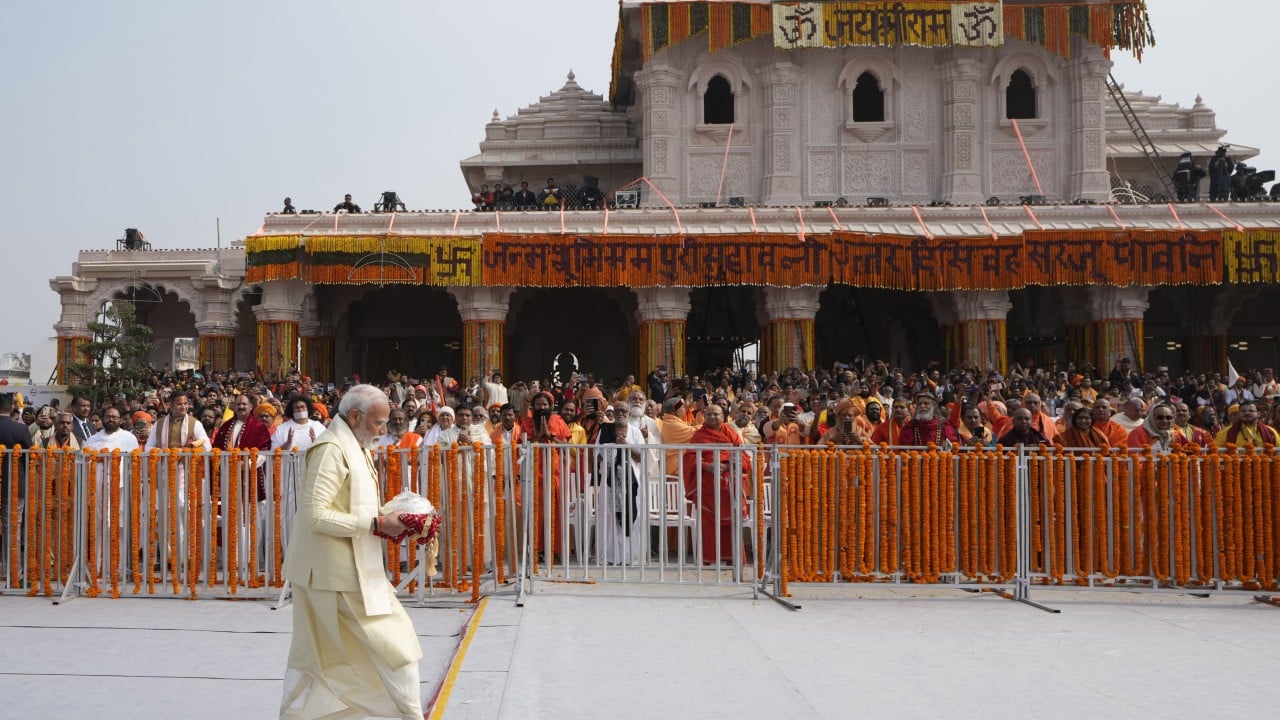
Ram Temple Corruption: BJP’s Sacred Cow Under Fire
A financial scandal hits India's Ram Temple project, funded by millions. Allegations of embezzlement threaten the ruling BJP's moral authority and political standing.

POLICY WIRE — New Delhi, India — In a nation where divinity often intertwines with politics, the very foundation of India’s most ambitious religious-political project — the Ram Temple in Ayodhya — appears to be sinking not in faith, but in financial mire. It’s a bitter pill, really. After decades of fiery rhetoric, after countless rallies and tearful promises, the structure meant to embody national pride and Hindu piety is now, quietly, a hotbed of alleged financial skulduggery. You couldn’t write this stuff.
This isn’t about mere misplacement of ledger books; it’s a full-blown investigation into shady dealings. And this whole sordid affair threatens to splash right onto the pristine white robes of Prime Minister Narendra Modi’s Bharatiya Janata Party (BJP), because, well, this temple? It’s basically their sacred cow. Their political heartland. It sits at the epicenter of their decades-long cultural nationalism drive.
Reports trickling in — and nobody’s being particularly transparent, mind you — suggest more than just a few clerical errors. They paint a picture of alleged embezzlement that’s seen two significant office bearers at the Shri Ram Janmabhoomi Teerth Kshetra Trust step aside, probably faster than they’d wanted. Meanwhile, police have collared eight officials managing the site. Collared them! It’s a messy business, but then, isn’t it always?
For a project funded by the faith of millions, by small donations from common folks across the subcontinent, this hits different. And it’s a big project. According to published figures, the Trust had, as of January 2021, raked in over ₹2,100 crore (roughly $280 million) in donations alone. That’s a staggering amount, isn’t it? To have a probe suggesting even a fraction of that sum got funneled into someone’s pockets, well, it’s not exactly going to win them any good PR. Especially when the temple’s completion is touted as a symbol of new India’s rise.
BJP spokesperson Ananya Sharma, in a statement designed to calm already-churning waters, maintained a poker face. “Any allegations of financial impropriety are being investigated rigorously. Our government stands for probity, and isolated incidents of malfeasance won’t taint a project of such profound national significance,” she asserted, though she couldn’t quite explain how so many ‘isolated incidents’ popped up simultaneously. It’s a narrative they’re sticking to, come hell or high water.
But opposition parties, predictably, aren’t buying it. Not even a little bit. “This isn’t just about a few rogue individuals; it’s a rotting fish starting from the head,” fumed Rahul Verma, a vocal critic from the opposition bloc. “The BJP preaches dharma, but practices deception when nobody’s watching. The people deserve real answers, not whitewash. And what about accountability from those at the very top?” His words, sharp as they’re, certainly resonate with many who’ve watched the temple saga unfold for decades, hoping for something other than prosaic greed.
And let’s be honest, for all the talk of cultural resurgence, the grimy reality of corruption hitting something so sacrosanct could wound the BJP’s image significantly. Because this isn’t just any construction; it’s meant to be an embodiment of their national soul, a potent electoral weapon, a grand testament to fulfilling decades-old promises. Its symbolism reaches far beyond state borders.
For observers across the border in Pakistan, or indeed among Muslim communities within India, this mess— regardless of its eventual resolution— casts a long shadow. The Ram Temple’s construction has always been viewed through the prism of India’s complex communal relations. Now, alleged corruption linked to its management adds another uncomfortable layer, potentially fueling existing distrust and narrative gaps. It certainly doesn’t help portray India as a unified, harmonious nation, especially not when headlines about fraying national banners are already doing the rounds.
What This Means
Politically, this is a sticky wicket for the BJP. They’ve leveraged the Ram Temple for years, tying it intrinsically to their identity and their promise of cultural restitution. A corruption scandal at this very site—the very beating heart of their ideological engine—threatens to chip away at the moral authority they claim. It gives opposition parties significant ammunition, allowing them to flip the script and question the integrity of those who so vociferously champion a ‘pure’ nationalist vision. Economically, while the direct impact on the national GDP might be negligible, the blow to public trust could ripple wider. Donations to other religiously-aligned causes might see a dip, as cynicism about financial stewardship sets in. this tarnishes the carefully constructed image of an India under strict, clean governance, which could subtly impact foreign investor sentiment. Because when you can’t even keep a holy temple free from alleged graft, what does that say about broader institutional accountability?