


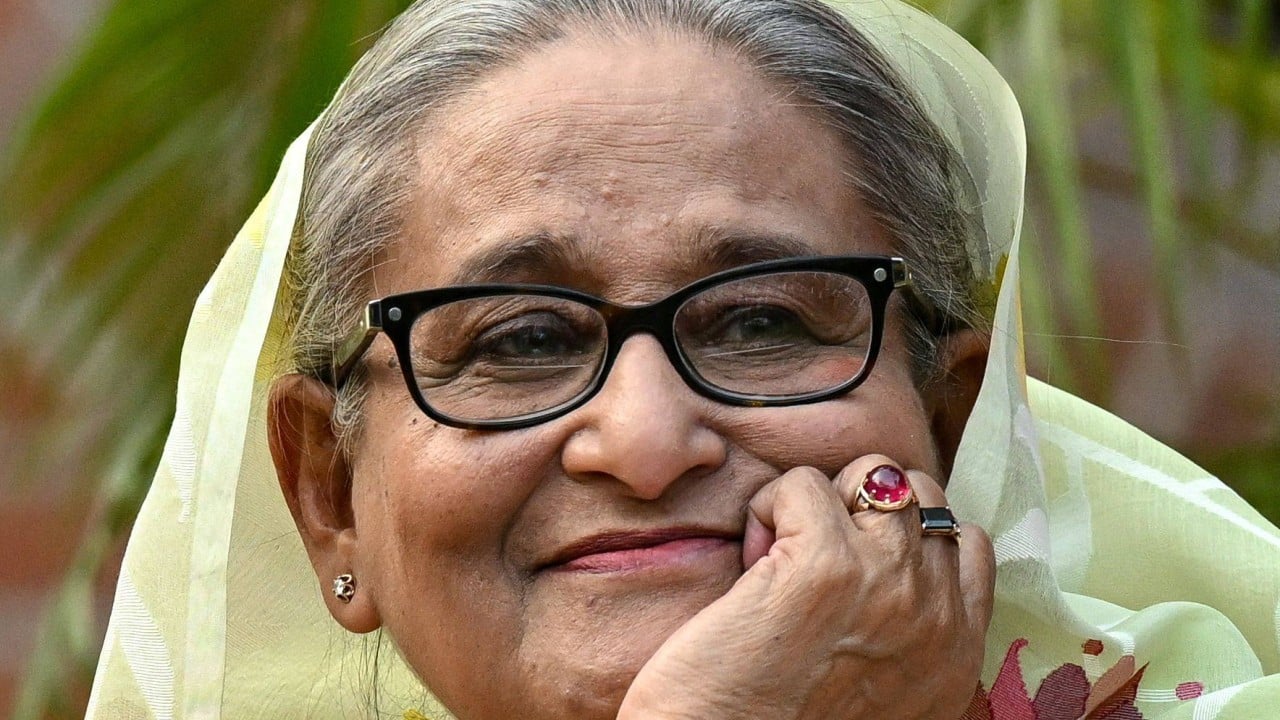
Dhaka’s High-Wire Act: Exiled Hasina’s Death-Defying Vow Ignites Fresh Uncertainty
POLICY WIRE — Dhaka, Bangladesh — The digital whispers carry more weight these days, don’t they? And sometimes, a defiant roar from exile rattles more cages than a direct confrontation. Such is...

POLICY WIRE — Dhaka, Bangladesh — The digital whispers carry more weight these days, don’t they? And sometimes, a defiant roar from exile rattles more cages than a direct confrontation. Such is the current state of play in Bangladesh, where a woman, 78 years old and branded a fugitive facing a death sentence, has declared her intent to simply return home, this year. It’s not just a political gambit; it’s a high-stakes, geopolitical tightrope walk.
Sheikh Hasina, the country’s former prime minister, is many things to many people. To her loyal Awami League followers, she’s an indomitable leader, a daughter of the nation’s founder. To the interim government in Dhaka—which took power after an unprecedented student-led uprising elbowed her administration out in August 2024—she’s a criminal. She fled to India as her government crumbled, a retreat her detractors called cowardice, her supporters, strategic repositioning.
Now, from the relative comfort of Indian airwaves (an NDTV interview, specifically), she’s tossing hand grenades back across the border. Her words: the death sentence, handed down in absentia for what the courts called ‘corruption and inciting violence’, is nothing short of “illegal, unconstitutional and politically motivated.” That’s a punchy claim, especially when your neck’s theoretically on the line. She insisted she’s not rattled by the inherent risks, vowing to overcome “every obstacle and every conspiracy” to plant her feet back on Bangladeshi soil. Some nerve, huh?
But the interim government isn’t just whistling Dixie. “Her pronouncements from comfortable exile are little more than theatrical gestures,” retorted a senior Interior Ministry official, who insisted on anonymity given the political sensitivity. “The law, she’ll find, applies equally to all, irrespective of past titles or claims of victimhood.” It’s a classic stalemate—a defiant declaration met with bureaucratic steel. They’re not exactly rolling out the red carpet.
This whole spectacle has, of course, got region watchers leaning forward. “This isn’t just about Bangladesh’s internal squabbles. It’s a calculated gamble on regional stability, a reminder of how quickly political fortunes can turn in South Asia,” observed Dr. Aisha Khan, a geopolitical analyst based in Islamabad. “Dhaka’s fragility, as always, has ripple effects. A point New Delhi understands only too well, given its strategic relationship — and proximity to Bangladesh. And one that Pakistan watches with its own peculiar interest, as a Muslim-majority neighbor grappling with similar leadership questions.” The stakes? Not low.
It’s important to remember that Bangladesh is hardly a sleepy village. It’s a country of nearly 170 million people, an economic engine (even if it sputters sometimes), and home to one of the world’s largest ready-made garment sectors, representing over 80% of its exports and employing nearly 4 million people, according to the Bangladesh Export Promotion Bureau (2023 figures). Political volatility doesn’t just scare away international investors; it can hit working families directly. And instability could push the nation further into the embrace of — well, whoever offers a helping hand.
What This Means
This isn’t just political melodrama, though it’s certainly got all the hallmarks. Hasina’s announced return date, however nebulous, throws a massive wrench into any stability the interim government might have hoped to project. It implies that she believes her political capital remains high enough to mount a credible challenge, potentially rallying disaffected elements and pushing Bangladesh further towards — God forbid — fresh chaos. It also puts India in a bit of an awkward position, playing host to an individual branded a criminal by a neighboring government. Does Delhi actively discourage her return? Or does it tacitly allow her to agitate, retaining a degree of regional leverage? Tricky. Because if she does try to come back, that creates an instant flashpoint. Her supporters would inevitably mobilize. The security forces, under the current administration’s control, would have a legal mandate to arrest her—or worse. The country is holding its breath. Remember the quiet street protests that turned into an eruption earlier? This could easily spark another fire. It’s less a game of chess, more a dangerous spin on roulette, — and everyone’s got something to lose. Especially when we consider the region’s long, rather storied history of political cycles involving exiled leaders, arrests, and the occasional—unfortunate—assassination. Just consider how such high-drama episodes impact the delicate economic balance in a developing nation like Bangladesh, not to mention how countries like Pakistan keep an eye on these political upheavals, reflecting on their own domestic fragilities.
Her vow is a public test of nerve for both herself — and the interim rulers. Can they maintain order in the face of such a provocative challenge? Can she truly conjure the support needed for a dramatic comeback without spiraling the nation into civil unrest? Only time, and a whole lot of political will—or brute force—will tell.