


Fenway Fiasco: Baseball’s Theatrical Collapse Echoes Political Spectacle, Pakistan Watches On
POLICY WIRE — BOSTON, UNITED STATES — It wasn’t the heroic home run, or even the surprising tenth-inning comeback, that truly defined the Red Sox’s recent sweep over the Yankees. No, what...

POLICY WIRE — BOSTON, UNITED STATES — It wasn’t the heroic home run, or even the surprising tenth-inning comeback, that truly defined the Red Sox’s recent sweep over the Yankees. No, what actually held Boston rapt (and perhaps aghast) was the sheer, chaotic performance art of it all—a media scrum, a deeply weird broadcast commentary, and some frankly astonishing defensive gaffes that would make any self-respecting foreign diplomat wince at the public display of organizational unraveling. You saw more drama than a parliamentary session in a hung government, I’m telling you.
Because, really, when you peel back the layers of statistics and competitive angst, what we had here was less a ballgame and more a concentrated dose of modern public life. It began with pitcher Sonny Gray, who had something truly special cooking. [QUOTE_PLACEHOLDER] His fastball and cutter each held strike rates over 80% through much of his dominant outing against a formidable opponent, as reported by analysis after the game. For seven innings, the man was surgical. This kind of precision, that unwavering focus, it’s the stuff of economic growth plans or carefully orchestrated geopolitical maneuvers. [QUOTE_PLACEHOLDER]
And then, as is often the way with the best-laid plans, things just sort of… well, they fell apart. Gradually. Caleb Durbin, fresh off a hot June where he maintained a [QUOTE_PLACEHOLDER] kept on trucking. He got on base, he stole a few, scored a run. He’s [QUOTE_PLACEHOLDER] which is another way of saying expectations are a heavy crown, sometimes.
Meanwhile, the periphery provided its own unsettling diversions. An enthusiastic umpire reveled in his power to announce automated strike zone reviews, proclaiming decisions like a tiny, sports-specific potentate. One might find that charming, or, if you’re like me, a bit much. Also, somewhere in the stadium, two Yankees fans thought, [QUOTE_PLACEHOLDER] One must ask, and I ask with utmost sincerity, [QUOTE_PLACEHOLDER] Indeed. [QUOTE_PLACEHOLDER] Such things make you wonder about the judgment of constituents, don’t they? Decisions made on impulse, in the heat of a moment that has absolutely nothing to do with personal futures.
But the true policy disaster — for a team, that’s — unfolded in the ninth and tenth innings, spearheaded by one Wilyer Abreu. The man’s performance on defense was, for lack of a kinder term, an absolute nightmare. After a crucial fly out in the ninth with runners on, [QUOTE_PLACEHOLDER] The result? Chaos. Runners advanced. A tied game. And in the tenth? More of the same, leading to the Yankees taking a lead. [QUOTE_PLACEHOLDER] Sometimes the biggest blows to an institution aren’t from external threats, but internal, self-inflicted wounds, a truth nations from Karachi to Kyiv could readily confirm.
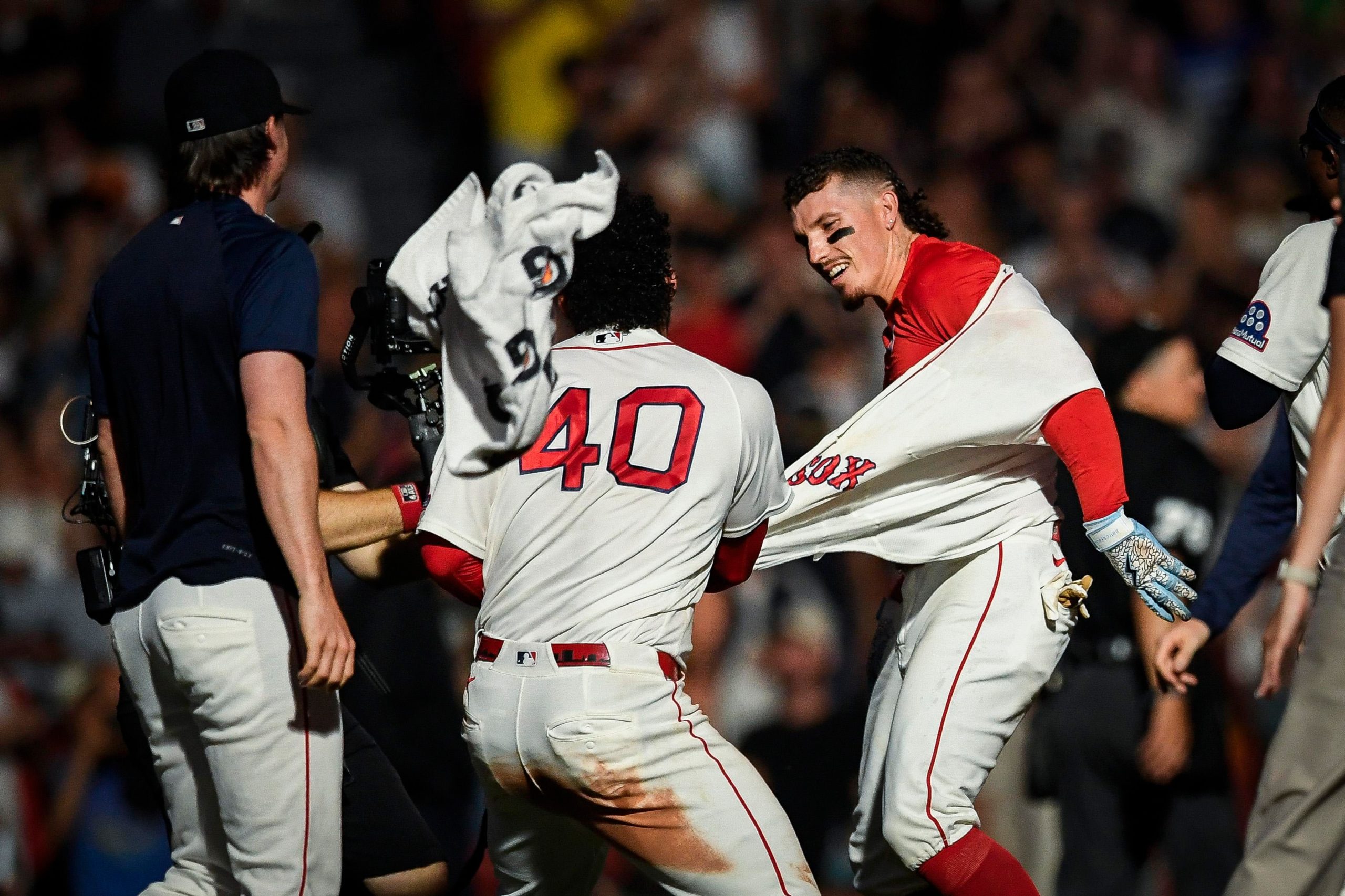
Tyron Guerrero found himself unexpectedly in a [QUOTE_PLACEHOLDER] a bullpen shuffle decision by management that seemed to work out, briefly. You see these kinds of surprising appointments in government, too; the untested hand suddenly entrusted with heavy portfolios because the usual suspects are, for one reason or another, unavailable or burnt out. These gambles, they can be good, they can be bad, but they’re always noticed. And then, there’s the broader issue of player-media relations. Jarren Duran, who ultimately delivered the winning hit, had been [QUOTE_PLACEHOLDER] the previous day, following what was apparently [QUOTE_PLACEHOLDER] That PR headache, those terse denials—it’s familiar territory. A politician in Islamabad, under scrutiny, trying to downplay a minor scandal, comes immediately to mind.
The entire, glorious mess culminated in a Red Sox [QUOTE_PLACEHOLDER] to complete a sweep. [QUOTE_PLACEHOLDER] brought them [QUOTE_PLACEHOLDER] It’s an unlikely resurgence that challenges belief, like a volatile currency suddenly stabilizing, or a fragile coalition government unexpectedly pulling off a legislative victory.
What This Means
The theatre of a high-stakes baseball game, replete with sudden heroics and spectacular failures, offers a curious, compressed allegory for the broader political and economic narratives playing out across the globe. For an institution, whether it’s a baseball franchise or a burgeoning democracy, navigating unexpected crises and maintaining public confidence becomes paramount. The Boston Red Sox, with their sudden, improbable streak and a front office that ostensibly knows [QUOTE_PLACEHOLDER] reflect the delicate balance between calculated risk and outright luck. The Red Sox’s current conundrum—to [QUOTE_PLACEHOLDER] or make the [QUOTE_PLACEHOLDER]—isn’t just a sports debate; it’s a mirror for the tough decisions policymakers grapple with in emerging economies like Pakistan. Do you prioritize long-term stability and austerity, even if it’s unpopular, or do you chase short-term, high-impact growth, hoping to galvanize national sentiment despite inherent volatility? That emotional investment by fans, the quick shifts from despair to euphoria, parallels the public mood in places where economic reforms or security measures are subject to intense, often personal, scrutiny. A single bad day, like Abreu’s fielding disaster, can erase weeks of goodwill. These are the moments when a nation, or a sports team, reveals its true character, its resilience, and the sometimes-fragile nature of its carefully constructed public image.