


Voter ID Showdown Halts Bipartisan Housing Bill: An Economic Hostage Situation?
POLICY WIRE — LOS ANGELES – For America’s struggling homebuyers and beleaguered renters, hope arrived in Washington this week with bipartisan applause, only to be yanked back with a political snarl....

POLICY WIRE — LOS ANGELES – For America’s struggling homebuyers and beleaguered renters, hope arrived in Washington this week with bipartisan applause, only to be yanked back with a political snarl. A massive housing package, designed to tackle the nation’s gnawing affordability crisis, sailed through Congress with rare consensus. Yet, the anticipated presidential pen stroke that would enshrine the 21st Century ROAD to Housing Act into law simply… didn’t happen.
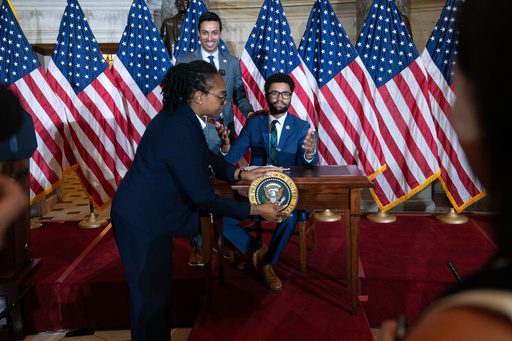
President Donald Trump, whose White House had initially signaled support for the measure, canceled the signing ceremony. Not because of a quarrel with zoning reforms or rental assistance provisions, mind you. No, this roadblock arrived with an entirely separate, decidedly political demand: a mandate for proof of citizenship for all voters. It’s an interesting move, holding critical economic legislation hostage to a long-sought campaign pledge. But then, Washington politics often isn’t about clean-cut policy; it’s about leverage. [QUOTE_PLACEHOLDER]
The legislative package itself is no small feat. It represents months of grinding negotiations, stitching together dozens of bills aimed squarely at easing the brutal squeeze on American households. You see, the cost of just having a roof over your head has spiraled, turning the aspiration of homeownership – and even stable tenancy – into a distant dream for legions of folks. This isn’t hyperbole; it’s just the raw, inconvenient truth for millions. Home prices, for instance, have skyrocketed a staggering 54% nationwide since 2020, according to researchers at Harvard’s Joint Center for Housing Studies, illustrating the profound disparity between what people earn and what shelter costs.
The bill is supposed to chip away at this problem from several angles. It would trim federal regulations, cut through some of the infamous environmental review red tape, and – crucially – accelerate new home construction. Think faster builds, less bureaucracy, — and maybe, just maybe, an eventual easing of inventory shortages. It’s even got provisions to curb the muscle of corporate landlords, limiting their appetite for gobbling up single-family homes, a trend that’s squeezed everyday buyers right out of the market. But it isn’t some magic bullet, of course. Nothing ever is. Issues like scarce construction labor, skyrocketing insurance premiums, and stagnant wage growth compared to housing costs will remain. Still, industry players, from homebuilders to apartment complex owners and housing advocacy groups, have mostly cheered it on.
As Daryl Fairweather, chief economist at Redfin, put it, We need more homes built, and legislation that removes construction barriers is exactly what the market needs right now. Her follow-up is the kicker: Homebuyers who were hoping for relief may have to wait even longer, and in a market already starved for inventory, that’s a tough pill to swallow. And it’s a tough pill, indeed. The U.S. housing market has been stuck in the mud since 2022, dragged down by mortgage rates that refuse to budge from their elevated perch. Sales of pre-owned homes barely moved last year, mired at a dismal three-decade low.
For renters, things haven’t been much better. While median monthly rents have cooled slightly for nearly three years, they’re still a chunky 17.2% higher in May than before the pandemic, Realtor.com data tells us. The legislation was looking to expand federal rental assistance, fund affordable housing projects, and even prod state and local governments to simplify new construction via federal incentives. It even includes new renter protections. Families are struggling under the heavy weight of housing costs that have climbed for decades, said San Diego Mayor Todd Gloria, who also chairs the U.S. Conference of Mayors. He added, There’s no time to waste. Without federal action, America’s housing shortfall will continue to grow, falling another 2 million units behind in the next five years.
So, what now? The interesting bit is Congress approved this thing with truly overwhelming margins. The House voted 358-32, the Senate 85-5. That’s what Washington types call a veto-proof majority, and it implies that even if Trump decides to fully nix it, they can likely override him. Speaker Mike Johnson, a Republican, even expressed confidence, noting The president, when we go through the details of the bill, he’s going to understand that it’s a good product. Whether a direct conversation changes a deeply held political position on voter ID remains to be seen. But the housing market, impatient — and stressed, watches closely.
What This Means
This presidential gambit isn’t just about a housing bill; it’s a potent demonstration of how far a leader can go to leverage an urgent domestic issue for a separate political objective. The U.S. housing crisis, in many ways, mirrors challenges faced globally, particularly in rapidly urbanizing regions like South Asia. For instance, in sprawling megacities like Karachi or Mumbai, similar pressures of limited affordable housing, inadequate infrastructure, and convoluted regulatory landscapes contribute to a chronic supply-demand imbalance. While the political systems differ wildly, the principle of governmental inaction or strategic delay having real, grinding consequences on citizens’ daily lives remains depressingly consistent.
From an economic standpoint, the delay is irritatingly unnecessary. Many of the bill’s provisions—especially those involving regulatory adjustments and planning incentives—aren’t instant fixes. Danielle Hale, chief economist at Realtor.com, wisely points out, Even if the president were to sign this bill immediately, many of the provisions will take time to impact builder planning and projects in the pipeline, so there’s going to be a delay before consumers feel the impacts of this legislation either way. So, adding another, purely political, delay just compounds the misery. It’s like waiting for a slow-moving train, only to have someone randomly pull the emergency brake because they don’t like the color of the engine. For millions grappling with escalating costs, such political theater isn’t amusing; it’s profoundly frustrating. This episode also underlines the growing entanglement of economic policy with election-year politics, where a critical need like housing becomes a bargaining chip. For many, the call for stricter identity verification at the ballot box—whatever its merits or controversies—seems a curious prerequisite for putting roofs over heads. That’s simply how Washington plays these days.