

Trump Dismisses Incoming UK Leader Burnham, Calling Him ‘Extremely Liberal’
POLICY WIRE — Former U.S. President Donald Trump has issued a notably dismissive assessment of Andy Burnham, the individual widely anticipated to become the nex...

POLICY WIRE — Former U.S. President Donald Trump has issued a notably dismissive assessment of Andy Burnham, the individual widely anticipated to become the next Prime Minister of the United Kingdom. Speaking to reporters on a Wednesday, Trump claimed unfamiliarity with Burnham, asserting he had only heard that the prospective British leader is “extremely liberal.”
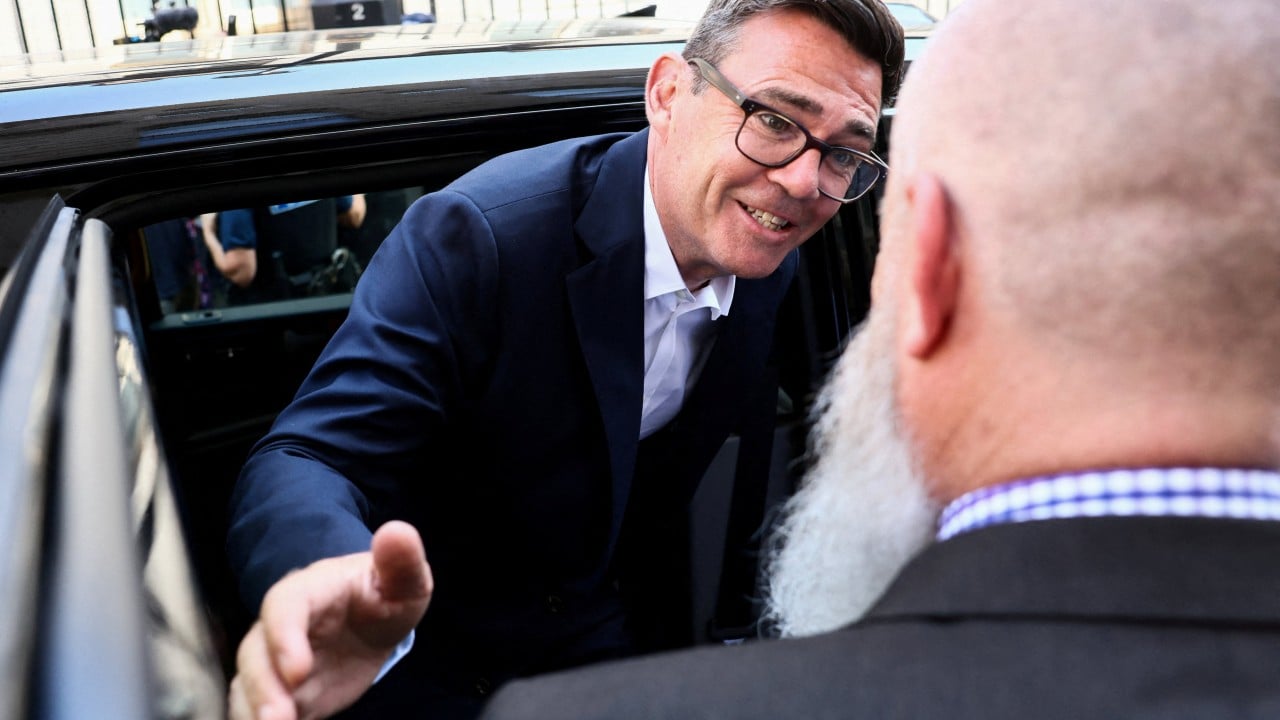
The pointed comments came amidst what appears to be Britain’s latest leadership shake-up, positioning Burnham — currently the Mayor of Greater Manchester — to succeed Keir Starmer. When pressed by a reporter about his knowledge of Burnham, Trump’s response was notably brief — and somewhat opaque.
I don’t know anything. I see that he was, I guess, the mayor of a town. I hear he’s extremely… Trump stated, his remarks trailing off, as reported by Reuters. This characteristic bluntness has been a hallmark of Trump’s engagements with foreign political figures throughout his career, often setting a contentious tone even before formal interactions commence.
The designation of an allied nation’s incoming leader as “extremely liberal” from a former U.S. President — who potentially seeks to reclaim the office — immediately signals a potential fault line in future diplomatic relations. Throughout his presidency, Trump often expressed a preference for leaders he deemed ideologically aligned, frequently reserving sharp critiques for those on the political left, both domestically and internationally. Such remarks typically serve to establish a framework for how his administration would approach and engage with these figures.
Andy Burnham, for his part, brings a significant political resume to the anticipated premiership. As the former Mayor of Greater Manchester, he has cultivated a profile centered on regional development, public transport, and social justice initiatives, often advocating for policies aimed at empowering local communities. Prior to his mayoral role, Burnham served as a Member of Parliament for Leigh and held various ministerial positions in previous Labour governments, including Chief Secretary to the Treasury, Secretary of State for Culture, Media and Sport, and Secretary of State for Health. His political career has, therefore, been firmly rooted within the Labour Party, generally considered a center-left party in the British political landscape.
The context of a ‘leadership shake-up’ where Burnham is poised to succeed Keir Starmer implies an internal change within the party currently leading, or set to lead, the UK. Such transitions are often critical junctures for any nation, especially one with a deeply interwoven special relationship with the United States. New leaders inherently bring new policy priorities — and diplomatic styles, which the U.S. traditionally navigates with carefully worded introductory remarks — and initial outreach. Trump’s immediate public characterization, however, suggests a more direct, and potentially confrontational, appraisal.
The label liberal, particularly in the American political lexicon, frequently carries connotations that diverge from its usage in other Western democracies. In Trump’s framing, it often implies an individual whose policies might diverge significantly from his own conservative-populist agenda, particularly on issues of trade, environmental regulation, and international cooperation. This early, unsolicited judgment sets a public expectation about Burnham’s ideological leanings before any formal state-level engagement or dialogue can truly begin, offering a glimpse into how future interactions could be shaped, especially should Trump return to the White House.
What This Means
The initial appraisal from Donald Trump, framing Andy Burnham as “extremely liberal” even before his presumed ascendancy to Downing Street, suggests a challenging horizon for the enduring special relationship between Washington and London. Should Trump return to the U.S. presidency, such an early, critical assessment could pre-emptively cool diplomatic exchanges, possibly leading to a more strained dynamic compared to periods when the two nations’ leaders shared closer ideological common ground.
Historically, American presidents have navigated transitions in allied leadership with a degree of diplomatic circumspection, particularly regarding initial public remarks. Trump’s directness here might foreshadow a less deferential approach to the UK’s internal political choices, focusing instead on ideological alignment as a primary driver of bilateral engagement. For Burnham, this label, while perhaps electorally advantageous within parts of his own political base, could serve as a lightning rod for criticism from political opponents eager to highlight potential friction with a powerful U.S. ally. The question remains whether an incoming Burnham premiership would seek to recalibrate this relationship early, or if the two leaders, if both in office, would find pragmatic common ground despite the declared ideological distance.
(Reporting based on Reuters)