


Hasina’s Grim Gambit: Exiled Leader’s Death-Defying Return Jolts South Asia
POLICY WIRE — New Delhi, India — The political calendar in Dhaka, for anyone who truly follows it, has a morbid predictability these days. But out of this grim tableau emerges Sheikh Hasina, a figure...

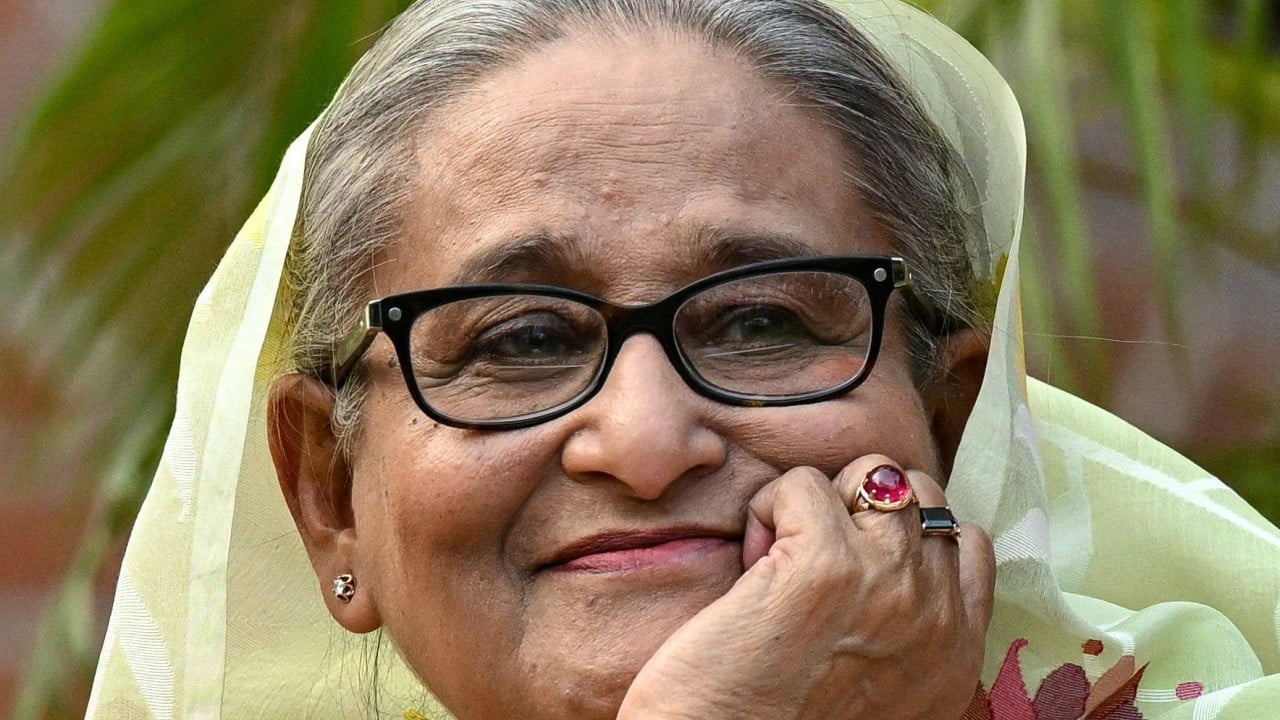
POLICY WIRE — New Delhi, India — The political calendar in Dhaka, for anyone who truly follows it, has a morbid predictability these days. But out of this grim tableau emerges Sheikh Hasina, a figure not content to fade into exile. Despite a death sentence hanging over her head—a judicial cudgel brandished by the current regime—she intends to be back in Bangladesh by year’s end. A declaration like that doesn’t just raise eyebrows; it kicks a hornets’ nest, doesn’t it?
It’s not merely a personal saga, though the drama’s certainly high enough for a miniseries. This is about power, about legitimacy, about a nation perpetually wrestling with its democratic ghosts. And, yes, about an octogenarian leader—she’s 78 now—who frankly just isn’t going quietly. You’ve gotta give her that much, she’s persistent. Fleeing to India after an abrupt student-led uprising booted her government in August 2024, one might expect a quiet retirement. Nope. Hasina, in an interview with Indian broadcaster NDTV, didn’t sound like someone resigned to fate. Quite the opposite, really. She confirmed she was undeterred by the risk — and would overcome “every obstacle and every conspiracy” to return home. A statement that, one imagines, went over well with precisely nobody currently in charge back in Bangladesh.
Her assessment of the death sentence, of course, was unequivocal: she denounced the ruling as “illegal, unconstitutional and politically motivated.” That’s a fairly standard line for any leader, former or current, caught in this sort of bind. But for a country like Bangladesh, where political allegiances often run deeper than reasoned debate, such pronouncements hit different. It’s not just legal jargon; it’s a battle cry. And let’s be honest, her return—if she pulls it off—would send political shockwaves not only through Bangladesh but across the entire Bay of Bengal. Think of the ripple effect on regional stability. Neighbors like Pakistan, often wary of any instability that might fuel Islamist currents or mass migrations, watch such developments with more than a passing interest.
But what kind of return would it be? A triumphal procession? More likely, an unholy mess. Security agencies are, shall we say, less than thrilled about the prospect. The ruling Awami League, which Hasina previously led, is currently fractured, its successor regime trying to consolidate power against a restive populace. Because let’s remember, a student uprising — August 2024, wasn’t it? — is what got her ousted in the first place. This wasn’t some coup de grace from a political rival; it was the street, fed up, making its feelings known. But street power, it often turns out, is a fickle beast. One moment you’re its champion; the next, you’re the target.
The history here is dense, convoluted. Bangladesh’s political landscape has seen more twists — and turns than a monsoon-soaked river. Two families, the Mujibs (Hasina’s lineage) and the Zias, have dominated post-independence politics, their rivalry frequently spilling into violent confrontations. A cycle of exiles, assassinations, and returns is almost an expected part of the job description for Bangladesh’s leaders. Hasina’s father, Sheikh Mujibur Rahman, the nation’s founding father, was assassinated in 1975, and Hasina herself has survived multiple attempts on her life. It’s not exactly an environment for political novices, is it? Her defiance, then, isn’t just personal bravado; it’s practically a family tradition.
Her declared intention to return also throws into sharp relief India’s position in regional geopolitics. India, where Hasina currently resides, has long played a complicated balancing act with Bangladesh. It’s an economic partner, a diplomatic ally against China’s growing influence, and a land bridge to India’s own restive northeastern states. But it’s also a host to an exiled leader defying a death warrant issued by a neighboring state. Talk about a diplomatic headache! Sources from the Indian Ministry of External Affairs—who, naturally, requested anonymity—indicated that handling Hasina’s future moves presents [QUOTE_PLACEHOLDER] with Dhaka. According to a 2023 report from the Bangladeshi Directorate General of Immigration and Passports, over 70,000 Bangladeshi citizens currently hold Indian visas for various purposes, underscoring the deep human ties that inevitably complicate high-stakes politics between the two nations.
What This Means
Hasina’s unwavering stance isn’t just noise; it’s a direct challenge to the legitimacy of the current government in Dhaka. A prolonged period of political uncertainty or renewed instability could deter foreign investment. Look, global textile giants aren’t keen on volatile environments, even if labor is cheap. Any economic slowdown would hit hard, potentially fueling more public discontent and complicating trade relationships with key partners like the EU and even other Muslim-majority nations in the region. Pakistan, for instance, a nation grappling with its own internal divisions and economic woes, keeps a close eye on Bangladesh’s political stability as a bellwether for regional security. This is particularly true given the historical complexities that bind — and separate — these two states. What unfolds next won’t be some quiet constitutional affair. It’ll be raw power politics, played out against a backdrop of deep historical grievances and the perpetual hope, or dread, of a former leader’s return. The immediate implications include increased scrutiny on human rights and rule of law in Bangladesh, putting immense pressure on Dhaka’s fledgling administration to either accommodate or firmly rebuff the former prime minister’s determined push.