

Iran School Strike: Trump’s Ambiguity Echoes Region’s Fog of War
POLICY WIRE — Washington D.C., USA — Sometimes, the quietest words carry the most thunder. It isn’t always the direct accusation that shapes a geopolitical narrative, you know? Often, it’s the...

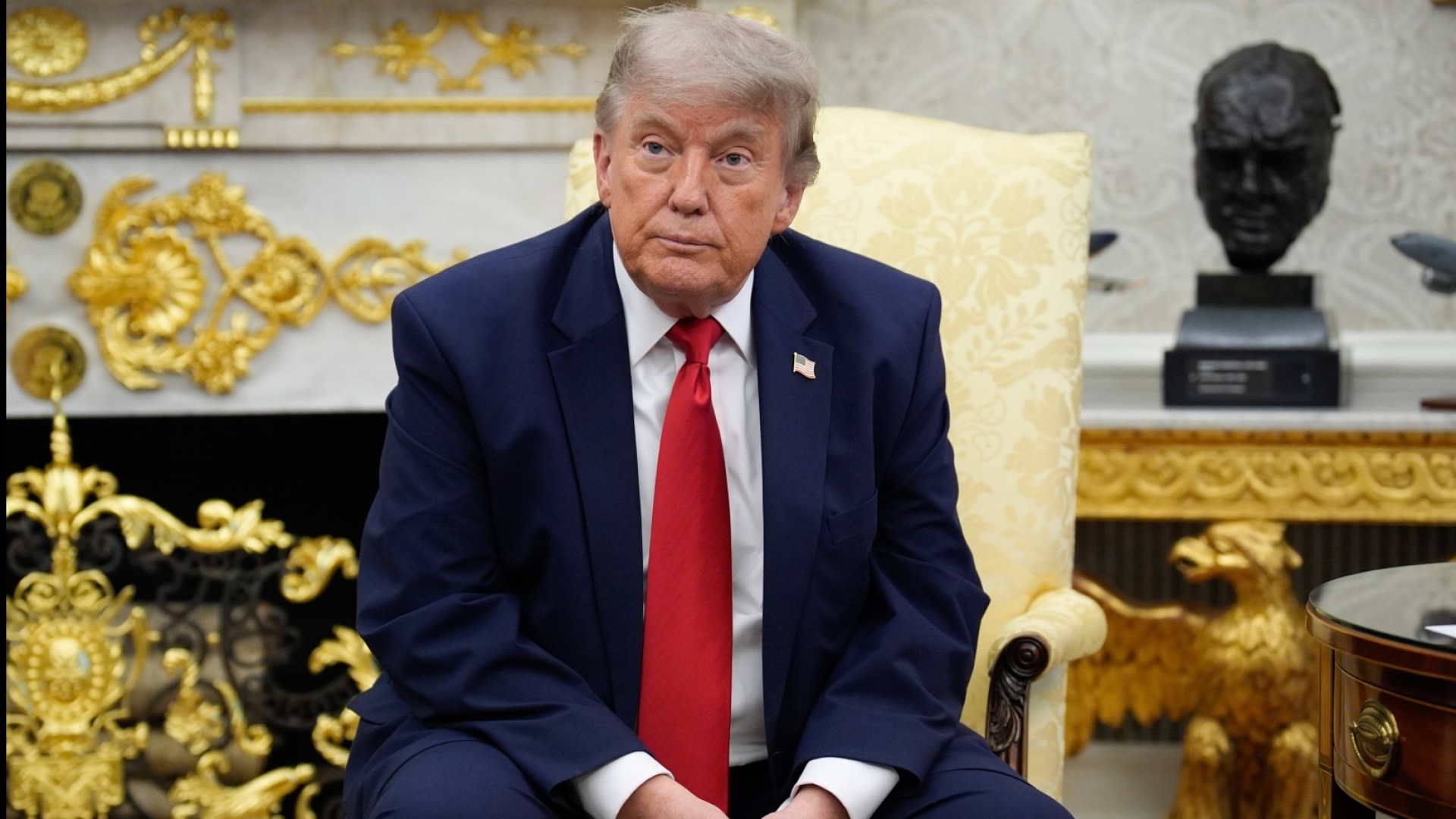
POLICY WIRE — Washington D.C., USA — Sometimes, the quietest words carry the most thunder. It isn’t always the direct accusation that shapes a geopolitical narrative, you know? Often, it’s the stark admission of uncertainty—the concession that clarity may forever escape—that actually ratchets up the tension. And Donald Trump, never one for understatement, chose that precise path when talking about a really grim business: a strike on a girls’ school in Iran.
It’s not just a passing comment, not just some offhand remark from a former head of state. It’s an acknowledgment of a deep, murky truth at the heart of modern conflict, particularly in that region of the world where facts often get buried faster than bodies. Trump’s choice words—it may never be known who was at fault for strike on girls’ school in Iran
—cut straight to the heart of the propaganda wars that shadow every physical confrontation. It’s a bitter pill to swallow, this kind of public shrug when children’s lives are on the line, no matter the perpetrator. [QUOTE_PLACEHOLDER]
We’re talking about Iran, a nation constantly under the international microscope, a hotbed of competing narratives. Was it a drone? A missile? Internal dissent bubbling over into violence? The specifics of the strike itself, and its tragic impact on those young students, often become secondary to the furious contest over who to blame, or just as powerfully, who not to blame. The fact is, in a region as volatile as the Middle East—one that casts a long shadow across South Asia—such incidents aren’t aberrations; they’re tragic, predictable pulses in an ongoing, brutal chess game.
But consider the context here. Iran is hardly a stranger to external pressures or internal strife. And for an incident as sensitive as a strike on a girls’ school, the typical immediate international response would be calls for investigation, demands for accountability. Instead, we got that profound, unsettling note of ambiguity. It effectively leaves the door open to all manner of speculation. Is it an implied admission of Western non-involvement, or a tacit nod to the tangled web of proxies and shadowy actors operating throughout the Persian Gulf? You don’t need a crystal ball to see how easily this breeds conspiracy theories on every side, making it that much harder to sort out reality from partisan spin.
This isn’t an isolated problem. You look at Afghanistan, just east of Iran, or the messy border disputes in places like Kashmir—this deliberate ambiguity, or perhaps genuine lack of actionable intelligence, just compounds the distrust. Even incidents far from direct battlegrounds, like the recent deaths of migrant workers at sea, show how complex tracing culpability can become, with multiple layers of actors and interests. According to the United Nations High Commissioner for Refugees (UNHCR), roughly 68% of civilian deaths in recent conflict zones are unattributable to a specific belligerent, underscoring this pervasive challenge in documenting conflict-related violence globally.
For Pakistan, a nation with its own complex relationship with Iran and a sizable Shia minority, this kind of ambiguous news isn’t just headlines. It feeds into existing anxieties, shapes perceptions of regional security—or insecurity, rather—and contributes to a sense of systemic vulnerability. The lack of clear answers about attacks on civilian targets, especially those involving children, makes everyone nervous. It suggests a world where fundamental protections can be shattered without clear repercussions, a frightening prospect for anyone caught in the crosshairs of regional power struggles. And frankly, it’s something Pakistan’s government, often navigating its own tightrope between external influences and internal stability, has to contend with, shaping public sentiment and policy decisions alike.
It’s this deliberate muddying of the waters, whether intentional or not, that causes real damage. It’s a vacuum where disinformation thrives, empowering extremist narratives and destabilizing already fragile environments. A government can deny, deflect, or simply state it may never be known,
and the result is the same: the truth remains elusive, and the victims—those girls in Iran—become statistical footnotes rather than subjects of justice. It’s a brutal mechanism, making accountability a rare — and treasured commodity. The fact that an ex-president, known for strong stances, would say who was at fault
would be lost, just emphasizes the severity of the situation’s inherent opaqueness.
Because ultimately, when blame can’t be fixed, it festers. It becomes a permanent scar on the geopolitical landscape. And it certainly doesn’t help stabilize an already volatile corner of the world, does it? Quite the opposite, I’d say.
What This Means
Trump’s comments, or rather, his assertion of enduring uncertainty, serve as a potent symbol of the deeper disarray plaguing international accountability in conflict zones. Economically, this sort of sustained ambiguity fuels regional instability, discouraging foreign investment and perpetuating a cycle of underdevelopment in already fragile states—not just in Iran but in its neighbors like Pakistan, too. Businesses hesitate to commit capital where security is consistently unpredictable and justice for egregious acts seems unattainable. Politically, the lack of definitive attribution weakens international law and institutions that rely on states acknowledging their actions, or those of their proxies. It emboldens non-state actors who thrive in shadows, while state actors can leverage plausible deniability, making resolution through diplomatic channels significantly harder. Think about the messaging: a former US president suggesting an incident of this magnitude might remain an eternal mystery. It normalizes a lack of transparency, eroding trust between nations — and empowering those who benefit from chaos. This particular type of rhetorical evasiveness creates an environment ripe for further escalation, as actors feel less constrained by the threat of identification and subsequent international condemnation. It just kicks the can down the road, — and the road, as it turns out, is riddled with landmines.