


Serena’s Second Act: Legacy, Family, and Wimbledon’s Shifting Sands
POLICY WIRE — London, UK — Forget Grand Slams and world rankings for a moment. Serena Williams, perhaps the greatest tennis player in history, is returning to Wimbledon—at 44—not for another record,...

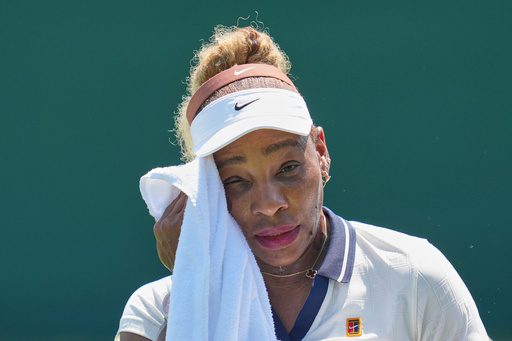
POLICY WIRE — London, UK — Forget Grand Slams and world rankings for a moment. Serena Williams, perhaps the greatest tennis player in history, is returning to Wimbledon—at 44—not for another record, but for an entirely more human reason: Her kids, it seems, won’t leave her alone. Well, that’s her playful take, anyhow. This isn’t a desperate grab at past glory; it’s something messier, more compelling, and honestly, a bit subversive in the highly controlled world of elite sports. She’s hinting it’s all about how “it’s summer” and “the kids aren’t in school.” But really, this unexpected comeback is shaping up to be a profound statement on generational legacy, family dynamics, and the relentless, universal pull of parental aspiration.
Williams, whose daughters Olympia (eight) and Adira (almost three) are now old enough to actually comprehend what mom does, has them along for the ride. They’ve been court-side, or rather, actively involved in her prep work. Remember the video last month, where little Adira was [QUOTE_PLACEHOLDER] helping with a resistance band? Williams quipped, [QUOTE_PLACEHOLDER] It wasn’t just cute; it was a subtle reveal of the new motivating force. This isn’t just a player looking for one more shot. It’s a matriarch giving her offspring a front-row seat to the daily grind of genius.
Christopher Eubanks, the recently retired pro now Tennis Channel commentator, observed this firsthand at Queen’s Club, where Williams played doubles. He doesn’t think this return changes Williams’ established record one bit. “There’s no changes to her legacy that will come as a result of this return. I don’t see anyone changing their mind about where Serena Williams stands all-time,” he explained, emphasizing, [QUOTE_PLACEHOLDER] It’s a compelling argument. This isn’t for the history books she’s already written. This is for the smaller, more intimate histories being shaped daily at home, training grounds, and now, arguably, on Centre Court.
He elaborated on the importance of this unique family experience: “Not just playing in front of her daughters, but having her daughters sit there and watch her train every day and have to wake up and put in the long, hard yards and doing fitness and doing treatment. For her daughters to have to watch her be super disciplined, that has to be just as much of a factor.” But you know what’s funny? The kids aren’t always all that impressed. Williams admitted, [QUOTE_PLACEHOLDER] Kids, right? Always bringing you back to earth.
But the real world—the policy world—does take note when titans like Serena return. It signals shifts, both subtle — and seismic. In South Asia, where women’s participation in sports is often fraught with cultural and societal hurdles, an icon like Williams showcasing the possibility of athletic ambition *after* motherhood, and *with* children involved, provides a powerful, if unspoken, narrative. Young athletes in countries like Pakistan, grappling with limited infrastructure and deeply entrenched patriarchal norms in sports, don’t just see a tennis player; they see a mother commanding a court. It’s an act of quiet defiance that transcends the sport itself. Her visibility challenges older paradigms about women’s roles, both on — and off the field. Because even without directly speaking to it, her presence is a testament to choice and empowerment.
Eubanks, who scored a career-high ranking of No. 29 in 2023, confirmed her actual game is still there, impressively so. He described her ball striking as “as good as it’s ever looked.” Her serve, too, garnered praise. [QUOTE_PLACEHOLDER] Eubanks noted—a startling data point from a practice match for a woman four years retired. That’s power, people. And the purity of her groundstrokes is “as dialed in as I’ve seen.” The concern for singles won’t be power, then. It’s likely about her fitness, particularly on grass, where movement is more intricate.
“The hardest part for me I always felt was the decelerating and the stopping because you have to take extra steps in order to come to a stop,” Eubanks detailed, contrasting it with hard courts where you can [QUOTE_PLACEHOLDER] On grass, he points out, “it takes a lot more steps and a lot more pounding on the body before you can change direction.” So, Wimbledon’s specific demands on the body are different. This might mean Williams changes her strategy, coming to the net more to shorten points, a tactic [QUOTE_PLACEHOLDER] Novak Djokovic has used his volleying skills more in recent years.
Eubanks is just 30, so for him, the Williams sisters were role models growing up. “They were always kind of the guiding light,” he recounted, noting their “huge influence on me personally.” This isn’t just a comeback; it’s an intergenerational dialogue, a passing of the torch where the torchbearer decides to take another lap. But then, this kind of layered influence, of sports transcending individual achievement, isn’t new. Consider the geo-political subtleties of cricket matches or the sheer economic might of the global sports talent market; every top athlete’s move echoes in myriad ways.
What This Means
Serena Williams’ Wimbledon foray isn’t just an athletic return; it’s a micro-economic case study in personal branding longevity and a profound political statement. On one hand, it speaks to the sustained commercial viability of a GOAT—an athlete whose celebrity now comfortably outstrips the fleeting demands of peak performance, opening new endorsement avenues rooted in motherhood and seasoned wisdom rather than just wins. For brands, Williams embodies resilience — and family values, broadening her appeal exponentially beyond sportswear. And it subtly, but potently, redefines the narrative around women and aging in public life, particularly in sports, challenging the often-brutal societal expiration dates imposed on female athletes.
From a policy perspective, her journey reinforces arguments for childcare support — and flexibility in demanding careers. When one of the world’s most successful individuals implicitly demonstrates the integration of family into professional life, it legitimizes calls for structures that allow more women to remain in high-level positions post-childbirth. This isn’t just about tennis; it’s about shifting the optics for women in power globally. It offers a blueprint—or at least a visible aspiration—for millions, showing that an almost-50 professional still operating at an elite level, even if just for the sheer enjoyment and education of her children, sets an entirely different benchmark. It challenges industries, particularly in regions where work-life balance for women is barely a concept, to reassess outdated models. It says, loudly, that experience and personal drive, when merged with familial connection, create a potent, enduring force far beyond the conventional competitive landscape.