


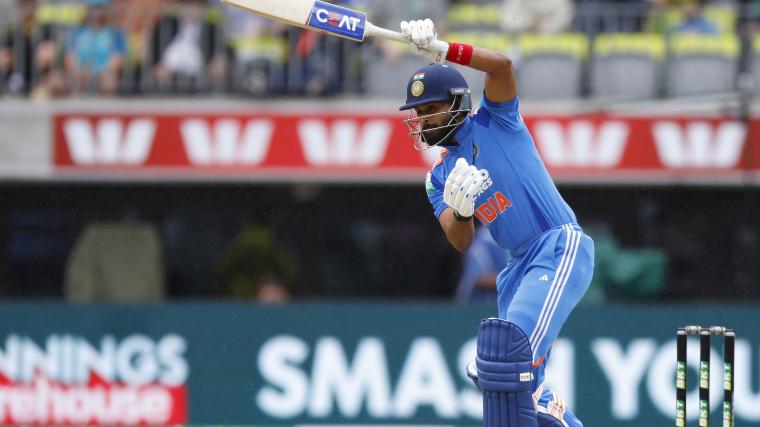
Belfast Beckons Cricket Giants: India-Ireland Clash a Subtle Geo-Cricket Overture
POLICY WIRE — Belfast, Northern Ireland — A cool breeze off the Irish Sea will soon greet not the familiar faces of a global summit or a tense political parley, but the formidable, burgeoning power...

POLICY WIRE — Belfast, Northern Ireland — A cool breeze off the Irish Sea will soon greet not the familiar faces of a global summit or a tense political parley, but the formidable, burgeoning power of Indian cricket. It isn’t often Belfast plays host to such a spectacle, particularly one that, for many, is little more than a couple of T20 games against Ireland. Yet, this isn’t just about sixes — and wickets. It’s a quiet overture, a subtle flexing of a sporting superpower’s muscle, setting a backdrop for future contests — and a strategic test of a fresh line-up.
It’s 2026. India, a cricketing titan, rolls into a comparatively small cricketing nation. A two-match T20I series is what we’re looking at, scheduled for June 26 — and June 28, 2026. These aren’t the high-octane clashes against arch-rivals that ignite passionate cries across South Asia. No, this feels more like a proving ground, a low-stakes yet consequential staging point before the bigger battles commence. [QUOTE_PLACEHOLDER]
But don’t let the modest opposition fool ya. This series, played at the Civil Service Cricket Club, serves as a dress rehearsal. India, under a fresh command, isn’t just turning up for a friendly knockabout. Shreyas Iyer will captain India, marking his first stint as the Men in Blue’s T20I skipper. That’s a big deal. For many young players, it’s a shot. A chance to stake their claim before India faces a packed international schedule, which includes a looming limited-overs tour of England right after this pit stop. It’s a high-stakes audition, really, masquerading as a brief sporting excursion.
And Ireland isn’t just making up the numbers either. They’re undergoing their own transition. Lorcan Tucker leads them for the first time, spearheading a squad featuring several uncapped players, including an Indian-born all-rounder, Jai Moondra. They’ve had their own busy home season, kicking off against New Zealand. It’s a proper initiation for new blood on both sides of the pitch, you see. Tilak Varma is the vice-captain for India, while familiar names like Sanju Samson and Ishan Kishan are also in the squad. But the visitors did take a hit: Nitish Kumar Reddy is not available due to an injury, with Suryansh Shedge getting called up instead. Cricket, it seems, waits for no one.
For those obsessed with the technicalities of viewership — and there are millions, particularly across the subcontinent — the details are already locked down. In India, fans can catch the action on the Sony Sports Network, with streaming available via SonyLIV. Over in Pakistan, where the love for cricket is a unifying national fervor, despite political grandstanding, fans will tune into the series via Tapmad, because there’s no confirmed TV broadcast there. It shows ya how the digital age blurs borders, allowing the shared passion for the game to transcend even strained diplomatic relations. You’ve got to admire the hustle for those broadcast rights. But then, the time difference can be a real headache, with the Belfast action starting at 5:30 p.m. Pakistan Standard Time.
It’s not just South Asia, though. For cricket junkies in the UK & Ireland, TNT Sports has you covered. Across the Atlantic in the USA & Canada, Willow TV is the go-to, while the MENA region and the rest of the world can mostly rely on Cricbuzz. What this means is a truly global audience, even for what some might dismiss as a preparatory series. It underscores the vast reach of the sport, and, frankly, the insatiable demand for Indian cricket wherever it plays.
What This Means
This ostensibly minor T20I series carries more weight than its billing suggests, acting as a crucial calibration point for India’s future T20 ambitions. It’s not just about a fresh captain in Shreyas Iyer taking the reins. It’s about how this iteration of India’s squad performs under new leadership and pressure (even if it’s internal pressure) before heading into higher-profile engagements. Politically, cricket’s massive viewership in India and across the broader South Asian region — including Pakistan — means these games are never just games. They’re cultural touchstones, moments of collective attention, and an affirmation of soft power, subtly reminding other nations of India’s demographic and economic clout. For smaller cricketing nations like Ireland, hosting such a behemoth, however briefly, offers invaluable exposure and, frankly, a financial bump from broadcast rights and sponsorships. Economically, even these smaller series contribute to the immense global cricket economy, funneling revenue to broadcasters, advertisers, and the host nation’s hospitality sectors. This whole apparatus supports a gigantic industry, an entire ecosystem. You can’t ignore that. It’s an investment in the long game, preparing the next generation of players (and fans) for bigger, much more expensive, battles ahead.
And, if we’re honest, it’s also a demonstration of strategic thinking. By sending a new-look squad for this particular kind of overseas tour, India isn’t just looking for wins; they’re testing depth, gauging resilience, and perhaps, building a tactical blueprint that will shape their approach for years to come. Because sometimes, the biggest impact is made not in the grand arena, but in the quieter, colder corners of the world, away from the most glaring spotlights. This isn’t just cricket, it’s preparation, a diplomatic tool, — and a cultural unifier, all rolled into one.