

World Cup’s Billion-Dollar Undercurrent: Talent Markets & Global Influence
POLICY WIRE — Madrid, Spain — While global eyes fixate on the verdant fields of the FIFA World Cup, a far more cutthroat contest plays out in the sterile confines of agents’ offices and club...

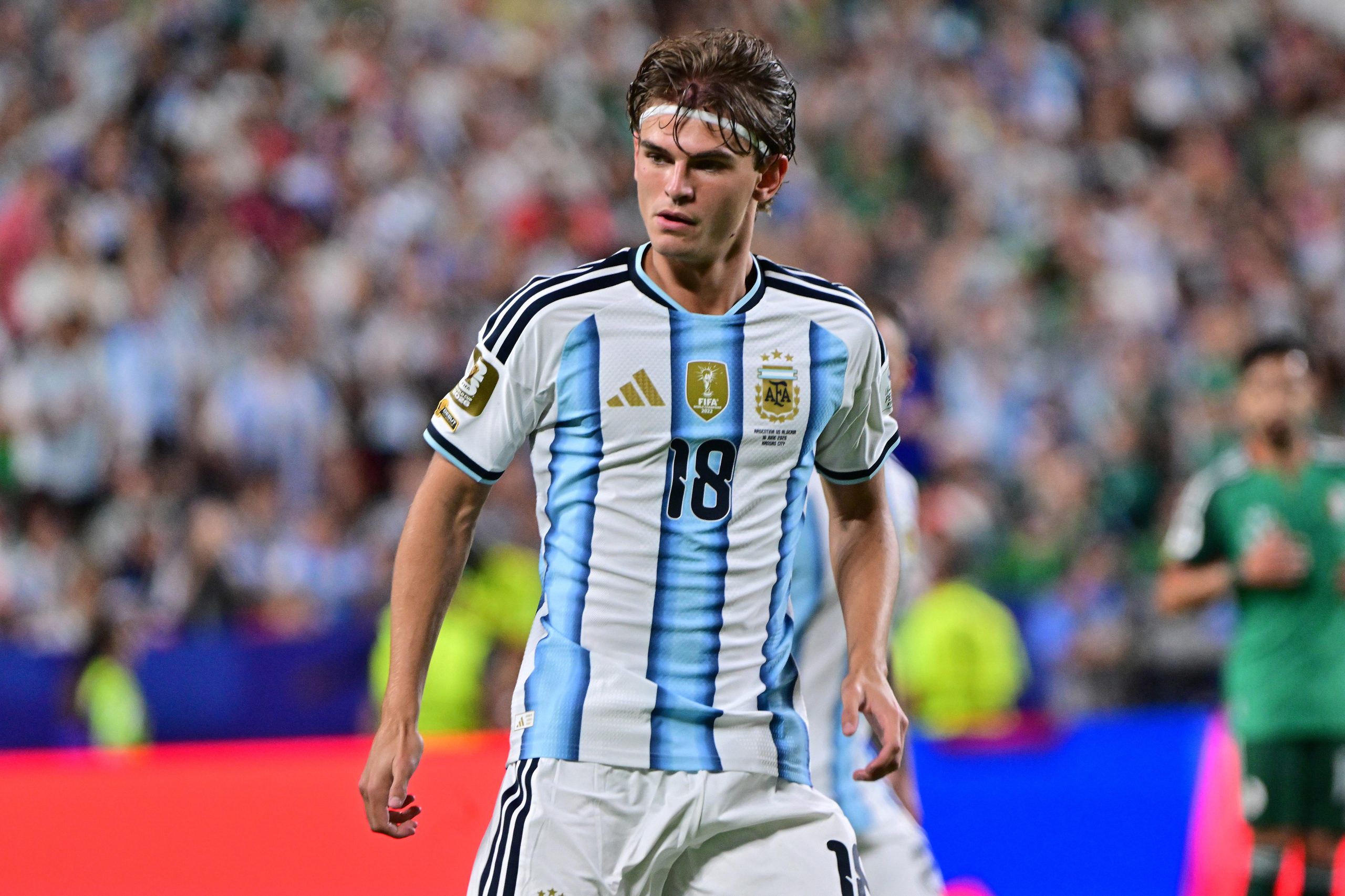
POLICY WIRE — Madrid, Spain — While global eyes fixate on the verdant fields of the FIFA World Cup, a far more cutthroat contest plays out in the sterile confines of agents’ offices and club boardrooms. It’s a game of euros and influence, where human talent is mere currency, shifting hands with dizzying speed—and price tags. Kansas City, Missouri, might host Argentina’s Nico Paz, but his value isn’t minted on American soil; it’s being fiercely debated across continental Europe, a stark reminder that beneath the pageantry of sport lies a brutal global market.
Take the curious case of Nico Paz. Just days ago, Paz, a burgeoning talent from Argentina, was part of a major transaction. We learn that Real Madrid officially inform Como they activate €9m buy back clause for Nico Páz. Sounds tidy enough, right? A standard recouping of a promising player. But hold your horses—the plot thickens, or rather, the price inflates. The very same communication outlines the Spanish behemoth gives Como the chance to buy him for €60m from now to Monday. And if that doesn’t pan out? Otherwise, next week Nico will be back to Real Madrid — and on the market again for MORE… Yes, it’s not enough to reclaim; the goal is to flip, to capitalize, to turn a tidy profit in a matter of days. That’s a roughly 666% markup in an instant. Some might even call it an Odegaard fiasco all over again, though the figures are decidedly steeper this time. [QUOTE_PLACEHOLDER]
And then Inter Milan entered the fray. It’s working to SIGN Nico Paz. Real Madrid want more than €70 MILLION. Imagine that: a player’s worth can swell by tens of millions in less than a week, dictated by whispers, tactical maneuvers, and an international auction fueled by media attention. This isn’t merely about football; it’s about asset management on a scale that would make hedge fund managers nod approvingly. Teams aren’t just collections of athletes; they’re multinational corporations, with players as their most volatile, yet potentially most rewarding, commodities.
But the World Cup isn’t just about financial speculation; it’s also a powerful stage for national projection. Consider the remarkable ascent of Arda Güler, the Turkish maestro. He’s been the center of attention for many a headline. After his performances, it wasn’t surprising to see headlines like Arda Güler is MAN OF THE MATCH. His brilliance on the pitch doesn’t just score goals; it scores points for his nation. Turkey, like many countries in the broader Muslim world and South Asia, uses the global phenomenon of football to enhance its soft power, to challenge perceptions, and to foster national pride on a world stage. It’s a message that resonates far beyond Ankara, reaching into Pakistani drawing rooms — and Indonesian cafes.
When Real Madrid—the club leading the current World Cup with Real Madrid — 10 Goals so far, according to tweets from ‘Madrid Zone’—has players like Güler performing at such a high level, it isn’t just a testament to their scouting network. It’s a strategic victory for nations associated with those players. For emerging economies, or those seeking greater international influence, football isn’t just a game. It’s a vehicle for brandishing cultural prowess — and a tangible return on investment in youth development.
This dynamic extends beyond individual brilliance. The sight of 14 teams locked into their Round of 32 spots at the World Cup is, for governments, more than just sports news. It’s an opportunity to project strength, unity, — and capability. Football success, however fleeting, often gets co-opted into broader narratives of national exceptionalism or progress, subtly weaving into foreign policy goals.
And while fans debate tactical formations — and refereeing decisions, the financial gears keep turning. Clubs don’t just win trophies; they accrue capital, elevate brand value, and solidify their place in a globalized sports economy that frequently mirrors the highs and lows of the world’s most aggressive stock exchanges. The spectacle itself masks an underlying ruthlessness, where sentiment is secondary to a healthy balance sheet.
But the true magic—or madness—is how seamlessly the two narratives coexist: the fan’s unwavering devotion and the cold calculations of capital. One provides the spectacle, the other harvests the profits. It’s a testament to the sport’s global appeal that both can thrive, however awkwardly, in the same spotlight.
What This Means
The ceaseless trading and re-trading of players like Nico Paz reveals a sophisticated financial apparatus underpinning global sports, operating with the same speculative fervor as any venture capital fund. This isn’t merely a transfer market; it’s a commodities exchange for human potential, subject to rapid valuation shifts based on World Cup performances. The implications extend far beyond club ledgers. Such high-stakes player valuation creates a bubble economy within professional football, driven by ever-increasing media rights and sponsorship deals. It funnels wealth into a select few elite clubs and leagues, potentially exacerbating disparities with smaller national leagues that struggle to compete for talent. Economically, this translates to an unprecedented flow of capital into entertainment, sometimes diverting investment from other sectors.
Politically, the meteoric rise of players like Arda Güler is pure soft power gold. For a nation like Turkey, or other aspiring regional powers across South Asia and the Muslim world, success on the world stage—be it individual player accolades or team triumphs—translates into enhanced national prestige and visibility. This can directly influence diplomatic standing, trade relationships, — and even cultural exportability. It presents a more favorable image globally, subtly countering geopolitical friction or negative stereotypes. When a player from Pakistan or India eventually becomes the next global sensation, their impact will reverberate as a powerful, non-military projection of their nation’s arrival on the world stage. It also provides a domestic sense of unity and pride, a valuable commodity for any government looking to consolidate its base. It’s why countries invest heavily in sports, recognizing that a golden goal can sometimes be more impactful than a diplomatic communiqué. And when you look at regions like India’s increasing engagement in global events, this phenomenon becomes highly relevant. The ongoing global pursuit of athletic glory is less about the sport itself, and more about who commands the narrative—and the market—beyond the boundary lines. This phenomenon even touches on how global economics intersect with geopolitical strategies, as explored in discussions surrounding topics such as Delhi’s Grand Unification Gamble: A Risky Roll of the Dice Against Beijing, Islamabad.