


Pro Football Star’s Alleged Retaliation Sparks Unsettling Questions on Justice, Wealth, and Recklessness
POLICY WIRE — Tampa Bay, Florida — A dusty King James Bible, amidst stolen Louis Vuitton and Rolex timepieces, presented a curious item on an alleged inventory of loss. One might imagine the...

POLICY WIRE — Tampa Bay, Florida — A dusty King James Bible, amidst stolen Louis Vuitton and Rolex timepieces, presented a curious item on an alleged inventory of loss. One might imagine the spiritual heft of scripture, the ultimate moral compass, somehow tempering the crass materialism of its companions. Instead, it became just another grievance—part of a perceived theft that, prosecutors contend, ignited a staggering chain of events involving a budding NFL star and a chilling episode of vigilante justice.
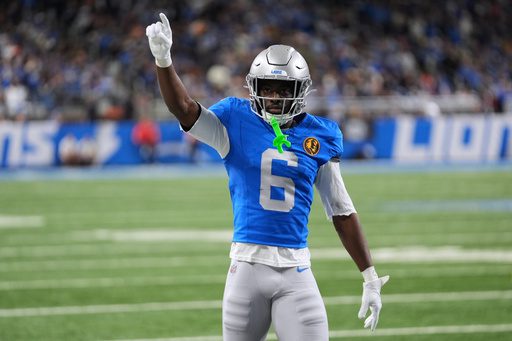
Terrion Arnold, a defensive standout for the Detroit Lions and a first-round draft pick just this year, stands accused of masterminding an operation straight out of a B-movie. Authorities allege he orchestrated the detention and brutal pistol-whipping of three young men—one, reportedly, his own driver. Their perceived transgression? Pilfering his lavish lifestyle’s trappings, alongside a substantial $100,000 in cash, from an Airbnb in Largo back in February. Irony, as always, has a sharp bite: investigators later determined the trio had nothing to do with the original theft.
It’s a peculiar narrative arc, isn’t it? An athlete, celebrated for his gridiron prowess, allegedly swapping plays on the field for orders in a group chat, guiding an assault. Police say Arnold, 23, wasn’t just a passive bystander; he was the primary conspirator. He later reportedly arrived at the apartment where these men were held at gunpoint, battered, — and struck. That’s a serious departure from collecting tackles, a feat he managed 31 of last season for the Lions. And it certainly isn’t an isolated incident; records show Jasmine Randazzo, 19, an alleged accomplice, was sentenced to four years in prison for her role in the kidnapping, conspiracy, and robbery with a gun.
And so, another tale of unchecked impulse collides with the cold machinery of the law. R. Timothy Jansen, Arnold’s defense attorney, contends his client is [QUOTE_PLACEHOLDER] absolutely denying these allegations. Of course, that’s the predictable refrain. But the fact is, the Tampa Police Chief, Lee Bercaw, already laid out a blunt truth for any high-profile figure nursing delusions of immunity: [QUOTE_PLACEHOLDER] Fame doesn’t get you out of criminal charges or our pursuit of justice and holding criminals accountable. No, it absolutely doesn’t. The State Attorney, Suzy Lopez, echoed that sentiment, adding, [QUOTE_PLACEHOLDER] No one has the right to take the law into their own hands. A dispute over missing property doesn’t justify kidnapping, violence or retaliation.
Arnold, who recently surrendered to authorities, now stares down charges of kidnapping, armed robbery, — and conspiracy. These aren’t minor infractions—they carry a possible sentence stretching up to life in prison. He’s in jail now, waiting for a detention hearing. But then, it’s not just Arnold who’s implicated. Two others involved have already pleaded guilty, agreeing to cooperate with authorities. At least six other people, including two women, face charges, showing just how many individuals one alleged fit of rage can sweep up.
But how does such a situation even get to this point? Neighbor reports of [QUOTE_PLACEHOLDER] pretty wild parties at Arnold’s Airbnb, lasting till dawn with many people coming and going, hint at a chaotic environment preceding the alleged theft. Even after items went missing, Arnold initially didn’t want to pursue the investigation, according to Largo police. That changes quickly when retribution becomes the preferred route.
What This Means
This episode, unsettling in its brazenness, doesn’t just implicate one athlete. It spotlights a persistent tension where public personas, built on athletic glory and massive endorsement deals, clash with fundamental civic obligations. For many, particularly those watching from places like Pakistan or other parts of South Asia, the spectacle of a wealthy, celebrated individual allegedly bypassing formal legal channels for personal retaliation might seem both familiar and acutely disquieting. Societies everywhere grapple with informal justice mechanisms—some deeply rooted in cultural norms, others borne of distrust in official systems—but a national figure resorting to such measures sends ripples well beyond local jurisdictions.
Economically, this is bad business for everyone. A talent pipeline worth billions globally, from US sports to the cricketing pitches that captivate regions like Pakistan and India (see here), depends on the perception of stability, ethics, and clear consequences. Teams like the Lions and leagues like the NFL, aware of the arrest, have predictably offered no comment—because what can they say? The immediate financial hit is obvious: contracts, endorsements, team image. But the broader policy implication concerns how organizations police their assets, which these athletes fundamentally are, even off the field.
The alleged willingness to resort to brute force over legal recourse suggests a dangerous belief in personal exceptionalism, that rules simply don’t apply when perceived property (and pride) are on the line. It’s a mentality that can erode public faith in due process, a system meant to protect everyone, even the most fallible among us. But here we’re, watching another cautionary tale unfold, a testament to how easily the veneer of professional achievement can peel back, revealing a raw, unpredictable humanity underneath. (Explore the global sports market here.)