
Oil’s Dangerous Passage: High Stakes Diplomacy Collides with Tehran’s Red Line in Hormuz
POLICY WIRE — MANAMA, Bahrain — The subtle art of diplomacy, it seems, has become less about persuasion and more about a high-stakes gamble on global shipping lanes. As U.S. Secretary of State Marco...

POLICY WIRE — MANAMA, Bahrain — The subtle art of diplomacy, it seems, has become less about persuasion and more about a high-stakes gamble on global shipping lanes. As U.S. Secretary of State Marco Rubio traversed the polished halls of Gulf capitals, preaching stability and reassurance, the Iranian Revolutionary Guard was busy laying down maritime red lines—literally, in some cases. Their contrasting narratives painted a grim picture of a fragile regional ceasefire teetering on the edge of economic warfare, with oil tankers, quite frankly, caught in the middle.
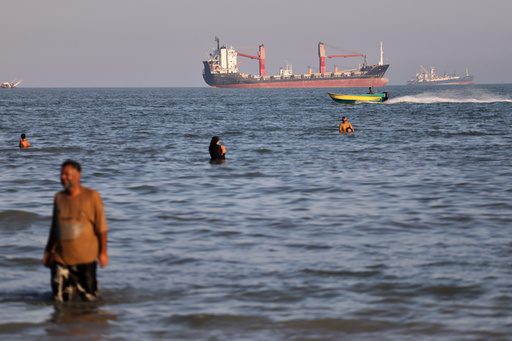
It’s not just about a ceasefire in theory. We’re talking about a world hungry for oil, and the slender choke point of the Strait of Hormuz is where a fifth of it sloshes through daily. So when a United Nations agency starts quietly promoting new, closer-to-shore navigation routes, you know things are more than a little touchy. But some vessels have taken the bait, trying out a path hugging Oman’s coastline—a departure from the customary, now-mined Traffic Separation Scheme in the strait’s center. They’re effectively thumbing their nose at Tehran, or at least attempting a new, nervous dance around its unpredictable threats.
This daring navigational shift unfolded just as the U.S. and Iran began haggling over the minutiae of their recent interim deal. That agreement, you see, was supposed to cool temperatures. Instead, it feels more like an oven turned up to ‘broil.’ Secretary Rubio, ever the picture of Washingtonian resolve, spent his time in Bahrain attempting to soothe frayed Gulf nerves. They’re wary. Of course they’re.
Rubio’s messaging was direct, almost blunt. He told journalists, and anyone else listening, that Washington’s engagement with Iran wouldn’t come at their allies’ expense. “There’s no part in this deal that’s undertaken that in any way undermines the security, the stability or the prosperity of any of our partners in the Gulf region,” he affirmed, a statement delivered with the kind of gravitas you only learn after two decades navigating Beltway spin. And he warned, starkly, of the consequences if this new Omani shipping lane were to be impeded. “If that stops, then we’re going to have a problem,” he said. Not exactly subtle.
Because, well, there are always problems. As tankers like the Stoic Warrior chanced their new path, the Revolutionary Guard’s naval arm wasn’t just sitting by. They exploded. Figuratively, of course. State media carried an angry warning, dismissing the new route as “unacceptable and completely dangerous.” Then they got even more specific, informing the maritime world, via IRNA, that “The only authorized route for passing through the Strait of Hormuz is the one declared by the Islamic Republic of Iran. Violators will be dealt with.” Sounds ominous, doesn’t it? Earlier, one tanker had reportedly received a radio warning from a Guard soldier: “you are in range of my missiles and maybe (I) fire on you.” It doesn’t get much clearer than that.
This escalating rhetoric doesn’t exist in a vacuum. It’s backdropped by the relentless, grim reality of flare-ups elsewhere. Lebanon, for instance, remains a boiling point. Israel, retaliating for militant action, launched an airstrike that reportedly killed two in the south. The wider Iran war, which began in February with U.S. and Israeli strikes on Iran, sparked the ongoing, deadly conflict between Israel — and Iranian-backed Hezbollah. Over 4,000 people have died in Lebanon from Israeli strikes since March alone. That’s not a footnote. That’s a burning canvas upon which the Strait of Hormuz drama plays out.
The numbers speak to the urgency. After weeks of suppressed traffic, the new, tentative opening has seen a burst of activity. Last week, 125 vessels crossed the strait, up significantly from just 33 the week prior, according to marine data and analysis firm Lloyd’s List Intelligence. Operators are gambling, hoping the new diplomatic detente—or perhaps just perceived weakness—will hold. Richard Meade, editor-in-chief at Lloyd’s List, observed that “opportunistic operators… have begun chasing the backlog of trapped cargoes that built up during the conflict.” Everyone’s looking for an edge, it seems.
Bahrain’s Foreign Minister Abdullatif bin Rashid al-Zayani summed up the region’s cautious optimism and inherent distrust rather well. He graciously acknowledged American support, saying, “today we see a glimmer of hope for our region,” but immediately pivoted to the critical caveat: “it’s critically important that Iran adheres to its obligations.” You hear the unspoken words there: we don’t entirely trust them.
What This Means
The situation in the Strait of Hormuz isn’t simply a story about shipping routes; it’s a potent barometer for the broader, delicate equilibrium between the West and Iran, with immediate, far-reaching economic consequences. A contested passage here doesn’t just snarl traffic—it directly impacts global oil prices, tightening the screws on developing nations from South Asia to Africa, including those in the wider Muslim world already struggling with energy costs. For a country like Pakistan, for instance, heavily reliant on imported oil, sustained disruption or price spikes stemming from Hormuz instability could easily trigger economic tremors, impacting everything from national budgets to everyday fuel costs. The humanitarian implications are significant; imagine millions already in poverty paying more for basic goods.
Politically, Iran’s defiant stance, coupled with America’s unwavering insistence on freedom of navigation, sets the stage for a prolonged, dangerous game of chicken. It forces Gulf nations—key American allies—to constantly weigh their strategic allegiance against the very real threat of a local military mishap spiraling out of control. It’s an unstable regional puzzle, isn’t it, and Washington, despite its diplomatic efforts, appears to be juggling more volatile pieces than ever before. We’re all holding our breath, watching the waves.