

Octagon in the Oval Office: Decoding Washington’s New Spectacle
POLICY WIRE — Washington D.C., United States — A gladiator’s arena, forged from temporary scaffolding and stark lighting, materializing within the hallowed grounds of American power? It sounds...

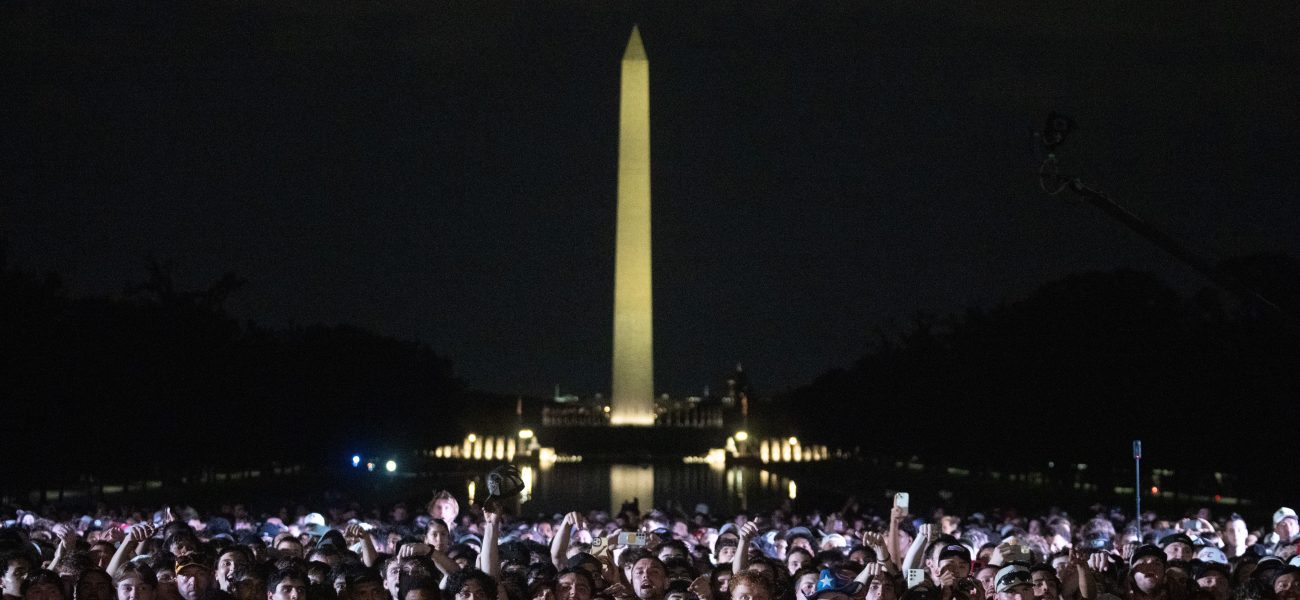
POLICY WIRE — Washington D.C., United States — A gladiator’s arena, forged from temporary scaffolding and stark lighting, materializing within the hallowed grounds of American power? It sounds like fiction, doesn’t it? But it was very much a scene that unfolded—a former occupant of the White House turning the Executive Mansion’s formal atmosphere into something akin to a high-stakes, pay-per-view spectacle. And I’m not talking about some genteel state dinner, but the raw, visceral world of mixed martial arts.
It’s an image that’s hard to shake. We’ve seen presidents throw first pitches, host musicians, even engage in quite animated policy debates. But an Ultimate Fighting Championship (UFC) showcase? With the raucous crowd, the blaring entrance music, the raw energy of athletes locked in combat—it felt, for many of us watching, less like governance and more like gladiatorial theater staged against a backdrop of carefully curated symbols. You can’t help but wonder what exactly that signals, not just to the chattering classes here, but to the world beyond, particularly those navigating their own rough-and-tumble political landscapes. [QUOTE_PLACEHOLDER]
Because frankly, it’s a hell of a choice. Why bring the visceral reality of the octagon to such an iconic seat of diplomacy? Is it a nod to a particular segment of the base, one that appreciates direct action, blunt force, and clear winners and losers? Probably. But it’s also a dramatic aesthetic statement—a stark deviation from precedent, another brick in the wall of an approach to power that relishes smashing the delicate china of tradition. He does love breaking things, doesn’t he? We’ve seen it time — and again, and this event, though certainly unexpected, fits a familiar pattern. It’s about optics, about projecting an image of strength — and an unapologetic defiance of norms. It certainly gets attention. That much, you’ve gotta give him.
And when you talk about strength and defiance, particularly in a context that skirts the formal, diplomatic stage, it raises questions for places far removed from Washington’s polished marble. Consider the impression such an event makes in a nation like Pakistan, for instance. A country wrestling with its own deep-seated political divisions, economic instability, and the constant dance between civilian and military influence. For onlookers there, who view American power through a complex lens of historical engagement and occasional disengagement—often fraught with distrust—this White House spectacle likely offered yet another bewildering data point.
In societies where political legitimacy is sometimes derived from shows of power—and where democratic institutions can feel fragile—such an overt embrace of performative combat by a former American leader might not just be seen as quirky. It could, perhaps, be interpreted as an endorsement of a less refined, more confrontational style of leadership. It reinforces an image some leaders abroad might wish to cultivate: the strongman, the decisive leader, unfettered by perceived bureaucratic niceties. It’s a perception that carries weight, especially when many global leaders from Cairo to Islamabad are already trying to balance appeals to traditional power structures with the demands of modern governance.
But how does one square that circle? How does a nation—or a former president, for that matter—project both serious statesmanship and the raw spectacle of a fight night? Well, maybe it’s not about squaring the circle at all. Maybe it’s about drawing a new one entirely. What we saw was an open declaration of priorities, a carefully orchestrated communication to supporters that politics, like the octagon, is about unvarnished victory. It’s an American exceptionalism turned inside out, where the exception isn’t some high-minded ideal, but the willingness to abandon pretense.
A recent poll, conducted by the Pew Research Center in early 2023, revealed that only 20% of adults across a basket of South Asian and Middle Eastern countries hold a favorable view of the political stability in the United States. That’s a pretty stark figure, and one has to wonder if events like these, however much they resonate with certain domestic audiences, do anything to burnish that particular international perception. Because when you’re battling for hearts — and minds overseas, the symbolism of your leaders really, truly matters. It’s not just an American story; it’s a global story, played out in front of billions.
What This Means
The White House UFC event isn’t just a quirky historical footnote; it represents a deepening chasm in how political power is both perceived and exercised. It’s a performative shift, signaling an increasing willingness among certain political factions to bypass traditional media narratives and connect directly with an audience hungry for authenticity—or at least, the appearance of it. Economically, this type of event leverages populist appeal into potential commercial opportunities, linking political brand with entertainment juggernauts. Think of the sponsorship potential, the media buzz—it’s all part of the modern influencer economy applied to politics. For nations grappling with internal disputes and looking to external powers for some semblance of order or example, this theatrical approach from Washington provides a confusing, even contradictory, model. It might empower nationalist or authoritarian figures who see democratic institutions as ripe for disruption and traditional etiquette as weakness. It’s a calculated gamble on charisma over protocol, and whether that gamble pays off in the long run for the American brand—or its allies—remains fiercely contested.
Ultimately, it’s about a leader, even a former one, demonstrating a very specific kind of strength. It’s not the quiet, measured power of diplomacy. It’s the raw, unvarnished power of an entertainer—a fighter, really—who understands that in the modern political arena, spectacle often trumps substance. And, man, he put on quite a show.