


Obama Center’s Glitzy Facade Cracks Amidst Subcontractor Payment Squabbles
POLICY WIRE — Chicago, USA — Even the most grandly envisioned projects, those bathed in the warm glow of legacy and promise, sometimes find their foundations not in concrete, but in quicksand. What...

POLICY WIRE — Chicago, USA — Even the most grandly envisioned projects, those bathed in the warm glow of legacy and promise, sometimes find their foundations not in concrete, but in quicksand. What was meant to be a crowning achievement, a physical embodiment of a former president’s aspirations for community and progress, is now entangled in a less-than-dignified squabble over money. It’s a familiar tune, really—the grand ambition hits the gritty reality of invoices and withheld payments.
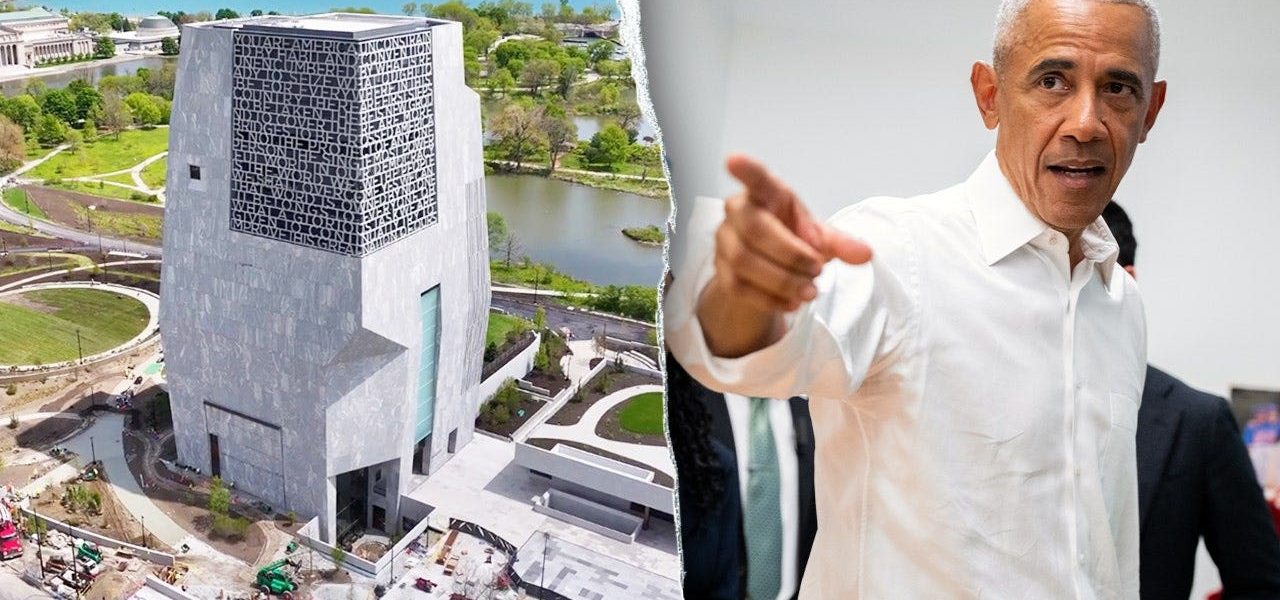
The Obama Presidential Center, that towering testament to democratic ideals on Chicago’s South Side, finds itself under an unwelcome spotlight. Beneath its much-publicized construction, a chorus of disgruntled voices is rising. They aren’t protestors (not directly, anyway), but a coalition of small and medium-sized businesses—subcontractors who performed work on the sprawling complex. They’re saying they haven’t been paid. For their efforts. Their materials. Their blood, sweat, — and frankly, quite a lot of tears, you’d imagine, given the sums involved.
It isn’t small change, either. We’re talking about millions of dollars here, according to the contractors themselves. The very financial safety net meant to protect this gargantuan endeavor, valued at some $470 million (per project documents), seems to have developed a few rather noticeable holes. You’d think a project bearing such an internationally recognizable name—a former U.S. president’s name, no less—would operate with the precision of a Swiss watch. But no, apparently not. It’s looking more like a tangled ball of string.
Reports suggest a significant portion of subcontractors, particularly those engaged in the later stages of construction, are caught in this monetary purgatory. They did the work. They poured the concrete, laid the pipe, wired the lights. Now they’re chasing checks, navigating a labyrinth of paperwork — and what they describe as, [QUOTE_PLACEHOLDER]. One owner, who wouldn’t go on record given the ongoing disputes, described the situation as [QUOTE_PLACEHOLDER]—a sentiment you hear often in the less glamorous corners of large-scale construction.
And let’s be frank: such financial imbroglios aren’t exclusive to monumental builds in the American Midwest. They echo challenges seen in development projects across the globe, from Islamabad’s burgeoning infrastructure to the port expansions of Colombo. Public and private ventures alike, especially those of high visibility, often attract scrutiny, and when payments falter, confidence in the entire enterprise — even in governance itself — can erode. It isn’t just about cash flow for these businesses; it’s about the broader perception of fairness and accountability, values one might associate quite strongly with a presidential center. The kind of headlines generated here in Chicago certainly don’t play well when nations like Pakistan are seeking foreign investment for their own ambitious schemes, say, in Balochistan, where transparency and prompt payments are always hot topics. It’s all interconnected, this web of perception — and reputation.
The irony, perhaps, is that these are precisely the sorts of small businesses a community-focused initiative, championed by President Obama, might aim to uplift. Instead, they’re stuck in a waiting game. They’ve finished their assignments, packed up their tools, — and now their invoices sit in some accounting purgatory. That can be crushing for smaller operations, putting payrolls — and families at risk. And that, frankly, diminishes the narrative of positive economic impact for the locals, which is typically a selling point for such developments. It’s tough out there for contractors right now; supply chain issues, rising material costs—it’s a real minefield, and getting stiffed just kicks them while they’re down.
It’s a complicated mess, a tangle of prime contractors, subcontractors, payment schedules, and what often feels like intentional obfuscation. Nobody’s exactly stepping forward to claim responsibility. They’re passing the buck, it seems, while these smaller outfits just want what’s theirs. They delivered on their end, you know? They followed the plans, hit the deadlines, sometimes against considerable odds. Now the expectation is for the larger entities to fulfill their end of the bargain. But that’s easier said than done, obviously. These kinds of holdups are common but never good. Never.
What This Means
The political implications here aren’t immediate in terms of votes, but they chip away at something equally significant: public trust and institutional credibility. When a project as high-profile as the Obama Presidential Center faces accusations of unpaid bills, it speaks to deeper issues within the construction and development sectors. It suggests that even under the watchful eye of a major foundation, the operational machinery can grind to a halt for the smaller players. For developing nations, say in South Asia, where infrastructure projects often dominate the political discourse and local economies, such issues can derail genuine attempts at equitable growth, echoing problems of opaque contracts and corruption. This Chicago saga could inadvertently fuel a cynicism about grand projects globally, making investors or international partners wary about financial transparency, especially when you think about projects like China’s Belt and Road Initiative, which also gets scrutinized for its financial mechanisms.
Economically, the impact is more direct. It squeezes local businesses, impacting their cash flow, ability to take on new projects, and, quite simply, their very survival. We’re talking job losses, potential bankruptcies—a cascade effect that can destabilize local economies built around such development. It’s a textbook example of how the grand vision at the top doesn’t always translate into a stable reality on the ground for everyone involved. For a wire service like Policy Wire, documenting such economic frictions is essential; they often highlight broader patterns of neglect or mismanagement. It’s not just a Chicago problem, it’s a symptom of a larger, global reality where big money sometimes trumps little promises. And for a city banking on this center to revitalize an area, these financial disputes could mean a less enthusiastic local partnership in the future. Nobody forgets getting burned, you know?