


Congo’s Unrelenting Ebola Crisis: More Than a Public Health Problem
POLICY WIRE — Goma, Democratic Republic of Congo — While much of the global press might fixate on the raw numbers—782 reported Ebola cases, 181 deaths, figures that, on their face, are undeniably...

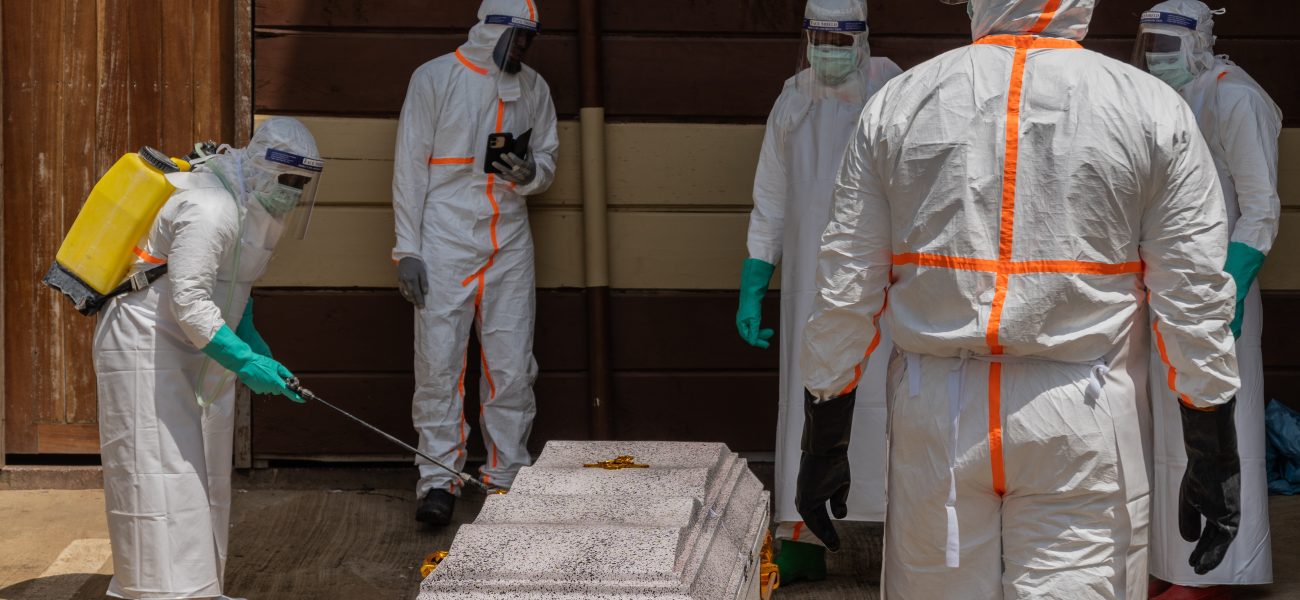
POLICY WIRE — Goma, Democratic Republic of Congo — While much of the global press might fixate on the raw numbers—782 reported Ebola cases, 181 deaths, figures that, on their face, are undeniably tragic—they tell only part of the story. You see, the contagion tearing through eastern Congo isn’t just a pathogen. No, it’s a political wildfire, fanned by decades of armed conflict and an ingrained public mistrust that even the most determined aid efforts can barely penetrate. This isn’t just about epidemiology; it’s about governance—or its frustrating absence.
It’s become clearer than a glass of cool water in the arid desert that containing this particular strain of the Zaire ebolavirus is as much a security nightmare as it’s a medical one. Humanitarian workers, often facing direct threats, struggle to conduct basic public health operations. Think about it: how do you convince someone to accept a new vaccine, or practice safe burial rituals, when their villages have been terrorized by a constantly shifting array of armed groups for years? The World Health Organization (WHO) reported in 2018 alone that 31.7 million people were displaced by conflict and violence globally. In eastern Congo, that statistic isn’t just a number; it’s the lived, brutal reality that makes every Ebola intervention fraught with peril. That means doctors can’t get where they need to go. That means surveillance falls apart. [QUOTE_PLACEHOLDER]
This isn’t some pristine, well-organized response, not by a long shot. Health workers, bless their hearts, they’re trying. But locals often view them, with their protective gear and foreign faces, as just another external force—perhaps even a malevolent one. You can’t blame them entirely. For generations, external intervention here has often brought as much woe as help. And rumor, a powerful beast in regions devoid of reliable information, spreads faster than any virus. Whispers of sorcery, of conspiracy, they cling to the disease, making even simple contact tracing feel like an interrogation.
Because the disease often lurks in areas under the thumb of various militias, reaching affected communities requires a precarious negotiation with non-state actors. This complicates everything, creating a labyrinth of checkpoints and permissions that bog down a response demanding speed and decisiveness. It’s a game of human chess, with lives hanging in the balance, and frankly, a game few outside agencies are adequately equipped to play. They’re doctors, not diplomats, — and certainly not infantry.
What’s truly troubling, what ought to keep more than a few international policymakers up at night, is the potential for this current, seemingly contained outbreak to become a much larger problem. With refugees and displaced persons often crossing porous borders, particularly with neighboring Uganda, Rwanda, and even further afield into South Sudan, the virus could easily hitch a ride. We’ve seen it happen before, though hopefully not this time.
And speaking of interconnectedness—something we sometimes forget in our cozy Western bubble—the Muslim world, often depicted monolithically by less astute observers, understands these dynamics of crisis and distrust intimately. Countries like Pakistan, for instance, have grappled for years with their own complex public health challenges, including polio eradication campaigns in conflict zones. They understand the intricacies of navigating deeply ingrained community beliefs and the palpable suspicion toward outsiders. It’s a tough row to hoe, trying to protect a population that feels perpetually under siege or exploited. The lessons learned, the strategies employed in contexts like Khyber Pakhtunkhwa or Balochistan, though geographically distant, offer practical parallels in terms of community engagement and culturally sensitive messaging. There’s a quiet resilience there, a stubborn pragmatism in the face of immense pressure that global aid agencies, currently scratching their heads in the Congo, might do well to observe. Why external patronage cannot resolve disputes between Pakistan and Afghanistan, for example, explores similar themes of local agency versus international influence.
The Democratic Republic of Congo—DRC, for short—it’s not just a country; it’s an immense, resource-rich land mass that has, for centuries, been a proxy battleground for outside interests and internal power struggles. This Ebola outbreak isn’t just a blip; it’s another harsh symptom of a system that just doesn’t work for its citizens, a system that leaves them uniquely vulnerable when a public health disaster inevitably strikes.
What This Means
The numbers—782 cases, 181 fatalities—are more than just statistics. They’re a stark political indictment. This epidemic isn’t a purely medical phenomenon; it’s a barometer of instability. Economically, prolonged outbreaks cripple already fragile local markets — and supply chains. Travel warnings and public health quarantines, however necessary, strangle cross-border trade, hurting small-scale vendors and entire communities that rely on daily commerce. Politically, the government’s perceived inability to contain the virus erodes what little public trust remains, potentially fueling further unrest—a dangerous feedback loop, especially with looming elections always a concern. It’s hard to build a functioning state when a biological crisis is continually tearing at its seams.
The failure to rapidly control this outbreak suggests a deeper systemic issue: the profound impact of long-term political instability on public health infrastructure. It forces a conversation about sovereignty, about effective aid, and about the brutal, inescapable truth that some regions of the world are simply ill-equipped, through no fault of their own, to handle predictable calamities. This isn’t just about an illness; it’s about what happens when societies break down. It’s a chilling reminder that the health of a nation isn’t just about its doctors, but about its peace—or the lack thereof.