


Armenia’s Mandate: Governing Party Dominates Amidst Nagorno-Karabakh’s Shadow
POLICY WIRE — Yerevan, Armenia — Sometimes, the quietest victories echo the loudest. You’d think the snap parliamentary elections in Armenia would simply deliver a clear outcome, a neat little...

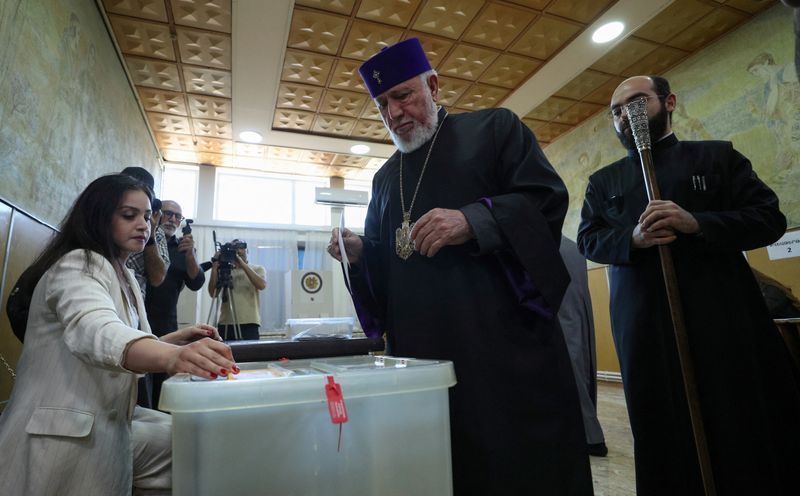
POLICY WIRE — Yerevan, Armenia — Sometimes, the quietest victories echo the loudest. You’d think the snap parliamentary elections in Armenia would simply deliver a clear outcome, a neat little bow on a contentious period. But nothing in the South Caucasus is ever neat. While official results confirmed a resounding lead for the ruling party, it’s the sheer breadth of this mandate, earned in the grim aftermath of a brutal military defeat, that tells a more complex, uncomfortable story about national psyche and geopolitical survival.
For a country still reeling from the Nagorno-Karabakh conflict – a loss that upended domestic politics and left scars etched deep on the national consciousness – an election isn’t just about who gets to sit in parliament. It’s about collective therapy. It’s about trust, or at least the desperate search for it. And the electorate has seemingly placed its faith, or its resignation, in familiar hands. The preliminary figures are pretty clear:
Armenia’s ruling party leads parliamentary vote with 54% in early results.
That’s not just a win; it’s a consolidation.
You might think folks would’ve tossed out the incumbents for presiding over such a significant setback. But voters are weird, aren’t they? Sometimes they stick with what they know, even when it feels like a painful familiarity. This election wasn’t about celebrating a bright future; it was about electing a steady hand, or what passes for one, amidst regional quicksand. The implications aren’t confined to Yerevan’s streets. Oh no. The geopolitical currents here are fierce, pulling at the very fabric of regional stability, with an ever-present eye from powers like Turkey and Russia.
Consider, for a moment, how these dynamics play out across broader swaths of the Muslim world and South Asia, where the specter of irredentism and ethnic conflict frequently defines political landscapes. Think of the unresolved issues in Kashmir, or the constant jostling for influence in post-conflict zones. Armenia, in its own crucible, reflects a persistent challenge for nascent democracies trying to navigate external pressures and internal grievances. Voters aren’t just choosing a party; they’re choosing a strategy for national resilience in a rough neighborhood.
And frankly, this electoral performance says a lot about what the populace believes, or desperately wants to believe, regarding future stability. We’re talking about a nation that lost substantial territory and endured a humanitarian crisis that led to [QUOTE_PLACEHOLDER]. It’s easy for outsiders to look in and expect neat narratives of accountability, but nation-states, especially those under duress, don’t often operate that way. This wasn’t a referendum on victory; it was a desperate plea for order.
But the numbers don’t lie completely. Voter turnout, for example, paints another picture. A recent election in a neighboring post-Soviet state recorded turnout upwards of 75%, demonstrating a different level of civic engagement, or perhaps state control. While the specifics for this Armenian vote aren’t finalized yet, typically such high support for a ruling party in the wake of such a setback doesn’t necessarily indicate robust democratic enthusiasm, but perhaps a calculated choice for perceived stability over uncertain change. Political apathy can be a powerful force too, or perhaps, weariness is a better word. Folks are just plain tired.
They’re tired of the uncertainty, of the constant threat, of seeing their aspirations ground into dust. The air in Yerevan feels different now—thinner, heavier—since the ghost of ’21 descended. This election is less about triumph — and more about an uneasy truce with reality. The path forward is strewn with tough choices, economic rebuilding, and a continued, cautious diplomacy with a heavily armed neighbor. It won’t be easy, not by a long shot. They’ve got their work cut out for them, didn’t they?
What This Means
This decisive, if surprising, electoral outcome consolidates power for Armenia’s current leadership at a critical juncture. Politically, it signals a mandate, however reluctant, for the existing post-Karabakh negotiation strategy. This doesn’t mean regional tensions evaporate; on the contrary, it may solidify Azerbaijan’s strategic position by granting their Armenian counterparts a clear, albeit weakened, negotiating hand. Economically, the stability, or at least predictability, that comes with a strong ruling majority could theoretically attract investment, but the lingering conflict and unresolved border issues remain a significant deterrent for any meaningful foreign direct investment (FDI). They can’t just wish away a regional superpower breathing down their neck. For Armenia, whose very existence feels precariously balanced between powerful neighbors, this vote represents a gamble on maintaining the current, uneasy equilibrium. It postpones reckoning, rather than resolving it, a strategy often employed in parts of the Global South where state fragility is a constant companion.