


Asia’s Enduring Stalemate: The Quad’s Familiar Refrain in a Changing World
POLICY WIRE — Washington D.C., USA — Forget the bold declarations, the handshakes under flashing lights, or the optimistic joint statements we’ve grown accustomed to. When you look beyond the...

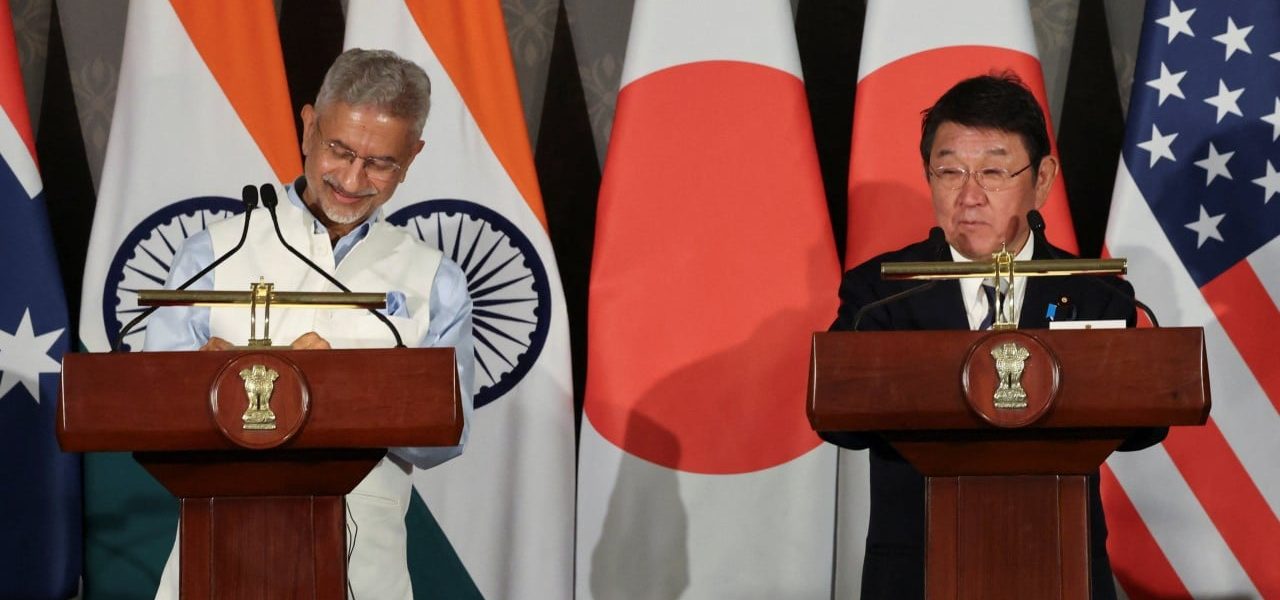
POLICY WIRE — Washington D.C., USA — Forget the bold declarations, the handshakes under flashing lights, or the optimistic joint statements we’ve grown accustomed to. When you look beyond the diplomatic pageantry—when foreign ministers of countries that are part of the Quadrilateral Security Dialogue (Quad) gathered in New Delhi last week—what you really saw was a rather uninspired tableau. It wasn’t about new frontiers; it was about more of the same. And for anyone watching Asia’s accelerating strategic churn, that’s just not good enough.
There’s a subtle but palpable sense that something’s shifted. Yet, the old playbooks remain dog-eared, thumbed through by officials who seem a tad reluctant to turn the page. The collective effort was—let’s be frank—predictable. Its agenda looked familiar: supply chain resilience, telecommunications security — and maritime domain awareness. It’s the standard fare, you know? Like clockwork. These aren’t insignificant issues, no doubt, but they don’t quite capture the messy, urgent dynamism brewing across a continent redefining its very power structures. [QUOTE_PLACEHOLDER]
It’s not that these groupings aren’t busy. Oh, they’re busy. The talking points have evolved, the initiatives have multiplied — and the meetings have become routine. You’ve got to give ’em that. They’re churning out reports — and holding bilaterals, but often it feels like motion for motion’s sake. The region, undeniably, is reshaping itself at a breakneck pace. From economic corridors spanning new maritime routes to burgeoning technological rivalries, the landscape morphs by the month. And, because of this relentless transformation, Asia is entering a new strategic era. One that demands a far sharper, far more agile response than the current mechanisms seem capable of mustering.
But here’s the rub, isn’t it? Its geopolitical debate remains stuck in the previous one. We’re still discussing the symptoms, not the core ailments. Think about the staggering defense outlays alone. The Stockholm International Peace Research Institute (SIPRI) reported a global military expenditure totaling an eye-watering $2.44 trillion in 2023, with a substantial chunk poured into the Indo-Pacific. That’s not just sabre-rattling; it’s a profound re-ordering of priorities. Nations are arming up, forging new pacts, and quietly, sometimes not so quietly, flexing muscles they barely knew they possessed a generation ago. Across the region, governments are investing in heavy armaments and sophisticated surveillance, a trend that speaks volumes about evolving threat perceptions and competitive ambitions.
And where does a nation like Pakistan fit into this grand, sometimes awkward, dance? Historically aligned, sometimes delicately balanced, Pakistan’s high-wire act Tehran talks amidst drone strikes and regional chill continues as major powers jockey for position. Does the Quad’s stated focus on maritime domain awareness or secure telecommunications alleviate Islamabad’s security concerns, particularly concerning its contested borders or its relationships with influential regional players? Unlikely, to put it mildly. Such initiatives, while ostensibly multilateral, can often be perceived through a deeply partisan lens by those outside the immediate circle—especially if they feel their own concerns are not adequately reflected in the dominant narratives. That creates friction. It certainly doesn’t foster widespread regional consensus.
You can’t just slap a fresh coat of paint on an old building — and call it state-of-the-art, can you? Not when the very foundations are shifting. The persistent rehashing of ‘supply chain resilience’ is less about innovative solutions and more about hedging against past shocks—important, yes, but hardly forward-looking enough for an age that demands foresight over mere reaction. We’re dealing with unprecedented technological advancements, cyber threats that defy geographic boundaries, and climate changes that threaten entire livelihoods. The boilerplate agenda, no matter how ‘routine’ its meetings become, won’t cut it anymore. It’s a bit like bringing a butter knife to a gunfight, really.
What This Means
The Quad’s current trajectory suggests a paradox: a grouping intended to address a ‘new strategic era’ but trapped by conventional thinking. For Washington and its allies, this familiar agenda risks portraying the Quad not as an agile bulwark, but as a largely symbolic grouping—an echo chamber of agreeable ideas that skirts the truly complex, contentious, and often sensitive challenges of the Indo-Pacific. Economic implications are significant; if the Quad’s initiatives don’t directly foster broad-based regional prosperity that includes non-members, its influence will remain constrained. Politically, nations like Pakistan or those in Central Asia might view its efforts as exclusive, potentially driving them towards alternative alliances or further deepening existing strategic relationships with Beijing. You see this everywhere, that hedging against one perceived bloc by cozying up to another.
It creates a perception problem: are these meetings genuinely about shaping a collaborative, stable regional order, or are they implicitly about containing a rising power, which is exactly how many perceive it? The latter, even if unspoken, restricts potential partners — and deepens regional divisions rather than healing them. So, the question remains, not just for the Quad’s architects, but for all stakeholders in Asia: will they embrace the messiness of true strategic innovation, or will they simply continue polishing the same old talking points while the ground shifts beneath their feet? And you know, time isn’t exactly on their side. Not these days. Not with everything else that’s going on—look at Europe’s shifting sands when citizenship dreams hit bureaucratic icebergs, for instance; no one’s waiting around.