


Germany’s Unfinished Reckoning: A Single Sign, A Nation’s Scar Tissue Exposed
POLICY WIRE — Frankfurt, Germany — The squeaking hinge of a courtroom door rarely captures global attention. But sometimes, what’s inside – a singular, small-time conviction – can pull back the...

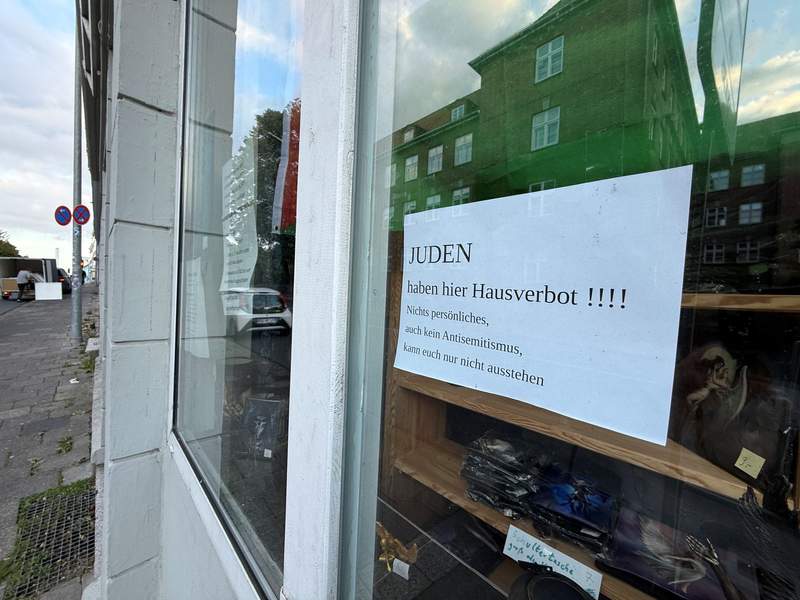
POLICY WIRE — Frankfurt, Germany — The squeaking hinge of a courtroom door rarely captures global attention. But sometimes, what’s inside – a singular, small-time conviction – can pull back the curtain on a nation’s larger, uncomfortable truth. A German shopkeeper, name now conveniently erased from most mainstream memory (though not from the annals of hate), recently got slapped with a verdict for proudly displaying an antisemitic sign. It wasn’t a riot; there were no burning effigies. Just one lone business owner, — and a sign. And that, frankly, is what makes it so unnerving. Because it’s not the grand gestures that erode a society’s soul; it’s the casual, everyday nods to prejudice that truly chip away.
This isn’t just about some guy in a retail space, mind you; it’s about a relentless, sometimes subtle, erosion of public decency in the heart of Europe. A recent report from the Federal Criminal Police Office (BKA), for instance, starkly illustrates the worsening situation, showing a nearly 20% rise in politically motivated antisemitic crimes across Germany in 2023, surpassing 2,000 incidents. These aren’t abstract numbers; they’re direct blows. You’d think Germany, more than anywhere, would be immune to such displays. They aren’t.
But they keep happening. And then you get convictions like this one – a local court pushing back, however minutely. “This isn’t just about one shop owner; it’s about the relentless erosion of decency in our public square,” stated German Justice Minister Marco Buschmann, a sentiment echoing through the halls of Berlin (or so one imagines). “We won’t stand by — and watch history repeat itself through apathy or calculated malice. Our democracy doesn’t just tolerate; it actively defends itself from this poison.” That’s a strong line, sure, but the reality on the ground sometimes tells a different story.
It’s a bizarre dance, isn’t it? Germany – a nation wrestling with the indelible shame of its past – finds itself constantly policing the present, fighting against its own ghosts. That sign, wherever it was, isn’t an isolated incident. It’s a symptom. And its conviction, while legally significant, feels like putting a tiny band-aid on a gushing wound. But a band-aid it’s, — and for some, any measure of justice is welcome. “We’re tired of seeing these echoes, these ugly sentiments surface time — and again,” expressed Dr. Josef Schuster, President of the Central Council of Jews in Germany, likely weary from years of similar battles. “But we won’t stop fighting for a world where our children feel safe, and where basic human respect isn’t up for debate.”
This struggle, it isn’t unique to Germany either. Think about the way certain narratives spread like wildfire online, infecting minds regardless of borders. Consider the complexities playing out across the broader Muslim world, particularly in South Asia – say, in Pakistan – where geopolitical grievances sometimes, unfortunately, find themselves distorted into generalized anti-Jewish sentiments, entirely separate from the state of Israel. Just as antisemitism in Europe often springs from a noxious stew of far-right nativism and lingering historical prejudice, Islamophobia in Europe, too, rears its ugly head. The cauldron of modern geopolitics only complicates these interlinked hatreds. One type of hatred doesn’t cancel out the other; they merely exist, often feeding off the same wellspring of xenophobia and misinformation, often finding fertile ground amongst marginalized communities looking for someone to blame. Because when fear takes hold, scapegoats aren’t hard to find, regardless of where you are on the globe.
What This Means
The conviction of a single shopkeeper for displaying hate isn’t going to turn the tide overnight, let’s be real. It’s a localized victory, an affirmation of a particular law designed to protect historical memory — and minority groups. But the implications are larger. Politically, it signals Germany’s unwavering, albeit challenged, commitment to its constitutional duty to combat antisemitism. For all the criticisms of German law potentially stifling free speech (an argument often trotted out by those looking to legitimize hateful discourse), this verdict reaffirms that there are lines. Certain historical realities, certain forms of incitement, simply aren’t up for public debate, not in a country that’s still so actively atoning for its gravest sins.
Economically, such incidents, when aggregated, create a chilly atmosphere. They deter investment, discourage talent migration, and certainly don’t paint a pretty picture for tourism – why visit a place where bigotry feels comfortable enough to hang in a shop window? they speak to a broader societal tension, a friction point that extremist elements — on all sides — are eager to exploit. This isn’t just about shops, it’s about the very social fabric. Asia’s unseen shifts often stem from cultural tensions as well, proving this global dynamic isn’t unique to Europe. The shopkeeper’s sign is a grim reminder: the battle against prejudice is far from over, it’s ongoing, fought one court case, one community pushback, one everyday confrontation at a time. And frankly, we’re all in it, whether we like it or not.