


Germany’s Left-Back Conundrum: A World Cup Whisper or a Pre-Tournament Shout?
POLICY WIRE — Frankfurt, Germany — The crisp air of a European late spring carries more than just the scent of blooming Linden trees these days; it’s thick with unspoken ambition, the sort that...

POLICY WIRE — Frankfurt, Germany — The crisp air of a European late spring carries more than just the scent of blooming Linden trees these days; it’s thick with unspoken ambition, the sort that only germinates on the eve of a World Cup. Forget the 4-0 thrashing of Finland; that’s a footnote. The real story, for those watching closely, unfurled not in the goals, but in the glaring absence on the pitch, and then in the measured words of a young man stepping into very big shoes.
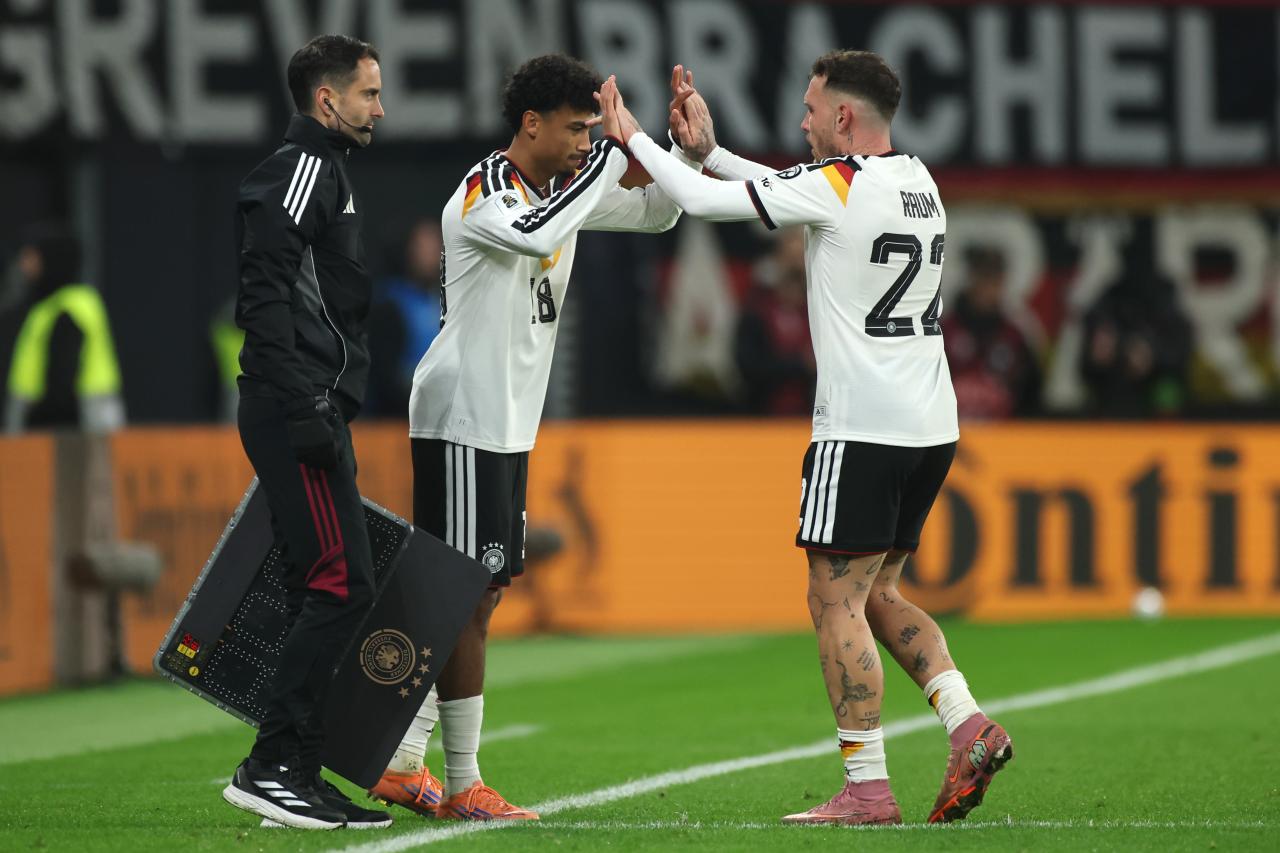
It’s about David Raum, the RB Leipzig stalwart, chained to the bench. And it’s about Nathaniel Brown, the Eintracht Frankfurt defender, seizing his chance, carving out a sliver of the spotlight. For veteran German manager Julian Nagelsmann, it’s not just about winning games. It’s about building an unshakeable squad, knowing exactly whose nerve holds steady when the stadium roar threatens to deafen thought.
“We look for a combination of form, tactical understanding, — and a certain mental fortitude. These are not easy choices, and every player here has earned their place in the squad,” Nagelsmann reportedly quipped recently during a media scrum, a masterclass in saying little while implying much about the razor-thin margins involved. Because, let’s be honest, every minute counts now, particularly when a country’s footballing reputation—a point of national pride as much as economic brand—is on the line.
Brown, addressing the media from a virtual setup late last week, kept his demeanor admirably composed. He’s not about to spike the ball prematurely. “I’m unbelievably happy to be here, part of this whole World Cup thing. And yeah, you bet I think I’ve got a shot to play,” he stated, a hint of steel beneath the understated delivery. He quickly added, almost reflexively, that “we’ll just have to see if the gaffer actually puts me on the field or not. No sense getting ahead of myself, is there?” It’s the kind of pragmatic caution drilled into any rising star in Germany’s notoriously demanding football system.
His rivalry with Raum? “We get along fine, actually. He’s been around longer, so he gives me pointers now — and then. We’re teammates,” Brown insisted. Then, the almost textbook line, perfected over years of PR training: “Honestly, I don’t care if I start or not, as long as we win. It’s about the team, about the big goal. Egos? Personal ambitions? You park those at the door.” But a glance at Raum’s social media feeds, conspicuous for their silence post-match, tells another tale. You can bet your bottom dollar he isn’t quite as sanguine about watching from the sidelines.
But the true crucible for this left-back quandary arrives this Saturday, when Germany faces off against the United States in their final World Cup warm-up. That fixture won’t merely be another friendly. It’s a dry run, a high-stakes audition where every misplaced pass or perfectly timed tackle gets scrutinized through a microscope. Who starts there could very well signal Nagelsmann’s hand for the June 14 opener against Curaçao.
For some, this left-back situation is an internal squabble. For others, particularly the millions who follow German football globally—including a burgeoning, passionate fanbase across Pakistan and the wider Muslim world—it’s a microcosm of the larger drama, the meticulous German effort to forge a winning machine. The German national team, for instance, boasted an average global viewership exceeding 40 million per match during the last World Cup, with significant traction reported from burgeoning fan bases across South Asia and the Middle East, according to FIFA’s own market reports. That’s an awful lot of eyeballs tracking every last positional battle.
And Raum? Well, the experienced head knows the drill. “Look, no one enjoys being out of the lineup. I’m a competitor, always have been,” David Raum told our wire service quietly this morning, a faint edge of controlled frustration in his tone. “But the manager’s got a vision. My job is to be ready, contribute whatever way I can. It’s for Germany, right? That’s what counts in the end. Even if it stings a bit right now.”
What This Means
This positional duel, seemingly a mere sporting detail, reverberates with wider implications for what many call “Brand Germany.” For one, it’s a direct reflection of Germany’s commitment to meritocracy—a cold, hard assessment of current form and fitness over past reputation. This ethos extends beyond the pitch, echoing the nation’s industrial pragmatism, where efficiency and performance often supersede sentiment. A successful World Cup campaign isn’t just about bragging rights; it bolsters national morale, injects cash into tourism and merchandise sectors, and subtly enhances the country’s soft power on the global stage. It’s a powerful PR tool.
Economically, every starting spot holds currency. A consistent starter in a successful German side sees their market value inflate exponentially, influencing transfer fees and endorsement deals. The financial stakes for players — and clubs are astronomical. For Nagelsmann, it’s a ruthless game of optimization, a high-stakes calculation. And if Brown performs well, it legitimizes the manager’s bold call, adding another layer of intrigue to what German football analysts have described as Nagelsmann’s most defining roster choices yet.