


Powering Up: South Africa’s Off-Grid EV Stations Signal a New Global Energy Divide
POLICY WIRE — Pretoria, South Africa — It’s a striking image: a gleaming electric vehicle, symbol of tomorrow’s supposedly clean future, tethered not to a robust national grid...

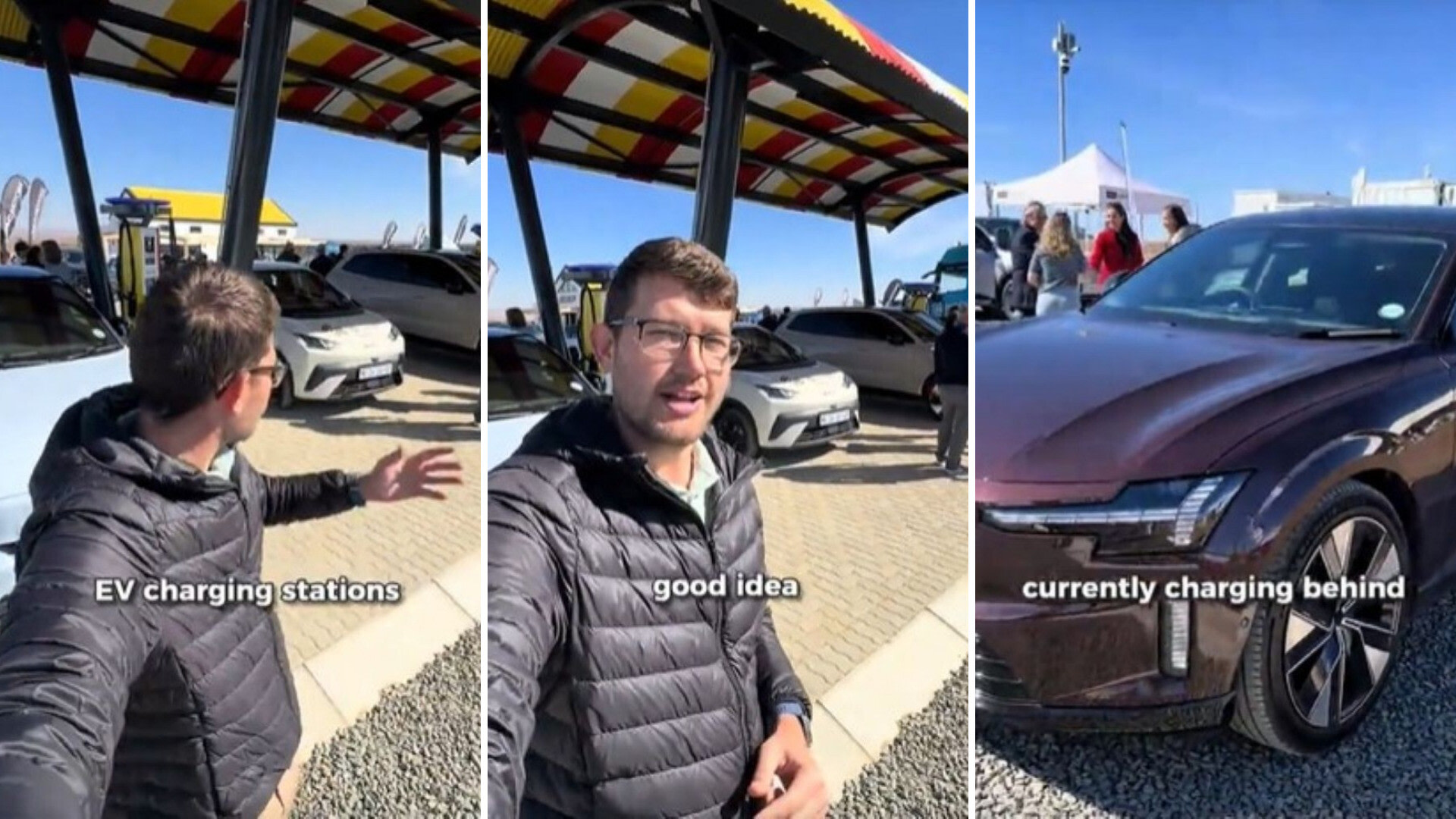
POLICY WIRE — Pretoria, South Africa — It’s a striking image: a gleaming electric vehicle, symbol of tomorrow’s supposedly clean future, tethered not to a robust national grid but to a collection of solar panels and battery banks, isolated on a plot of land. This isn’t some distant, pioneering outpost anymore. This is South Africa, a nation grappling with persistent load shedding, showcasing brand-new off-grid electric vehicle charging stations that, for many, feel less like innovation and more like an inconvenient truth.
It isn’t about pioneering spirit in a vacuum, though you could argue some PR strategists want you to think it’s. But look closer. It’s about necessity, born from a system buckling under pressure. Forget convenience; think resilience, a forced independence from an erratic national power supplier. For countries like South Africa, or even segments of Pakistan with its own grid woes, this kind of ‘progress’ feels less like advancement and more like a tactical retreat into self-sufficiency. You can’t wait for Eskom (South Africa’s utility) to get its act together, can you? [QUOTE_PLACEHOLDER]
Because the truth is, the promise of electrification — cleaner air, quieter streets, energy independence — runs smack into the wall of unreliable infrastructure. You want people to buy electric cars? Great. But where, precisely, do they charge them when the lights are out for four, six, sometimes ten hours a day? It’s not just a rhetorical question; it’s an everyday reality. An ‘off-grid’ solution then isn’t a premium perk; it’s the bare minimum required to actually make EVs a viable option outside urban centers with somewhat stable electricity.
A recent visual shared online of one such station, ostensibly near Krugersdorp, showed a setup designed to sidestep the state-owned utility entirely. We’re talking PV panels — and hefty battery arrays, providing a closed loop for electric vehicles. It’s a microcosm of a much larger trend globally, where the wealthy and the proactive are creating their own solutions, leaving the general populace to suffer the indignities of decaying public services. But don’t misunderstand; these stations aren’t just for luxury rides. They’re increasingly for businesses looking to keep their logistics moving, to power their fleets regardless of grid stability.
And that’s where the deeper implications lie. This decentralization of power, albeit driven by immediate need, carries an edge. It separates those who can afford their own micro-grids from those who can’t, exacerbating inequalities that already run deep in nations like South Africa. We saw similar phenomena during peak pandemic, where access to private healthcare became the ultimate dividing line. Energy, it seems, is the next frontier for this deepening chasm.
Consider the broader Muslim world, from Lahore’s stifling summers — and power cuts to Cairo’s overstretched grids. The lessons from South Africa’s approach — born of desperation, repackaged as innovation — won’t be lost. There’s a clear trajectory here: if the state can’t provide reliable basics, individuals and corporations will fill the void. Sometimes this manifests as entrepreneurial zeal; sometimes it’s just desperate survival. But it never bodes well for national cohesion or shared prosperity.
Globally, EV sales have seen exponential growth, with the International Energy Agency (IEA) reporting that global electric car sales exceeded 10 million in 2022, accounting for 14% of the total car market, up from around 9% in 2021. Yet, much of this growth is concentrated in regions with stable grids or aggressive policy support. How do you square that circle for the rest of the planet?
The answer, apparently, is to build parallel universes of power. You build an entirely separate infrastructure, using private capital to bypass a broken public one. It’s not unlike the rise of private security firms in areas where public policing has failed; it’s a direct consequence of institutional fragility. It’s also incredibly inefficient on a systemic level — a duplicate, often poorly integrated, approach that fails to achieve economies of scale a unified grid should offer.
But the pragmatism is undeniable. If you’ve invested in an electric vehicle, you need to charge it. An off-grid station provides that reliability, circumventing the headache of scheduling charges around load-shedding schedules that change faster than your local politician’s promises. It’s a quick fix that feels like a long-term solution — at least for the lucky few. And this isn’t just about personal cars; commercial fleets will eventually look to these setups to avoid operational disruptions. This signals an interesting turn in the price of penny-pinching on infrastructure.
What This Means
This off-grid EV charging phenomenon isn’t just a South African curiosity; it’s a bellwether for emerging economies facing energy transitions without robust foundational infrastructure. Politically, it signals a quiet but potent erosion of state authority and competence, forcing citizens and businesses to essentially secede from national services — and often, national planning. Economically, it points to a dual-speed development path: a segment of the population that can afford resilience, and a much larger one that remains at the mercy of state failure. This bifurcated approach to energy can also fuel inflationary pressures, as localized, less efficient power generation often comes at a higher cost, which is eventually passed on.
For regions like South Asia and parts of the Muslim world — from Pakistan’s industrial hubs to Saudi Arabia’s burgeoning green energy aspirations — this trend presents a sobering dilemma. They want the future of EVs and clean energy, but many lack the financial muscle and stable governance to upgrade entire national grids swiftly enough. The temptation to bypass grid issues with localized solar-plus-storage solutions for EV charging, perhaps tied to broader geopolitical shifts in energy policy, will be immense. But doing so risks embedding deep structural inequalities and inefficiencies, preventing the broad societal benefits that a truly unified, green energy transition could offer. It’s a classic choice: patch up the symptoms, or address the underlying disease? For now, it seems many are choosing the former, one solar panel at a time.